
I know how to pick a travel day. On Jan. 16, I flew to Anchorage, en route to Homer, by invitation of the Homer Garden Club. The topic I was planning on presenting: “You Can’t Grow That! And Other Garden Myths Worth Breaking.”
You might recall that on Jan. 15, a Pineapple Express of warm, soggy air pushed its way into Alaska, all the way into the Interior. Suddenly, our beautiful, snowy landscape turned into ice and slop.
Soon after landing in Anchorage, I made my way to the gate to catch my flight to Kenai. Once in Kenai, I would be picked up by a member of the garden club and then head on down to Homer.
On my way to the Grant Air gate, I turned on my phone and read the following message from Candice, a friend in Kenai:
“I hope you’re not coming in today. Our roads have been closed intermittently due to the weather and several auto accidents. This morning, the Sterling Highway just south of Kenai/Soldotna, heading toward Homer, was closed. Several cars are off the road.
“It’s still raining here,” she added. “Terrible after all the beautiful snow we had.”
Yes, terrible. My flight was canceled. I checked into a hotel.
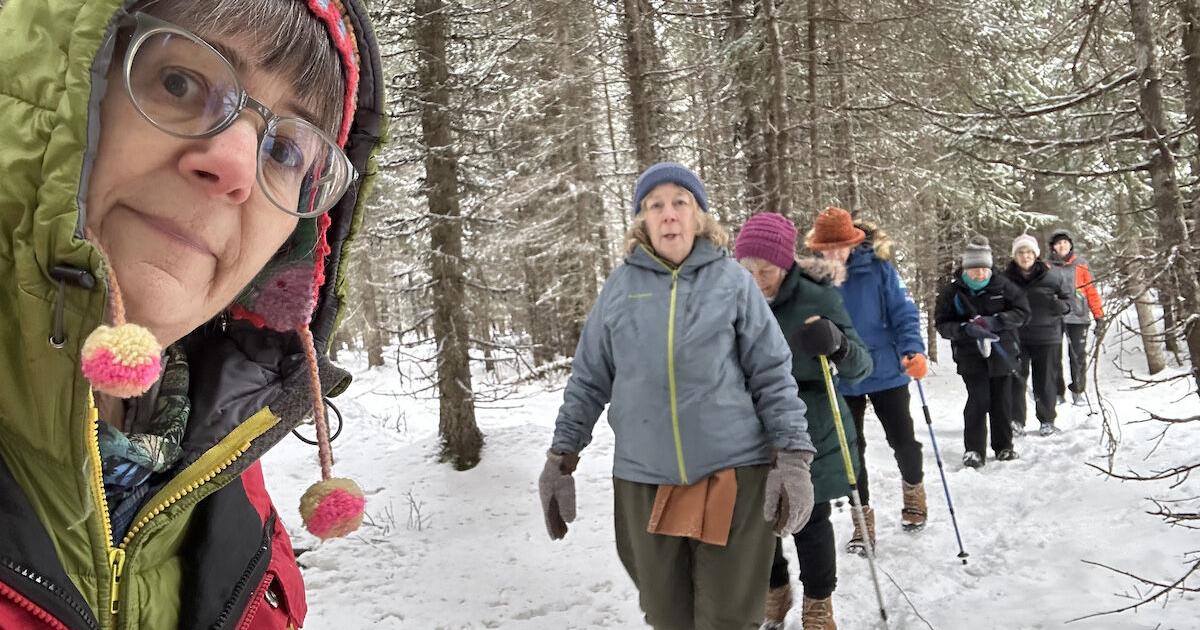
I made it to Homer on Saturday, in time to check into the B&B, go for a long hike on Diamond Ridge, walk along the spit, and enjoy a Thai dinner with a friend.
On Sunday afternoon, I stood in front of 75 avid gardeners to talk about five garden myths.
1. You Can’t Grow That!
2. Never Put Meat in the Compost. Ever.
4. Seedlings Need Sterile Soil
5. Gardening Is a Lonely Journey
Which myth, do you think, brought the most comments and questions?
Number 4. Maybe because we’re leaning into seed-starting season. Which reminds me, I’ll be hosting a seed-starting class at the Kodiak Public Library on Feb. 11, from 5:30 to 7:30 p.m.
I love nothing more than debunking myths we all grew up believing. And sterile soil is one of them. In a nutshell, there is no such thing as sterile soil.
In fact, sterile soil is bad for seedlings.
Jeff Lowenfels, longtime garden writer for the Anchorage Daily News, once told me, “Seedlings need living soil, because it allows bacteria to help plants take up nutrients more efficiently.”
And what’s the best living soil?
“Organic soil and compost,” he said.
This is totally different from what most books, experts, and articles will tell you. But soil science is revealing so much more about what goes on beneath our feet. If I could’ve cloned myself 40 years ago, I’d have opted to be a merchant marine officer, photographer, gardener, AND a soil scientist!
While I cover this amazing development in more detail during my upcoming talk at the library, here’s the gist of it: plants actually allow bacteria into their roots in order to farm them for nutrients. Think shearing sheep.
Studies now show that about 30% of a plant’s nitrogen is supplied as a result of this plant-microbe relationship. So if you use chemicals, guess what? You’re killing off the friendly microbes that deliver nutrients to your plants.
So, since we’re leaning into the gardening and seed-starting season, let’s talk about the pros and cons of starting seeds early.
First, the benefits are fairly obvious: Get a jumpstart on transplanting your seedlings outside: Early plants mean early harvests.
But all this takes planning. Every year, I hear people talking about their horribly stunted tomatoes sown in February. Or I see photos on Facebook of cucumbers taking over an entire shelf in the middle of winter. Trouble is, if you sow indoors too early, things can go wrong. Plants become rootbound and are unable to provide enough water and nutrients to the foliage. And our interiors are dim and too warm (nice for us, not for plants).
To be clear, some plants are not in a hurry to germinate. These include parsley, pansies, celery, thyme, peppermint, purple coneflower, columbine, rosemary, sage, and peppers.
And there are vegetables such as broccoli, cabbage, onions, and cauliflower that need to be sown earlier.
Now you might be wondering why not start tomatoes in February? That way, you’ll have nice big plants to transplant in the greenhouse or hoophouse. It’s a nice thought, but unless you’re set up to take care of tomatoes when it’s still cold outside, you’re setting yourself up for trouble.
So, if you plan to start seeds before April, here are eight tips to keep you honest and successful:
1. Provide enough artificial light (14 to 16 hours per day)
2. Keep cool nights. Memorize my “Seed-Starter’s Ditty”:
Germinate your seeds in warmth,
‘Tis normally the rule.
To raise your seedlings stout and strong,
Grow them where it’s cool.
3. Create air movement with a fan
4. Use light, slightly rich, well-draining soil
5. Water accurately, from below, is best
6. Choose plants suitable for early sowing
7. Manage containers and re-potting when plants need it
8. Use a greenhouse (hoophouse) as a transition zone
SOW LATER TO MAKE LIFE EASIER
Don’t get me wrong, sowing seeds early is not for everyone and I’m not trying to encourage you to sow earlier. But I wanted to be honest here, so you understand how complex the early approach can be, requiring time, attention, and setting up equipment such as lights and fans.
For some folks, it’s often simpler and more effective to start seedlings as late as possible, so that they spend as little time indoors as possible.
This approach is quite simple. Start with the date when you plan to transplant seedlings outside. Notice I didn’t mention “the date of the last frost” as most gardeners would focus on. If you’ve lived in Kodiak for more than a couple of years, you know from experience that frost can happen most any month of the year. You just have to be ready for it.
That said, let’s pick May 15. Add about two weeks to give yourself a safety margin, knowing that this date is only an average, because in nature, nothing is ever completely guaranteed.
From that date onward, follow the recommendations on seed packets or in gardening books. If they suggest sowing six to eight weeks before the last frost, I usually choose the lower end of the range — that is, six weeks before my planting-out date. Why? Because for many plants, frost isn’t the only limiting factor.
I’ll cover those factors during my seed-starting talk at the library. See you there on Feb. 11.
As for my trip to Homer, after I finished my presentation, several gardeners came up to me with an invitation I couldn’t refuse. “We want to take you to the Salty Dawg Saloon.” I was told it was the No. 2 “dive bar” in the world. But that’s another story.
If you enjoy these weekly columns, please support our amazing local newspaper, the Kodiak Daily Mirror — online or in print. To subscribe, call Janet at 907-486-3227 or email Info@KodiakDailyMirror.com
Comments are closed.