
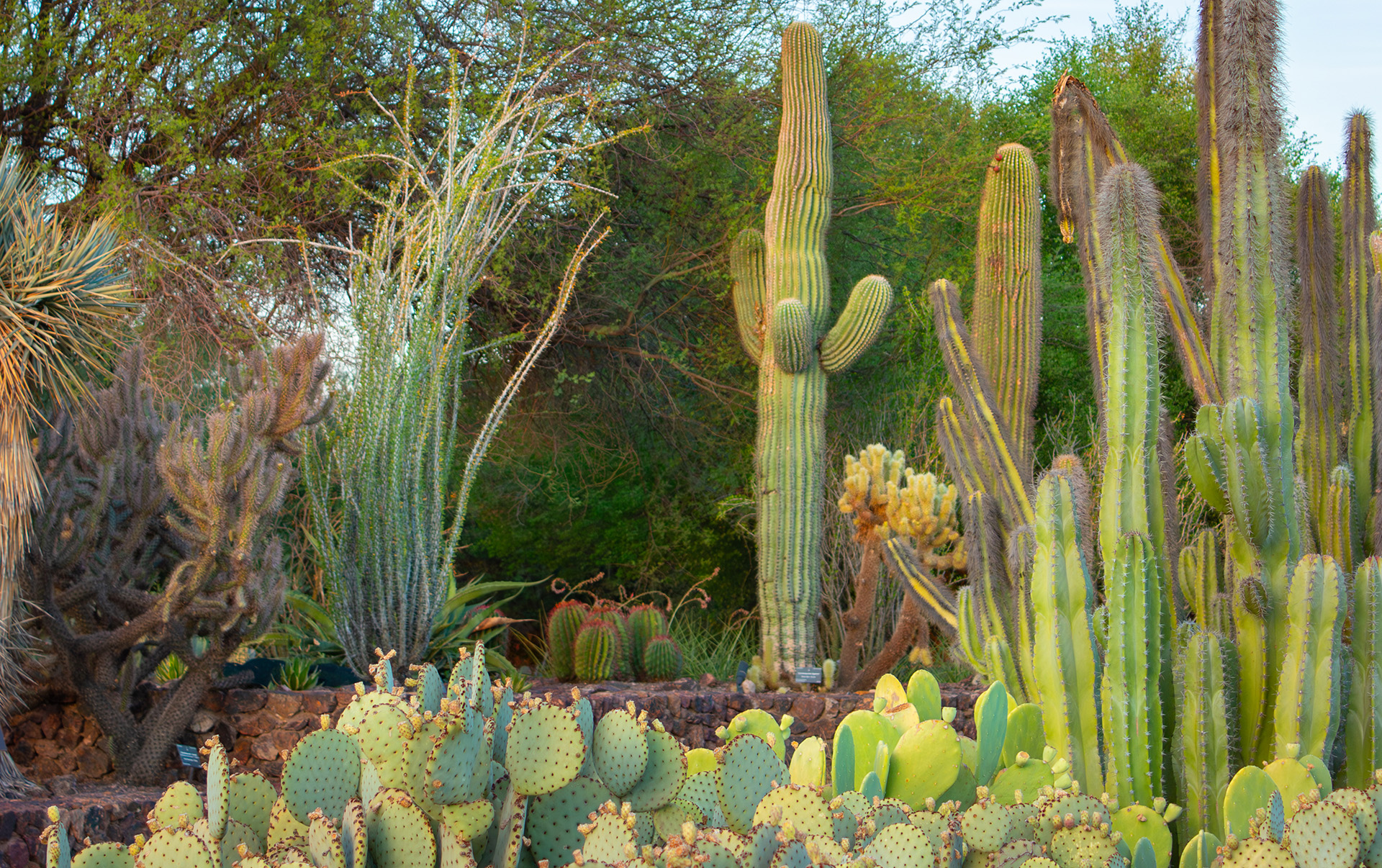
Each year, the Garden’s horticulture team carries out a saguaro succession planting, an essential effort to replace saguaros lost to storms, rot or other natural impacts. This work is guided by the annual saguaro inventory, led by the GIS manager and research department, which helps track plant health and identify new locations for planting. Thanks to this data-driven approach, 32 new saguaros were planted throughout the Garden this season.
Timing is everything. Fall through winter is also the ideal planting window. Seasonal rains support root growth and give young saguaros time to establish before the intense summer heat.
Careful techniques are key to success. Each saguaro is planted in the same orientation it previously grew to prevent sun scorch, placed beneath nurse plants like creosote, ambrosia and palo verde trees, and positioned on gentle slopes away from washes. Protective cages help shield them from hungry jackrabbits, bunnies and pack rats.
This year’s saguaros range from two to five feet tall. For columnar cactus, smaller and younger plants have a higher chance of survival when transplanted—another factor the Garden’s horticulture team carefully considers. The plants were sourced from Pima County Native Nursery in Tucson, a conservation-focused organization that salvages native plants from development projects and provides them exclusively to public and nonprofit initiatives.
Most of the new saguaros were planted in the Garden’s butte preserve, where last year’s inventory showed notable losses. By planting saguaros annually and sourcing them from different nurseries, we help maintain a strong and diverse gene pool. And while natural recruitment still occurs, each year Garden staff discovers a handful of baby saguaros sprouting on their own, these efforts ensure the long-term vitality of this iconic desert species.
Cheers to our horticulture team and dedicated volunteers for planting, protecting and caring for the saguaros that shape the Garden’s desert landscape.
Comments are closed.