
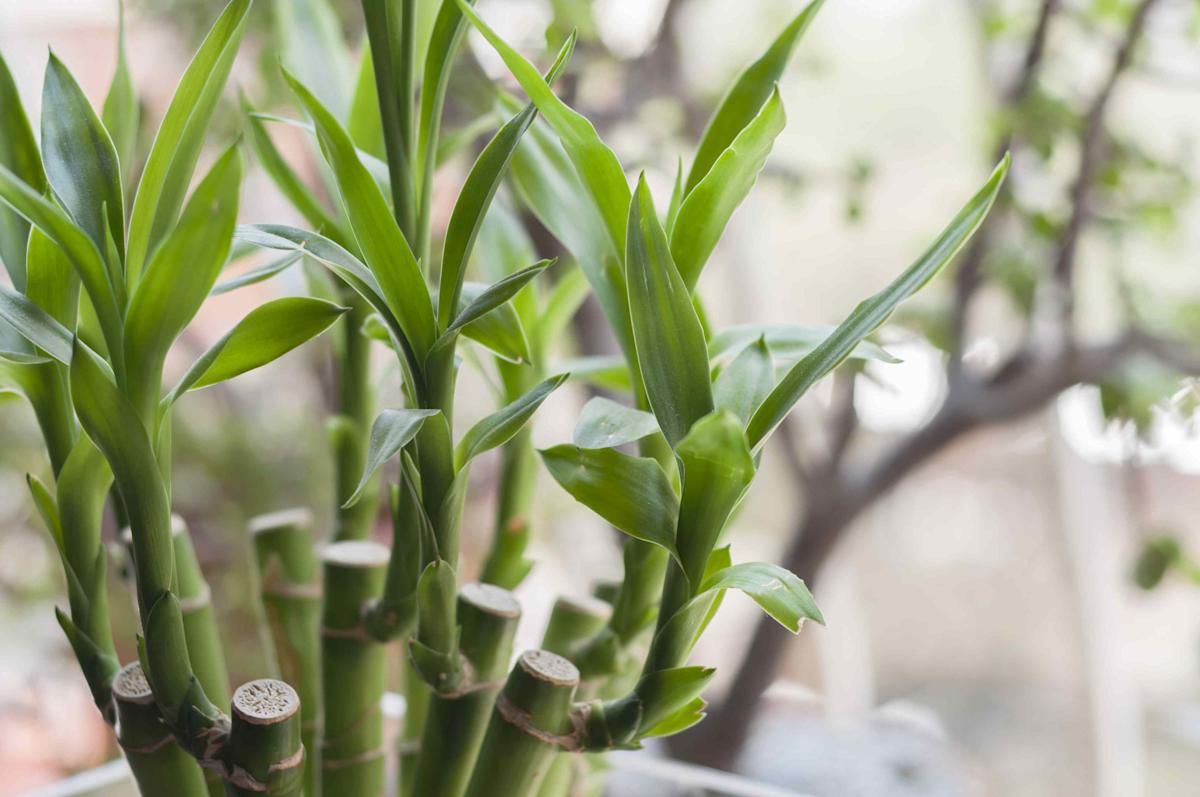
Lucky bamboo (Dracaena sanderiana) is a popular tropical houseplant that thrives in bright light and well-draining soil. It can be grown indoors or outside in warm climates. If you love your lucky bamboo and you want more plants around your home or in your garden, you can do so through propagation. Propagation is a gardening technique that involves taking cuttings from a parent plant and either repotting them in soil or growing them in water to form new plants. Ahead, gardening experts share their tips for the best tried-and-true methods for propagating lucky bamboo.
Meet Our Expert
Teresa Watkins, landscape designer, garden author, and syndicated radio host of Better Lawns and Gardens
Andrew Bunting, vice president of horticulture at the Pennsylvania Horticulture Society
Related: How to Grow and Care for a Lucky Bamboo Plant
When to Propagate Lucky Bamboo
Propagation of lucky bamboo depends on where it’s grown—indoors or outdoors. “As a houseplant, most tropical plants can be propagated year-round when grown indoors or in a greenhouse,” says Teresa Watkins, landscape designer, garden author, and syndicated radio host of Better Lawns and Gardens. “For those living in zone 10 or 11 with lucky bamboo on the patio or planted outdoors, it’s best to wait until spring or summer to take cuttings for propagation.”
How to Propagate Lucky Bamboo in Soil
Propagating lucky bamboo in soil is a common and dependable method. It’s done by removing stems from your plant and potting them in a well-draining potting mix. Follow these steps from Andrew Bunting, vice president of horticulture at the Pennsylvania Horticulture Society, to successfully propagate lucky bamboo in soil.
Using sharp, clean pruners, cut a stem from the top of the plant, 4 to 6 inches long.
Remove the leaves from the bottom two-thirds of the stem.
Moisten the bottom of the cutting and dip it into a rooting hormone, coating the bottom inch of the stem. This helps encourage root development.
Fill a container with well-draining potting soil. Mixes that include perlite are especially helpful for drainage, Bunting says.
Create a pilot hole in the soil and insert the cutting to a depth of about 2 inches.
Gently pack the soil around the base to ensure the cutting is secure.
Keep the soil moist, but not soggy, and place the cutting in an area that receives indirect sunlight. Roots will form in about three to four weeks.
Tips
Gently tugging on the cutting after a few weeks can help determine whether roots have formed, Bunting says.
How to Propagate Lucky Bamboo in Water
One of the quickest ways to propagate lucky bamboo is to take stem cuttings and place them in a jar of water. Once the roots are well established, you can move the plant from the glass jar or vase and transplant it into a container with well-draining potting soil.
Using sharp, clean pruners, cut a stem from the top of the plant, 3 to 5 inches long.
Remove the leaves from the bottom two-thirds of the stem.
Fill a shallow jar halfway with distilled or bottled water, as tap water contains chlorine that can damage the cuttings, says Bunting.
Add a layer of pea gravel to the bottom of the container.
Place the cutting into the jar, positioning one to two inches of the stem securely in the gravel.
Change the water periodically to keep it clean.
Roots should begin to develop within two to four weeks. Once the roots are well established, the cuttings can be gently removed from the jar and potted into four-inch containers using standard potting soil, Bunting says.
How to Care for Lucky Bamboo Cuttings
After propagating your cuttings, place them somewhere that receives bright, indirect sunlight. If you potted the cuttings in soil, keep it moist but not soggy. If you placed the cuttings in water, replace the water every few days to prevent bacteria from harming them.
Once the cuttings have formed long enough roots, you can repot them into 4-inch containers using well-draining potting soil. Use a fork or pencil to carefully loosen the soil and lift out the cuttings. “As the plants mature, water them regularly, allowing the soil to dry out slightly between waterings,” says Bunting. “This helps prevent overwatering and encourages healthy root development.”
Read the original article on Martha Stewart
Comments are closed.