
On a joyful April day in 1965, first lady Claudia “Lady Bird” Johnson brought figures from the Camelot era back to the storied former home of President John F. Kennedy and his wife, Jackie, to close the loop on an important project disrupted by the violence of JFK’s assassination.
“Only a short while ago, sometimes it seems only days, this wonderful old building was occupied by the 35th American president and his first lady,” Johnson told the esteemed guests. “They brought to the White House many striking qualities, but perhaps above all, they brought the lilt of youth and instinct for the lovely, and an infinite quality of grace.”
She noted that among their many ideas for the White House, John and Jackie sought to create areas on the property for “repose” and “reflection,” commissioning their dear friend, horticulturist Bunny Mellon, to design functional green spaces beside both the West Wing and East Wing.
AP
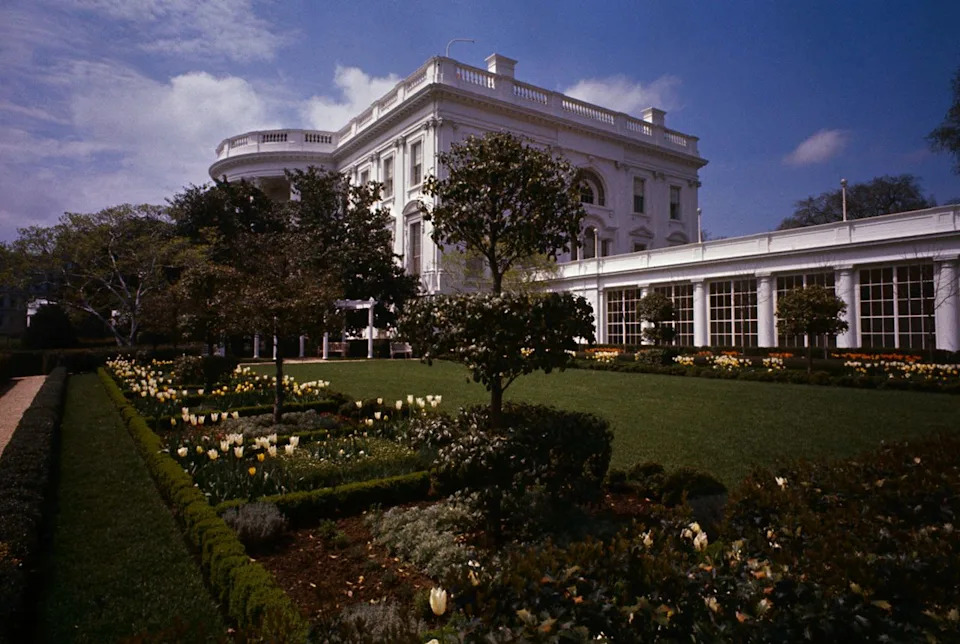
The Jacqueline Kennedy Garden, which sat opposite the White House Rose Garden, in the 1960s
While the West Garden became the more famed “Rose Garden” that Americans have repeatedly seen in photographs over the decades, the East Garden, Johnson said, deserved to be dedicated in honor of her predecessor.
“There could be only one name for this garden,” Johnson insisted, revealing that it would thereafter be known as the “Jacqueline Kennedy Garden.”
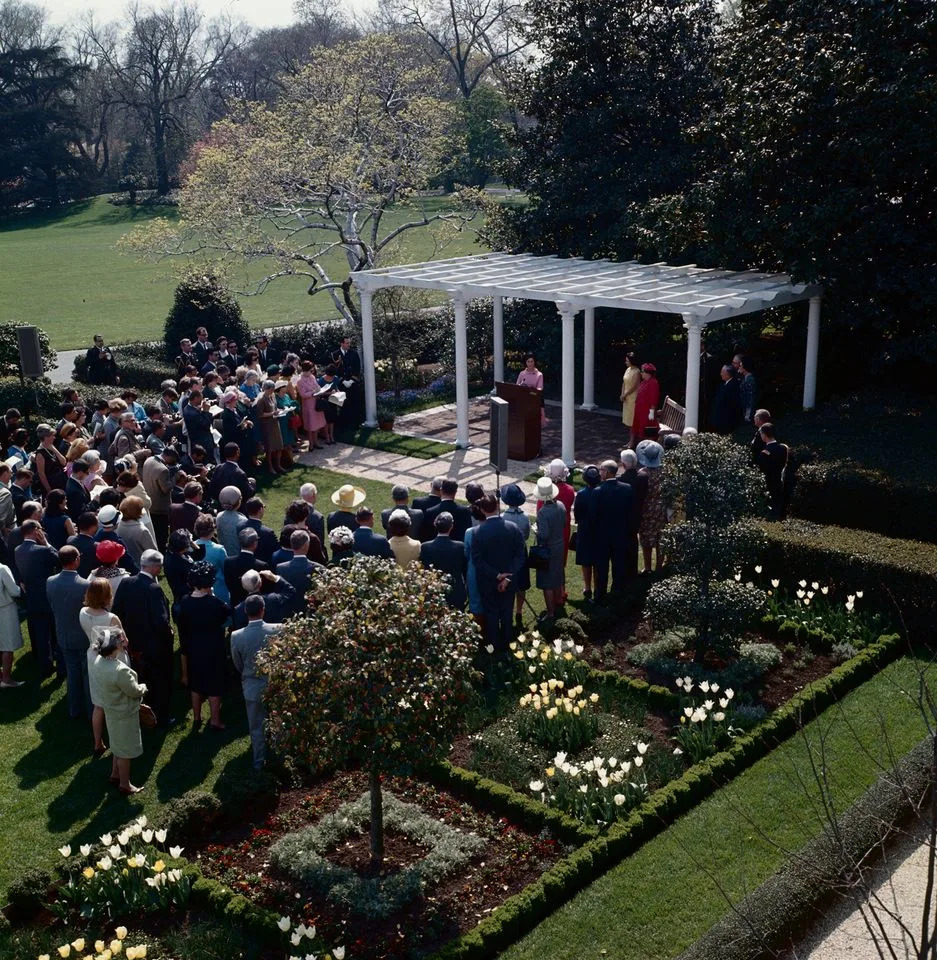
Standing under a pergola designed by renowned architect I. M. Pei, the first lady added, “For generations to come, the garden will add to the pleasure of those who occupy this home, and the thousands of Americans who walk down that walkway over there on their visit to the White House.”
Bettmann/Corbis/Getty
The dedication ceremony for the Jacqueline Kennedy Garden on April 22, 1965
Though Jackie herself did not attend the 1965 garden dedication — she largely avoided the White House after her husband’s assassination — members of the Kennedy family returned to the south side of the White House to hear Lady Bird’s speech, including Robert F. Kennedy and his wife, Ethel, and Jackie’s mother, Janet Lee Auchincloss (née Bouvier).
Auchincloss, then 57, delivered remarks about the new garden, saying, “I know you’ll understand that I cannot express how I feel at this tribute to my daughter. Very few people have been so honored.”
“President Kennedy loved gardens very much, and as you said, he planned this garden with Jacqueline, and I know that it makes him very happy to have it dedicated to her,” Auchincloss said. “And I cannot think of anything that could have more meaning to all the people who care about Jackie than to have this lovely garden as a memory of the years that she shared with him here.”
“I wish I knew how to thank the President and you, Mrs. Johnson, for this especially thoughtful tribute,” she added.
Brooks Kraft LLC/Corbis via Getty
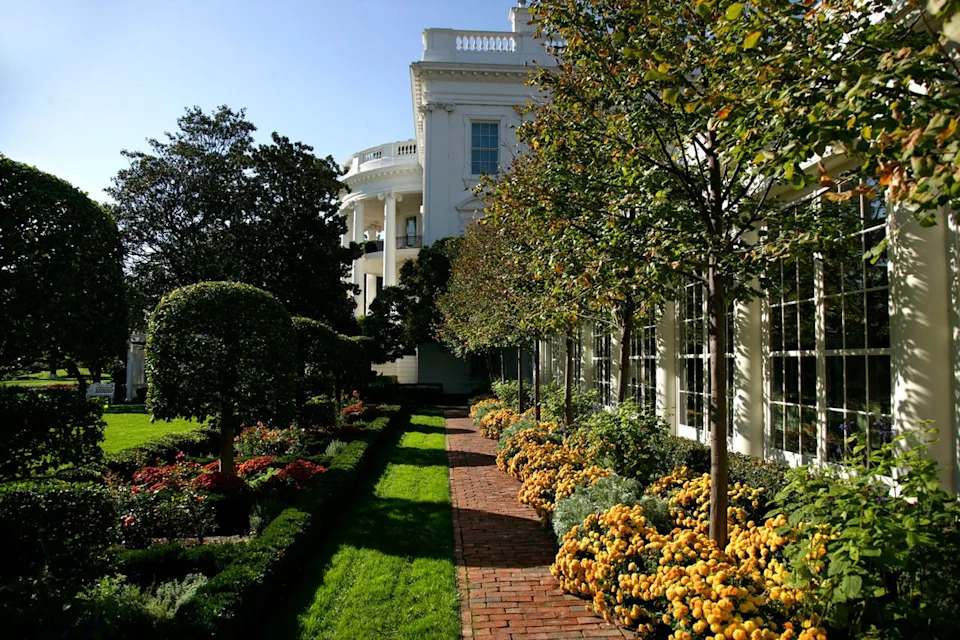
The Jacqueline Kennedy Garden ran the length of the East Colonnade
The Jacqueline Kennedy Garden, though sometimes forgotten in the shadow of the west side Rose Garden, became a secondary event space, sometimes used for presidential award ceremonies or first ladies’ parties and tea times.
Under first lady Hillary Clinton, it was transformed into a sculpture garden, featuring contemporary American works to show “how important the arts are as part of our public life, but also as an integral part and contribution to our private lives.”

Alex Brandon/AP
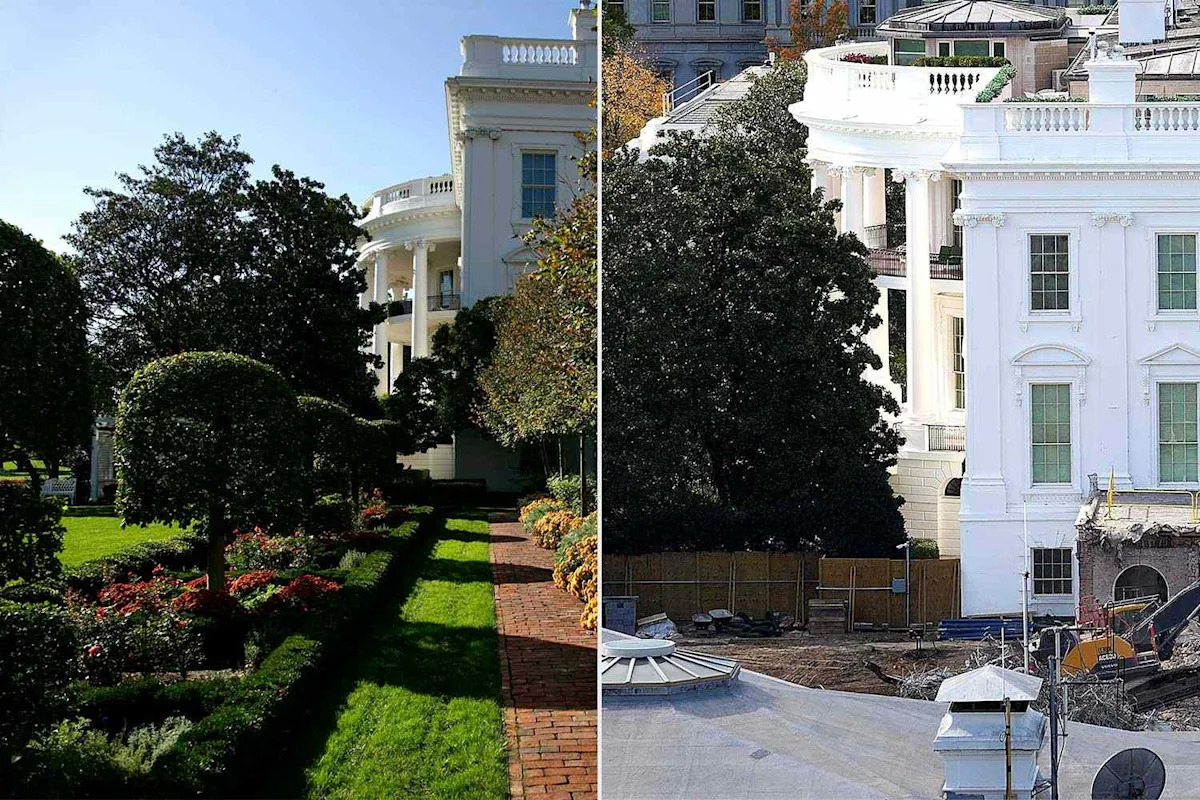
The Jacqueline Kennedy Garden on Oct. 15, 2009, during President Barack Obama’s first year in office
The garden was one of the first things that millions of White House visitors saw on public tours for six decades, after guests entered through the East Wing and looked out through the large glass windows that lined the East Colonnade.
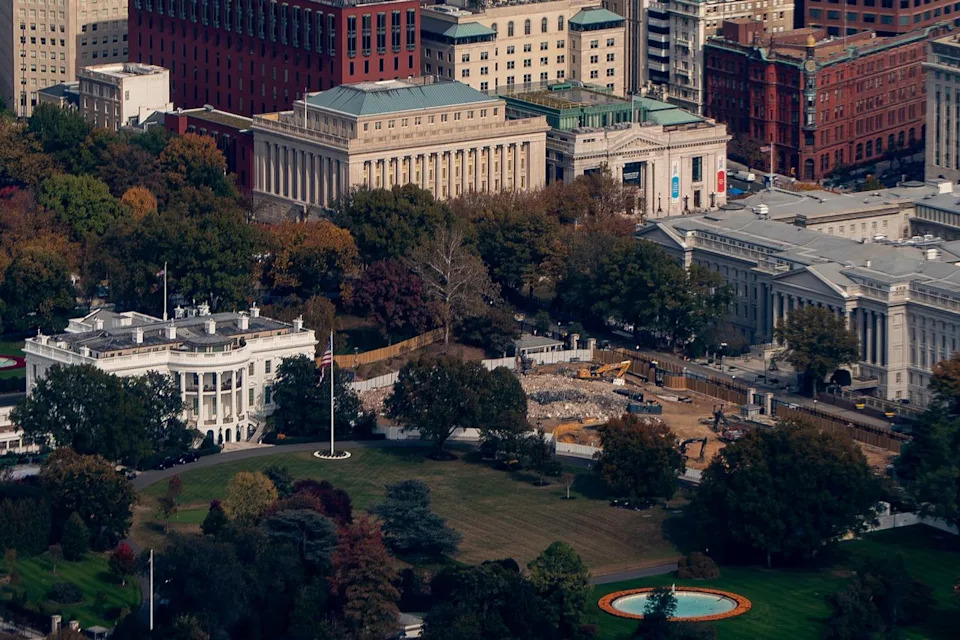
Then, on Oct. 20, 2025 — 60 years after Lady Bird Johnson dedicated the green space — a backhoe tore through the historic East Wing, beginning a surprise demolition to make way for President Donald Trump’s new 90,000-square-foot ballroom.
Soon, the entire east side of the White House complex had been razed, including the East Colonnade and the idyllic Jacqueline Kennedy Garden, one of the most prominent American features that bore the late first lady’s name.
Al Drago/Getty
An aerial image from Oct. 26, 2025, shows the rubble of the White House East Wing, East Colonnade and Jacqueline Kennedy Garden
A White House official told PEOPLE after the garden’s quiet demolition that the plan is to rebuild Jackie’s namesake green space, though the official noted that “the scope and the size of the overall [ballroom] project has always been subject to vary as the project develops” and said “we will have more specifics to share as we go along.”
In a Jan. 8 meeting with the National Capital Planning Commission, Trump’s ballroom architect showed off renderings of the plans for the new East Wing, which have changed since the president first announced his idea to build a massive addition to the White House.
An aerial-view rendering of the proposed ballroom appeared to show that a garden would be rebuilt along the East Colonnade once construction is completed, though it did not specify whether it would be modeled after Jackie’s design — or whether it would still share her name.
The White House Ballroom is expected to be completed by 2028.
Read the original article on People
Comments are closed.