
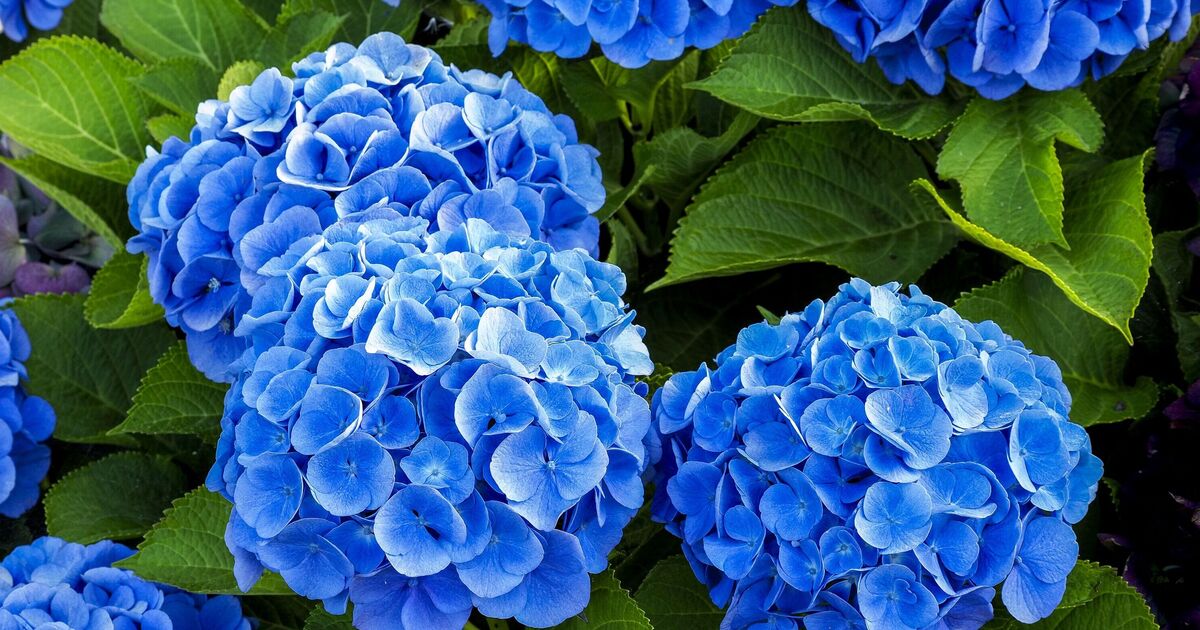
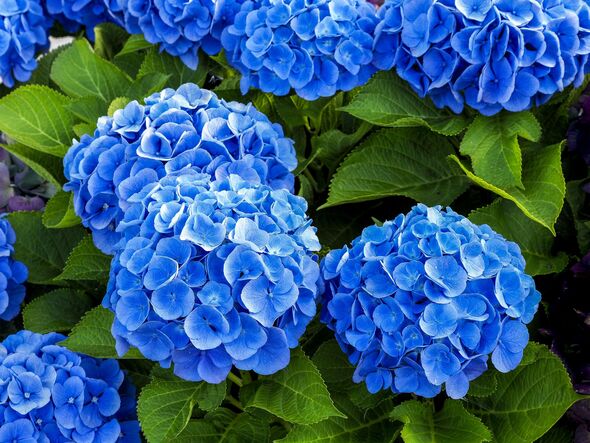
Hydrangeas will give you ‘glorious blooms every year’ if you stop making 1 common mistake (Image: Getty)
Hydrangeas are renowned for producing a spectacular display of enormous blooms throughout the summer months. Their blossoms can then transform from vivid early summer shades to delicate winter flower heads. Pruning hydrangeas enables gardeners to maximise their plants’ potential, though it’s crucial to understand that different varieties require pruning at specific times.
After trimming his hydrangea at an inappropriate moment, one gardener turned to the Hydrangeas in the UK Facebook page seeking guidance after his plant failed to flower. Matthew Roberts posted: “Hi, I am a new visitor to your site, hoping for some advice. My Hydrangea in my front garden, which looks like the same variety as on your home page [hydrangea macrophylla], has struggled to blossom over the last couple of years, as with one I have in my back garden, which has more of a flat flower to it.
Read more: easiest vegetables to plant january winter gardening
Read more: Remove patio moss with natural item three gardeners prefer over pressure washers
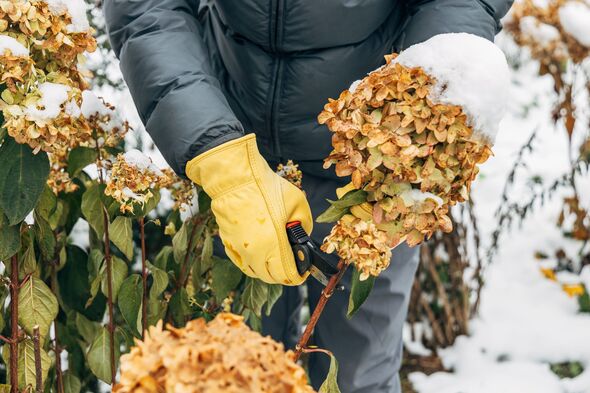
Not all hydrangeas can be pruned in winter (Image: Getty)
“Only thing I can think I have done differently was to be quite ‘keen’ on pruning back both plants a couple of years ago under the advice of a landscape gardener who happened to be in the close when I was doing a garden tidy up.
“Since then, the plants have turned into very large healthy-looking plants with lovely healthy-looking green leaves, but little or no flowers. Have I done something wrong when I aggressively cut them back?
“Am thinking of just leaving them alone this year to see what happens, but conscious, especially with the one in the front garden, I will end up again with a massive green bush taking over a quarter of the garden and encroaching on the neighbour’s fence if I don’t cut it back. Any help or pointers are greatly appreciated.”
For the best flowering display, hydrangea macrophylla requires pruning shortly after blooms have wilted in late summer.
This allows the plant time to develop fresh growth where the following year’s flower buds will emerge. Since this variety flowers on previous season’s wood, gardeners who prune in spring will sacrifice that year’s blooms entirely.
Group members responding in the comments section identified this common pruning error. Holly Maidens explained: “This one in the photo is a macrophylla, they typically bloom on old wood, which means the flowers this year will come from these stems. If you trim them, you’ll have no blooms this year. You trimmed them before, so that will likely be why you didn’t get blooms. They are also not an overly large shrub, so they should not take over the garden or your neighbours.”
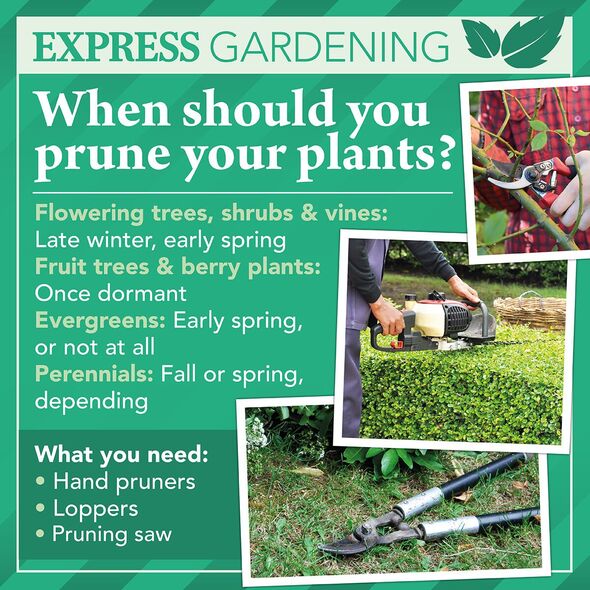
When to prune your plants (Image: EXPRESS)
Julie Prescott shared: “I never prune mine and get glorious blooms every year. I just deadhead in spring, then just leave them alone. Try it and see what happens.”
Wendy Hocking advised: “I wouldn’t touch it this year, blooms develop on last year’s stems, so any cutting back from now will be removing the flower buds.
“One of my bushes gets too large, and I find it difficult to keep its size down without removing flower buds. I often get it wrong. Someone else said to keep it under control, cut back one-third of the stems each year, forfeiting the flowers on them, but trimming the size of the plant.”
Luis Lluch stated, “It resembles a big leaf hydrangea (hydrangea macrophylla). These buds are located at the ends of the stems, so this species of hydrangea is best sited where it can attain its estimated size at maturity and then rarely pruned.
“But do feel free to prune stems that remain leafless by the end of the astronomical spring. Deadheading of spent blooms – not the same as pruning – can be done safely without impacting blooming or winter protection, but is more conveniently done at the end of winter, or never deadhead and they will drop on their own.
“To deadhead, cut above the first pair of leaves. If the stem is leafless like yours is, cut the string that attaches each bloom to the stem. I suspect many of those stems may be leafless by the end of spring and could be pruned then.
“To control the size, you can prune after it stops opening blooms in spring/early summer. At that time, you have a few weeks, maybe a month, before the production of flower buds starts again, or you can use rejuvenation pruning.”
Comments are closed.