
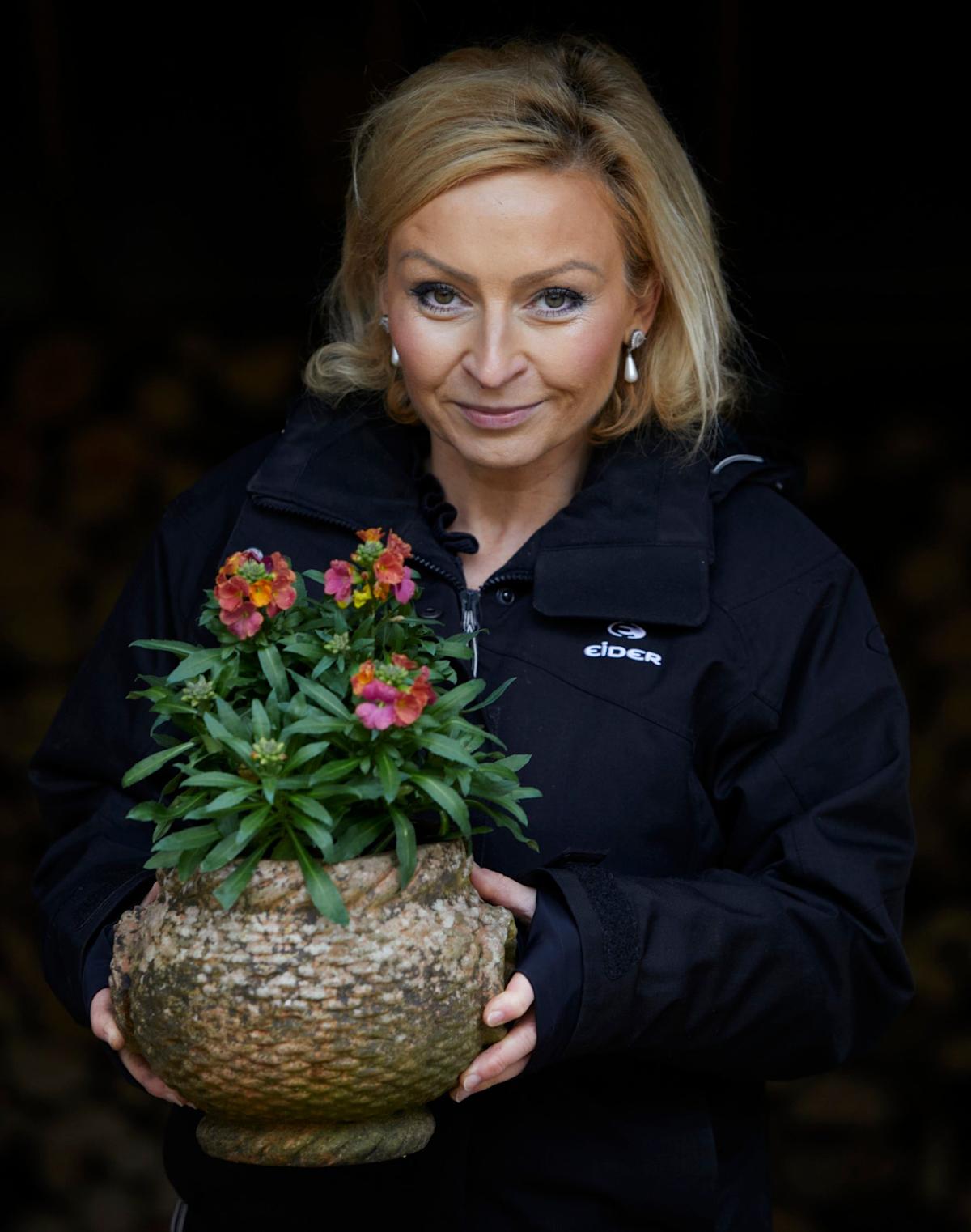
Anya Lautenbach champions gardening for less. With a wide audience on social media (1.5 million followers on Instagram alone), she advocates for mental health and connection through growing. Her latest book is filled with brilliant ideas for containers – an accessible way for anyone to access the joy of growing, regardless of budget or space – from beautiful design combinations through the year to clever tips and tricks for propagation.
Anya grew up in Poland, where it was very much a case of growing to survive. “If you didn’t grow, you simply didn’t eat,” she says. Yet she was always surrounded by flowers and scent. As she writes in her new book, The Money-Saving Gardener Containers: “I have happy floral memories of sitting on our balcony on summer afternoons with my mum and granny, eating homemade cake and talking about the plants growing around us in various containers.
“The climbing beans we grew in pots not only gave us fresh, healthy food, but also acted as a screen on the balcony, which in summer felt like a beautiful jungle. In the winter, we celebrated our potted amaryllis blooms – they were truly our pots of joy in the darkest days of the year.
“From a very early age I was taught to find joy in the simple things, and potted plants always played a big role, bringing me closer to the natural world and allowing me to live a happier, more purposeful and fulfilled life.”
The joy of gardening, whatever the size of your plot
When Anya moved to the UK, plants and propagation helped to ease her displacement and loneliness, but it wasn’t until she first saw her mother-in-law’s beautiful Yorkshire garden that she took it beyond the windowsill. She was blown away by its beauty, and so began a love affair with British gardens that has been the guiding force of her life.
She hopes her gardening work and books will open doors to people who might not otherwise have the means or opportunity to garden, particularly during the cost-of-living crisis. Anya knows what it is to face financial hardship, and believes that her mother’s passion for growing made her childhood a happier one.
She also believes that just 10 minutes of gardening a day can completely shift your mood and focus, and the joy of gardening with pots is that you can garden anywhere. “One little success will lead to the next, as it is in the rest of your life,” she says.
What’s in a container?
Anya loves how creative you can be with containers. “There is so much room to play, and you can do things no-one has before,” she says. “It is like having a group of friends on the doorstep.” She often lifts her pots to give them more presence, and moves them around as the seasons change. “They are so inclusive. You can even have them on a tabletop, so if you are in a wheelchair, you can still see the plants.”
She hopes that her book will open doors to those who don’t necessarily have access to a garden. You can grow things anywhere – “pots are like little gardens” – and they will lift your mood whatever the time of year, whether in a garden, on a balcony or even on a windowsill.
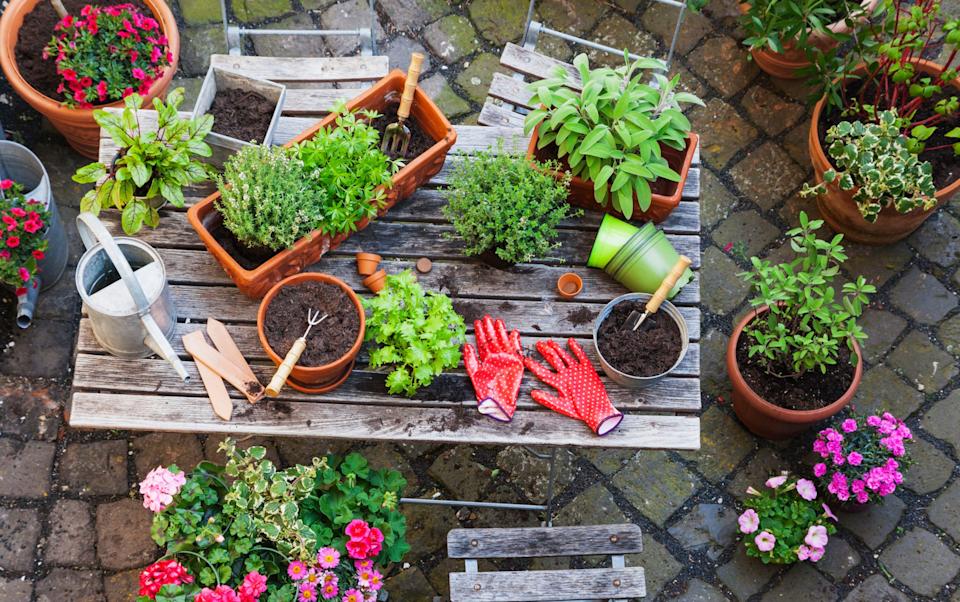
Pots can be used everywhere from in a garden to on a windowsill – Westend61
Anya’s top tips for gardening in pots on a budgetUse what is available
Before buying anything, look around to see what could be used – whether you’re repurposing containers, making your own plant feed, or dividing existing plants to fill your pots for free.
Anya doesn’t waste a thing. Offcuts from pruning shrubs might become next year’s props for sweet peas, be used to create a beautiful winter arrangement in pots, or protect tender plants and bulbs from squirrels.
Think outside the box
You can create the most amazing pots in a sustainable way by following the simple rules of repurpose, reuse and recycle.
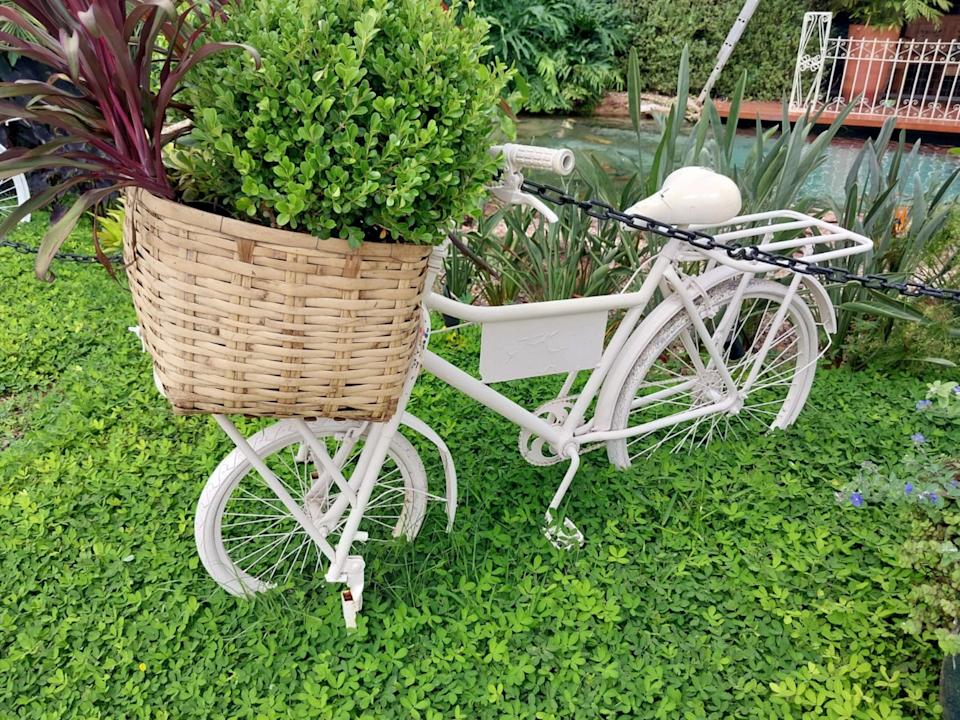
Even the most unlikely containers can be used as pots – iStockphoto
Anya’s garden is filled with unlikely containers – an old trunk has been transformed into a cut flower garden. for example, which is perfect if you’re short on space. Colanders and cake tins become hanging baskets and bulb planters, as do old buckets, and pots and pans from the kitchen. Experimentation and play are the only rules.
She also scours charity shops, reclamation yards and local recycling websites for larger pots and galvanised containers.
Recycle compost
It’s fine to reuse compost, as long as it has only been used for a year or so, and the plant it homed was free from disease. Anya will simply add a little fertiliser to top up the nutrient content and use it again. “Recycled compost is perfect for sowing seeds or propagation, when fewer nutrients are needed,” she says.
Make plants for free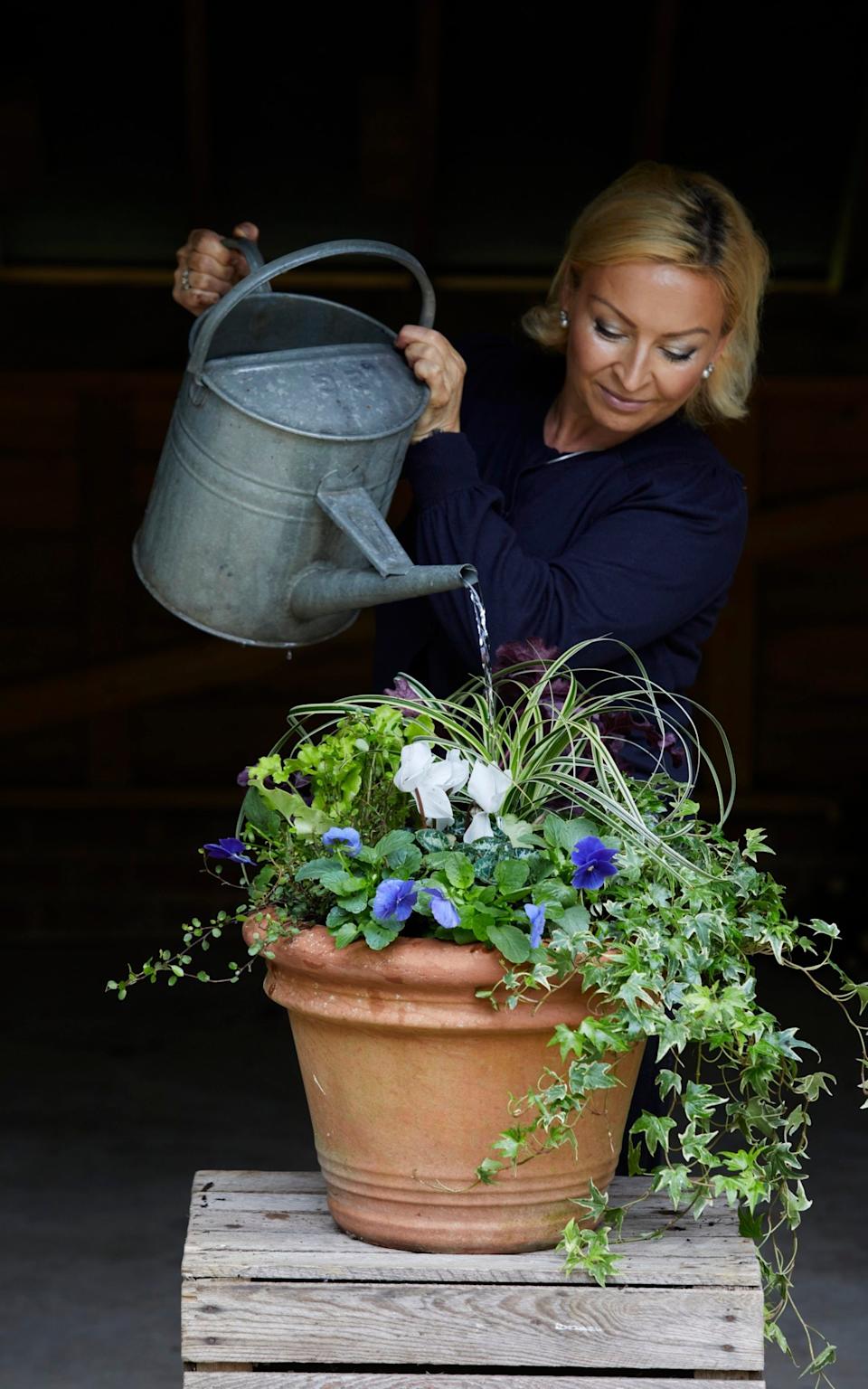
Avoid containers sitting in water during the winter months – Britt Willoughby/Dorling Kindersley
You don’t always have to buy plants – it is simple and satisfying to propagate your own, or to collect seed and seedlings from existing plants. Anya’s book demystifies the process with clear instructions for taking cuttings, whether softwood or hardwood, leaf or basal, and a handy calendar for what to propagate when.
Her favourite propagation method is to root cuttings in water: take a few stems of new growth, trimmed just below a bud or node (a bump on the stem from which a shoot will grow), pop them into a glass of water and wait for roots to form. Anya uses this method for hardy perennials and fruit bushes, which will form roots within a few weeks. Once each stem has a set of roots, pot it up in cuttings compost.
If you do want to buy something new for your pots, however, you can often find bargains in the discount section of the garden centre or supermarket – then split them up to make more plants.
Sow seeds and plant tubers
Seeds cost a fraction of the price of more mature plants. Hardy annuals and perennials can be sown from early spring, either indoors or outside in a sheltered spot. If they are outside, make sure to cover your pots with netting to protect the seeds from birds and animals. Fast-germinating seeds that are easy to grow include cosmos, nasturtiums, sunflowers and zinnias, which germinate within two weeks.
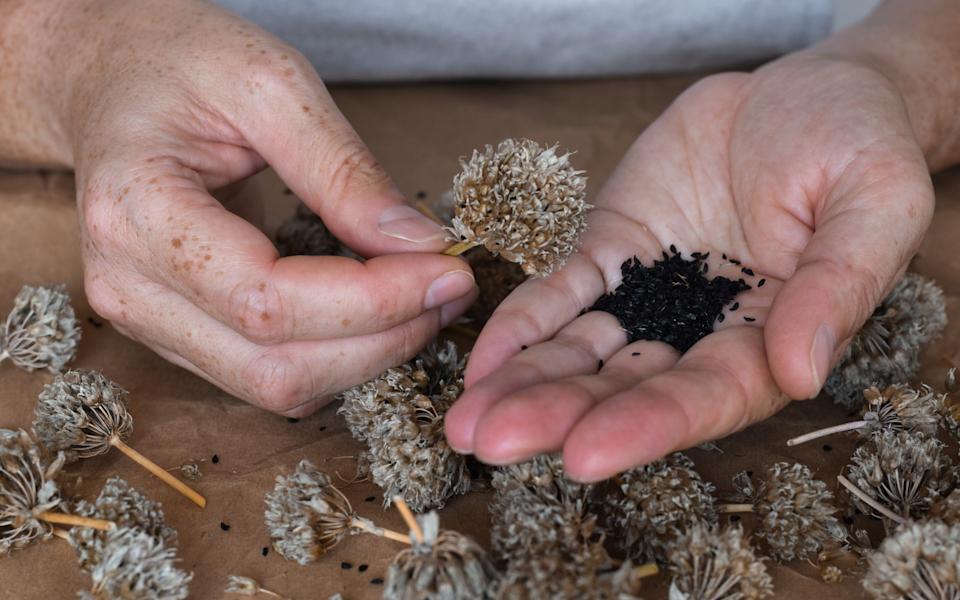
Seeds cost a fraction of the price of more mature plants – iStockphoto
Likewise, buying dahlias, lilies and begonias as plants is expensive, but their tubers, corms and bulbs are much more affordable, and can be planted in mid spring. You can take softwood cuttings from the shoots that form from your dahlia tubers, increasing the number of your plants. Once the shoots reach about 7.5cm and have three sets of leaves, use a sharp knife to remove some of them at the base, remove the bottom sets of leaves, pot up in a 4:1 mix of potting compost and grit, and place indoors in a bright area.
Maintenance tips
Always think one step ahead, both in terms of planting and propagating, as well as maintenance.
Extremes of weather are particularly relevant for containers. In summer, keep on top of the feeding and watering, and if you’re going away, group pots in the shade in shallow trays of water. Anya also snips off flowerheads before she goes on holiday so there is a new crop of blooms when she returns.
In winter, it is important to avoid containers sitting in water. Pot feet can be expensive though, so Anya makes her own from premixed concrete and silicone cupcake moulds, or you can cut wine corks in half to lift pots off the ground.
The Money-Saving Gardener Containers: How to Create a Year-Round Container Garden for Less by Anya Lautenbach is published by DK on 29th January
Try full access to The Telegraph free today. Unlock their award-winning website and essential news app, plus useful tools and expert guides for your money, health and holidays.
Comments are closed.