
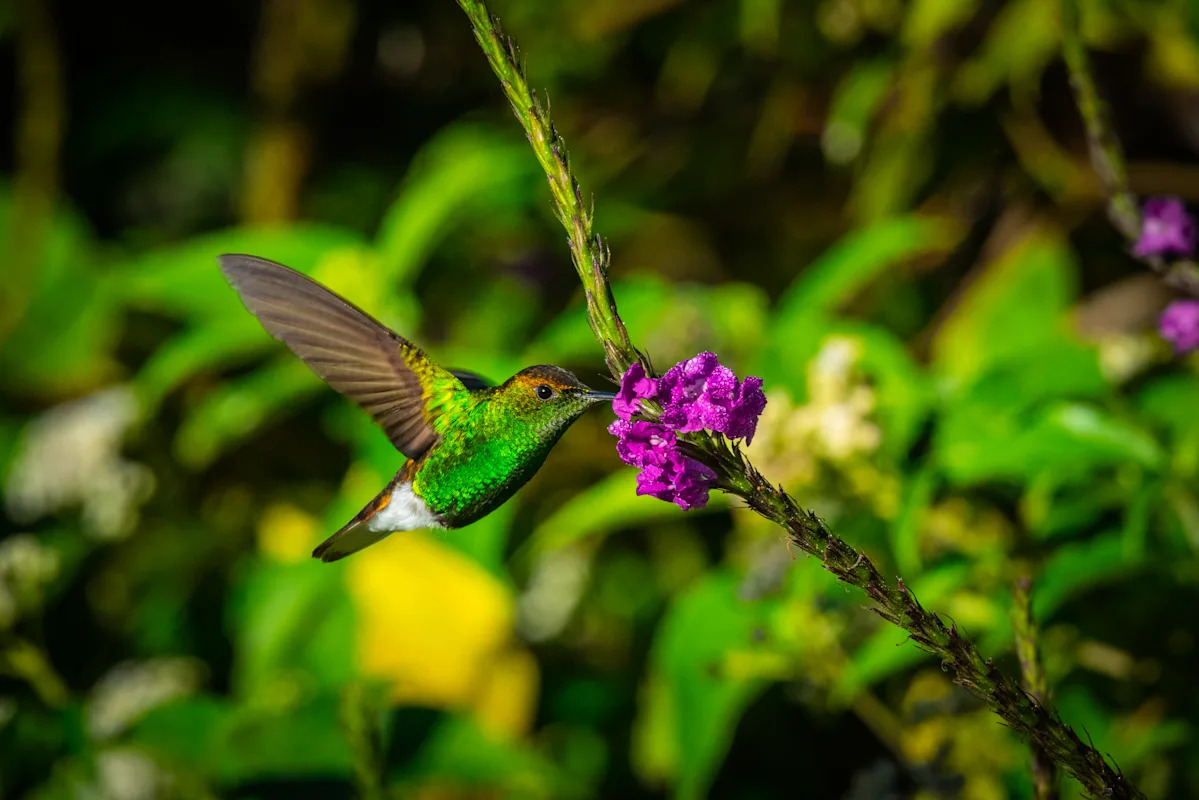
Hummingbirds are always a welcome sight in the garden. Their quick movements and bright colors make the space feel more alive. If you’d like to see more of them around, planting purple flowers can help.
Many purple blooms are rich in nectar and naturally attract hummingbirds. They also add lovely color and contrast to garden beds, whether you plant soft shades or deeper tones. Most are easy to grow, low-maintenance, and good for other pollinators, too.
If you’re looking for plants that hummingbirds will visit often, these purple flowers are a great place to start.
Bee Balm (Monarda didyma)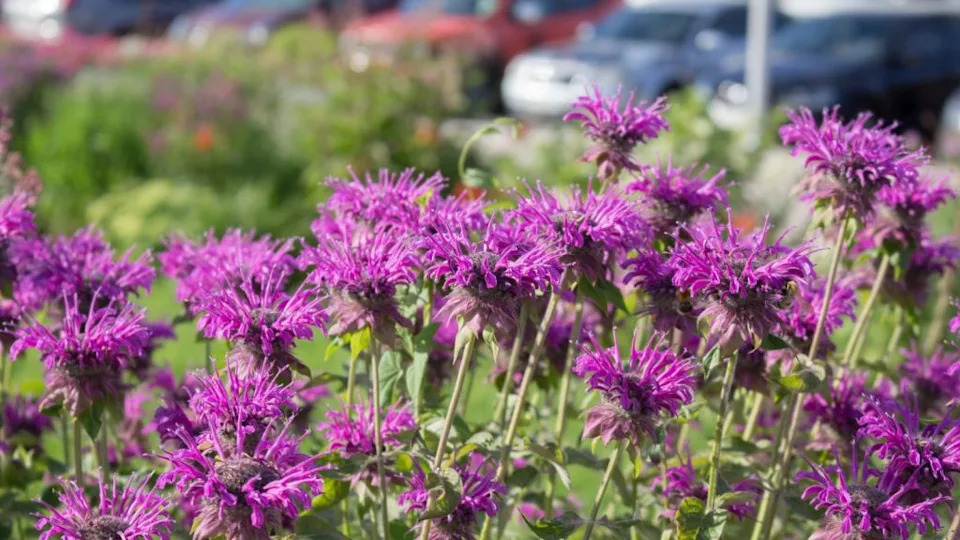
Image Credit: Deposit Photos
True to its name, Bee Balm is a magnet for bees as well as butterflies and hummingbirds. They are also excellent for crowding out weeds. Part of the mint family, it’s easy to grow and provides aromatic flowers that spread joy and color.
Verbena (Verbena bonariensis)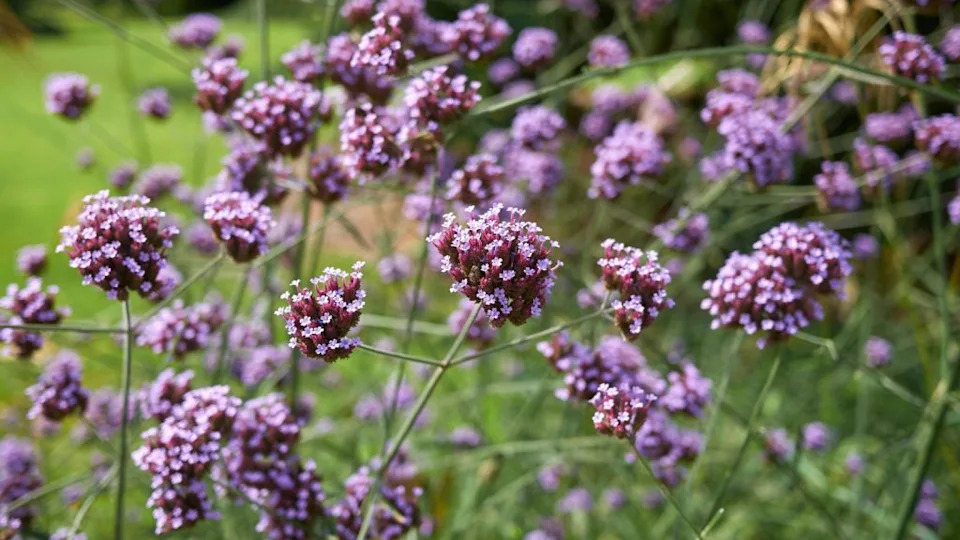
Image Credit: Deposit Photos
Verbena is a tall, airy plant that can be grown as an annual, perennial, or subshrub. It thrives in rocky, well-drained soils. It prefers full sun and is hardy in USDA zones 7 to 10 (as a perennial) and zones 1 to 6 (as an annual). Verbena’s clusters of purple flowers attract hummingbirds and butterflies, adding vertical interest to gardens.
Salvia (Salvia spp.)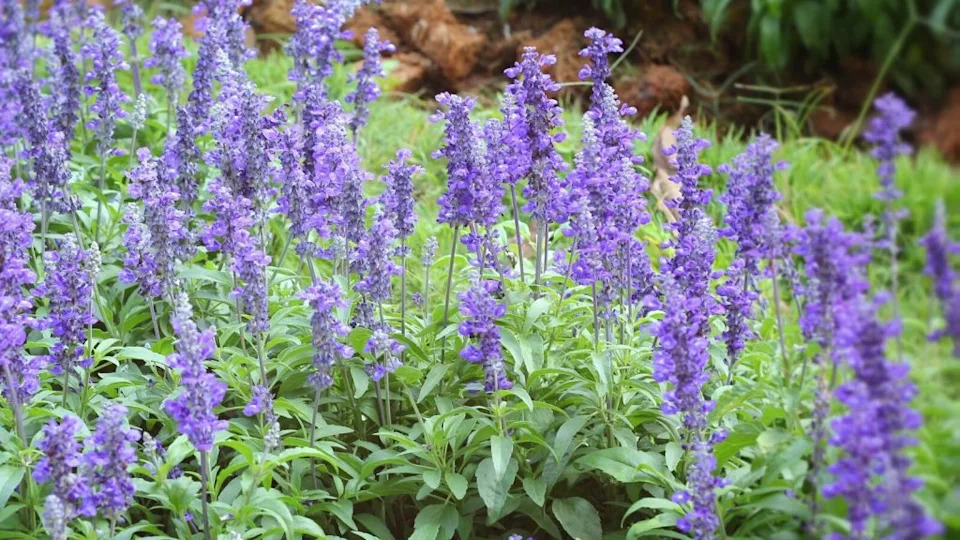
Image Credit: Deposit Photos
Salvia plants are recognized for their spikes of purple flowers and are drought-tolerant, thriving in full sun. Salvia will attract beautiful hummingbirds to your garden. While some salvia varieties are perennials that return year after year in most zones, others may also be grown as annuals or biennials.
Anise Hyssop (Agastache foeniculum)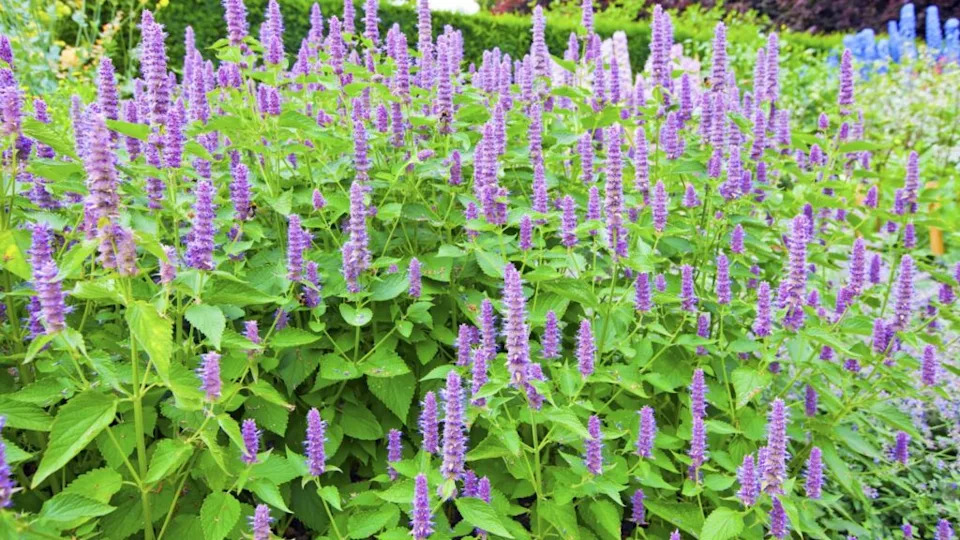
Image Credit: Deposit Photos
This pollinator magnet features spikes of fragrant purple, pink, or orange flowers. Hummingbirds love.
.Thriving in full sun, they are both deer-resistant and drought-tolerant. Zones 4-9.
Bellflower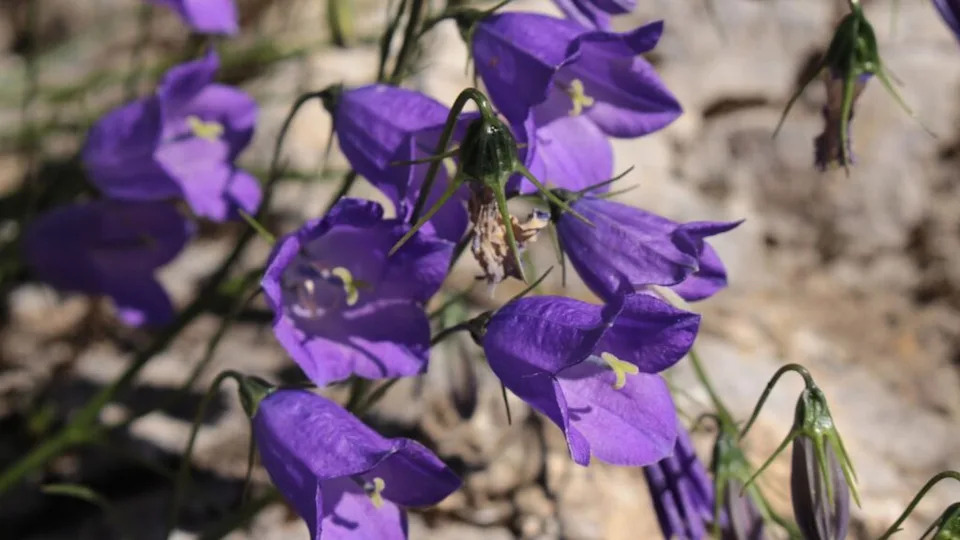
Image Credit: Deposit Photos
Bellflowers boast beautiful bell-shaped flowers in shades of blue, purple, and white. They’re perfect for adding a splash of color to sunny borders and attracting hummingbirds and other pollinators with their nectar-rich blooms.
Iris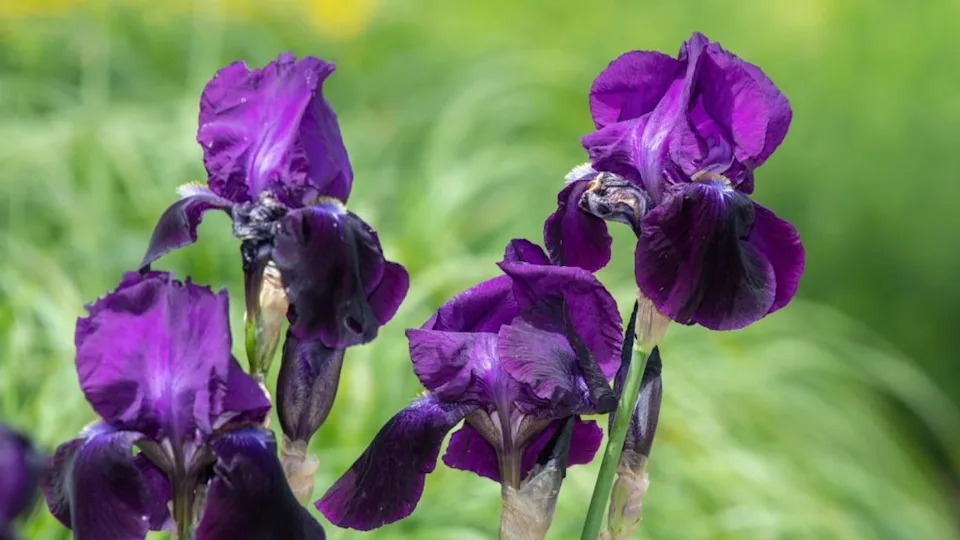
Image Credit: Deposit Photos
Irises are known for their beauty and relatively short lifespan. Varieties include bearded irises with distinctive “beards,” Siberian irises known for their elegant blooms, and Japanese irises prized for their intricate patterns. Irises thrive in USDA hardiness zones 3-9.
While they prefer full sun, they can tolerate partial shade. Planting irises in late summer to early fall ensures a stunning display of blooms in spring and early summer.
Catmint (Nepeta spp.)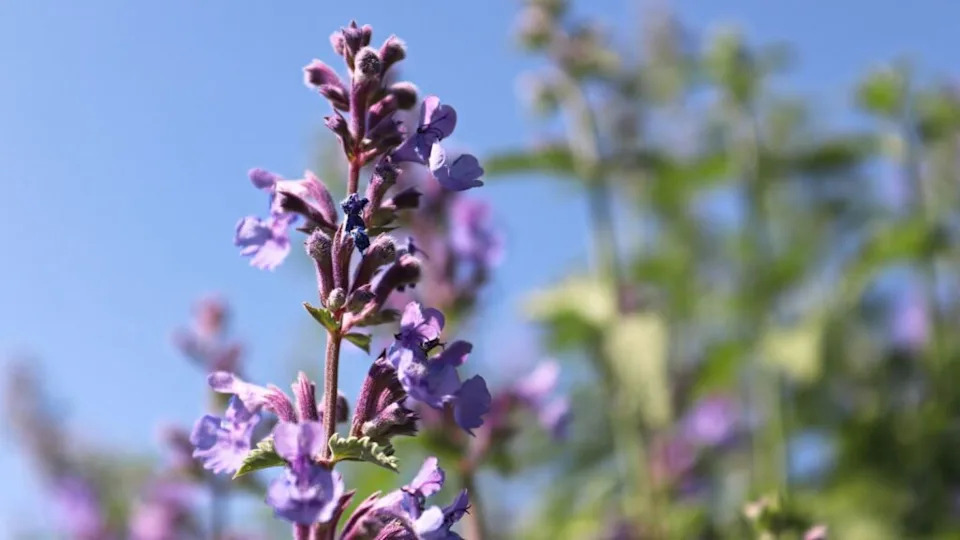
Image Credit: Deposit Photos
Catmint produces
-blue flowers throughout the summer. It’s easy to grow, drought-tolerant, and thrives in full sun to partial shade. This sun-loving plant is not fussy about soil conditions and rises to a height of 18-24 inches.
Lavender (Lavandula spp.)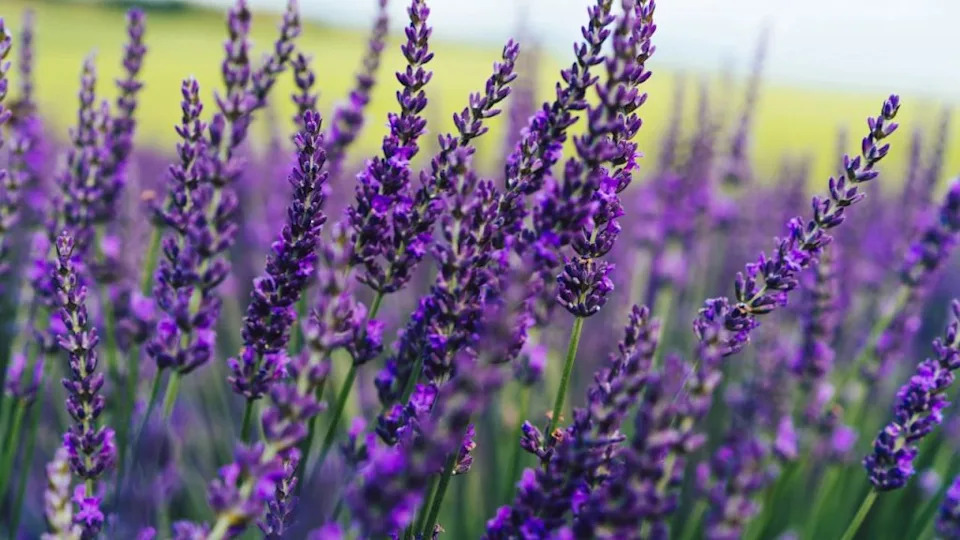
Image Credit: Deposit Photos
Known for its striking purple hue and soothing scent,
is a magnet for hummingbirds and butterflies. It is also an excellent choice for those seeking low-maintenance beauty. It has the most amazing scent and makes a garden smell wonderful. Thriving in sunlight and requiring minimal water, it’s perfect for easy-care gardens.
Pansies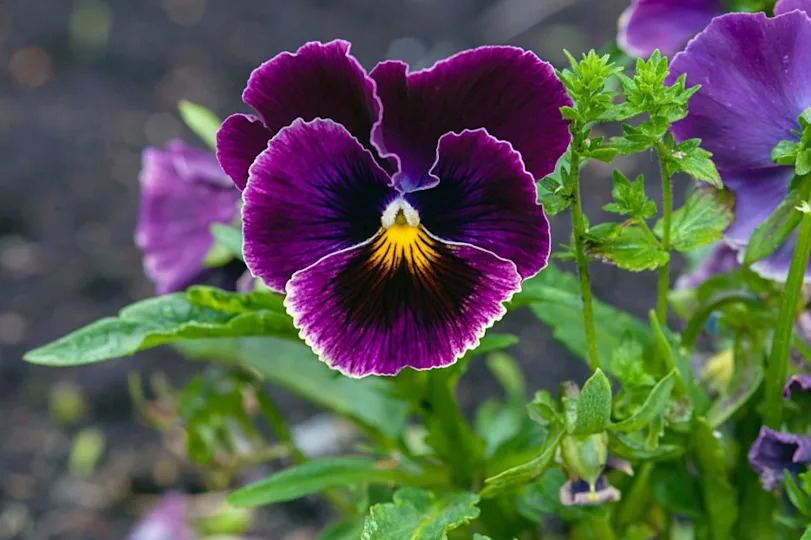
Image Credit: Deposit Photos
These fast-growing, vibrant flowers thrive well in containers or garden beds and are a favorite of hummingbirds. With bright and bi-colored edible flowers, pansies are popular in both fresh salads and desserts. They flourish in full morning sunlight and well-drained, fertile soil.
Clematis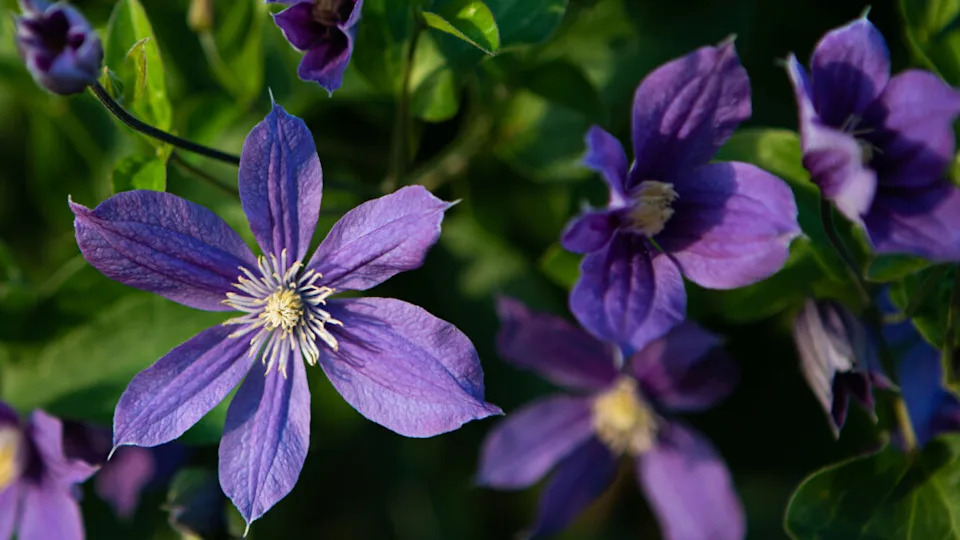
Image Credit: Deposit Photos
Clematis has striking, vivid purple flowers. This perennial prefers full sunlight and requires moderate watering. Some varieties are known to attract hummingbirds.
Petunia (Petunia × hybrida)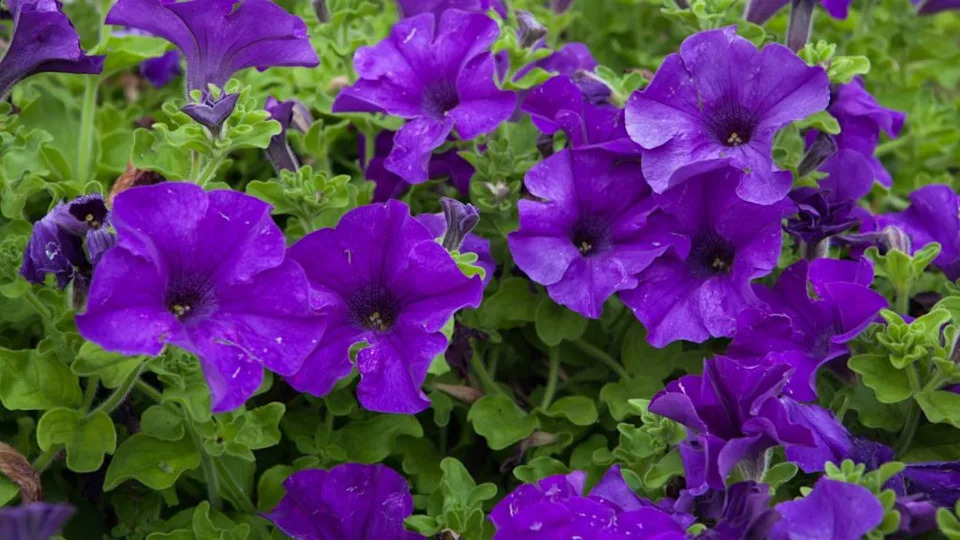
Image Credit: Deposit Photos
Petunias are prolific bloomers, offering a range of trumpet-shaped flowers in various colors, including purple, pink, white, and red. Their stunning display makes petunias a garden favorite. They are excellent for containers, hanging baskets, and rock gardens, blooming continuously with regular deadheading. Plant in well-drained soil in a sunny spot for a summer full of vibrant colors and lush growth.
Blazing Star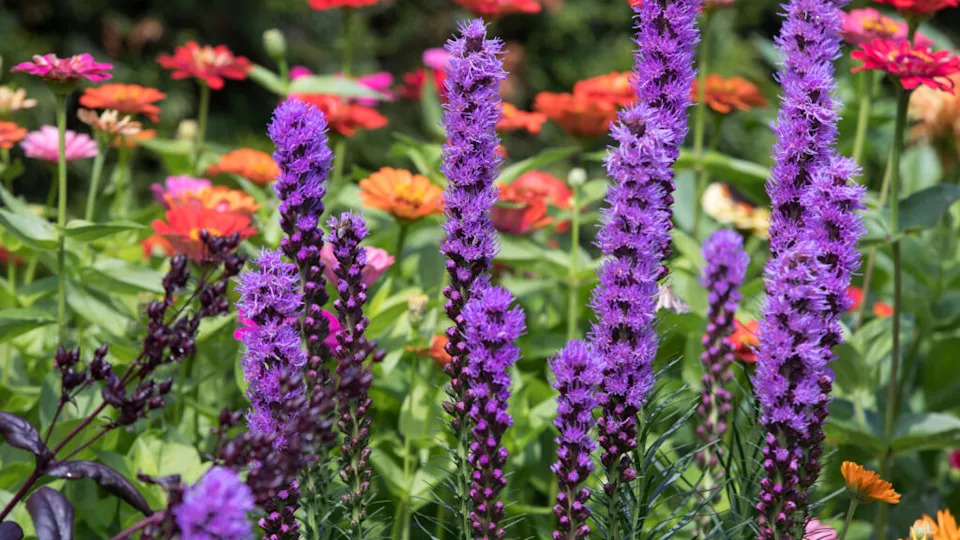
Image Credit: Deposit Photos
Liatris, commonly called blazing star or gayfeather, is a native North American perennial known for its tall, spiky blooms. Unlike many flowers that open from the bottom up, Liatris produces dense clusters of purple or pinkish-purple florets that bloom from top to bottom, creating a striking vertical display in summer and early fall.
Beyond its bold appearance, Liatris is a magnet for pollinators, drawing in hummingbirds, butterflies, and bees while adding height and texture to garden beds. It thrives in USDA hardiness zones 3-9, preferring full sun and well-drained soil, making it a resilient and low-maintenance choice for gardeners looking to add both beauty and ecological benefits to their landscape.
Agastache
Image Credit: Deposit Photos
Agastache is a favorite among bees, hummingbirds, and butterflies. It features tall spikes of fragrant purple, pink, and orange flowers. Agastache requires full sun and well-drained soil. This plant is relatively pest-free and will bloom throughout the summer. Zones 4-10
Columbine (Aquilegia Canadensis)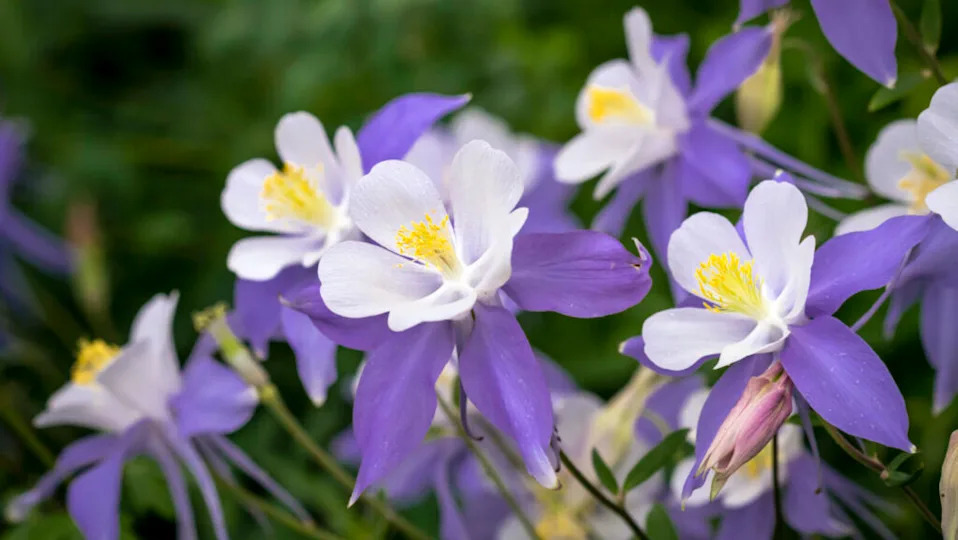
Image Credit: Deposit Photos
Columbine is a perennial plant with bright flowers that contrast against dark, clover-shaped leaves. Available in various colors, including two-tone options, its unique bell-shaped flowers with five spurs are sure to catch the eye. Ideal for slopes, ledges, or open garden spaces, Columbine adds beauty, attracts wildlife, and deters deer.
Comments are closed.