
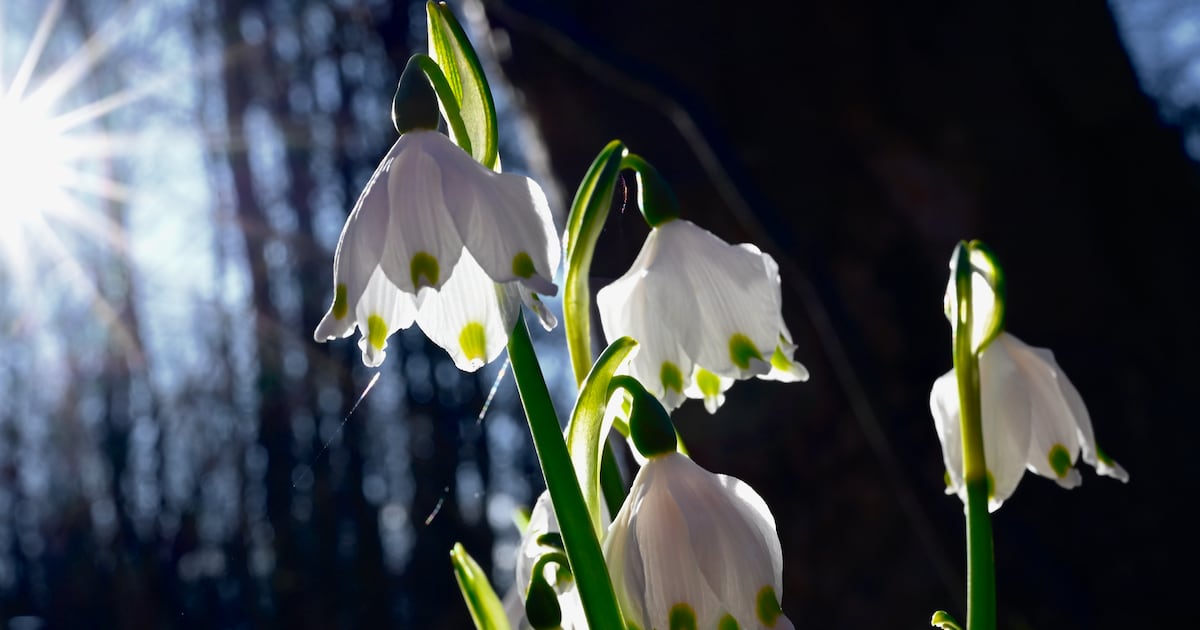
Coined by the 19th-century Belgian botanist Charles Morren to describe the study of nature’s seasonal cycle of birth, growth, reproduction, death and decay, the term “phenology” might sound like a big, unwieldy mouthful. But in fact, as gardeners, we’re all phenologists to some degree. Close observers of the seasons, we’ve learnt to watch for the myriad of small, reassuringly familiar cues that change is subtly afoot.
At this time of year, it might be the emergence of the first snowdrop, hellebores unfurling, or the icy-sweet scent of a daphne in full bloom. Come spring, it could be the heavy hum of a queen bumblebee foraging noisily for food after emerging from winter hibernation. Or the first sighting of a blackthorn in full smoky-white blossom, traditionally a reliable sign that winter is losing its grip. Or the first sustained flush of soft new growth on a lawn, an indicator that soil temperatures are on the rise.
Likewise, we can see the intricate workings of nature’s clock in the arrival and departure of many migrant animal and insect species. I’ll always, for example, associate winter with the hoarse cry of whooper swans flying in formation overhead, and summer with the giddy dance of swallows. The call of the cuckoo means, of course, late spring, while red admiral butterflies basking in the sun before departing for warmer shores speaks of early autumn.
It’s long been understood that the timing of these kinds of different seasonal events gently fluctuates from year to year as part of the larger, complex patterns of nature, a result of the combined effect of a horde of different, everchanging factors. Those include day-length as well as the intensity of any sunlight. Both day and night minimum and maximum temperatures play an important role. So do average monthly temperatures, and rainfall amounts.
Likewise, the cycle of the moon also helps govern key events in the deeply intertwined life cycles of plants and animals, from reproduction, growth and development to migration. Now, however, we have the giant spanner in the works – the great disrupter – that is climate change, as a result of which everything feels different.
[ ‘Too small to matter’ is the laziest-possible excuse in climate debateOpens in new window ]
It’s not just the delicately balanced cycle of the seasons that’s being disrupted, but also our understanding of that cycle. As gardeners, we rely on that knowledge – a foundational one, learned almost by osmosis – to inform and guide us in countless ways, from deciding when to sow the first seeds of the season to when to prune, plant, mulch, mow, feed, harvest, divide plants and take cuttings.
Until recently, for example, the first sighting of blackthorn blossom in Ireland typically occurred in March-April. For countless generations, the gentle fading of that same blossom also traditionally signalled to gardeners and farmers that it was time to start preparing the land for seed sowing.
Not any more. Instead, in recent years, this thorny, resilient native plant (Prunus spinosa) has been recorded in bloom in early February, a time of year when killing frosts are still very much a real threat in Ireland, meaning it can no longer be regarded as a reliable guide.
That earlier-than-normal flowering period (more than 40 days earlier than was once typical) has also disrupted the blackthorn’s symbiotic relationship with spring-emerging pollinating insects, including species of bumble bees, solitary bees and hoverflies that depend upon its blossom for food, resulting in what scientists describe as a “phenological mismatch”.
Climate-change-induced mismatches such as this are increasingly evident in our gardens, as well as in our parks and wild places. That earlier onset of fresh grassy growth, for example, not only presents maintenance challenges for gardeners but is resulting in whooper swans leaving their overwintering sites in Ireland earlier than was once typical. Fattened up on that early abundant growth, they’re returning to their Icelandic breeding sites before weather and growing conditions there become suitable.
‘If ever there was an argument for gardeners to more closely observe, monitor, record and continue to learn from the shifting seasonal cycles of the natural world, it’s now’
Phenological mismatch is also one of the reasons why recordings of the once-common cuckoo are in decline. The timing of its migratory flight back to Ireland no longer neatly tees up with the now earlier nesting patterns of host species of native birds such as the meadow pipit, which the cuckoo depends upon to home its eggs and rear its chicks. Similarly, the earlier arrival of migratory swallows in Ireland no longer chimes perfectly with the reliable emergence of the abundance of insect life upon which they rely to feed, thrive and reproduce.
Climate change is also the reason why the red admiral butterfly has begun to overwinter in Ireland rather than to migrate to southern Europe and Africa. This might sound like a plus, until you consider the fact that its ability to breed in spring is closely tied to ready availability of the leaves of its larvae’s host plant, the common nettle, a native herbaceous perennial that typically dies back down to ground level in winter before re-emerging in late spring/early summer.
Changing patterns in the life cycles of insects caused by climate change have also impacted on our ability to garden well. Examples include the earlier emergence in spring of destructive garden pests such as box caterpillar, and the “phenological mismatch” between the emergence of aphid populations versus ladybirds, their natural predators.
[ We need a new type of green politics to rebuild a strong climate movementOpens in new window ]
Unsurprisingly, our dwindling confidence in the reliability of what were once familiar seasonal cues has likewise made it harder to garden. Both very wet autumns and dry, warm springs have shortened the viability of the bare root season, for example, and made it more difficult to successfully establish young transplants, while the damage caused to early, soft growth by harsh, late spring frosts is correspondingly greater. Wetter summers have also caused problems with growth levels, pests and diseases, as have fierce summer droughts and heatwaves, while milder winters have similarly increased pest and disease pressures and caused problems with the production of blossom and fruit.
Trying to navigate our way through this strange new world of ours is indisputably challenging. But if ever there was an argument for gardeners to more closely observe, monitor, record and continue to learn from the shifting seasonal cycles of the natural world, it’s now. And if you’d like to generously share those observations with the world via Ireland’s National Biodiversity Data Centre’s Citizen Science Portal (records.biodiversityireland.ie), then all the better.
Dates for Your diary
Snowdrop Gala 2026 Ballykealey House, Co Carlow, Saturday, January 24th. With guest speakers including John Massey of Ashwood Nurseries, Callum Hallstead of Cambo Garden, and Dave Hardy of Esker Farm Daffodils, plus specialist plant sales on the day. Tickets €145, see altamontplants.com.
This week in the garden
So long as the soil isn’t frozen or waterlogged, this is a good time of year to get bare root plants in the ground. Along with most Irish garden centres, recommended online suppliers include futureforests.ie, mrmiddleton.com, irishseedsavers.ie and quickcrop.ie
Love the thought of growing your own chillies? Then now is the time to sow seed in a warm, bright, sheltered spot under cover and with good bottom heat to guarantee good germination rates (25C-30C). Recommended Irish suppliers include brownenvelopeseeds.com
Comments are closed.