
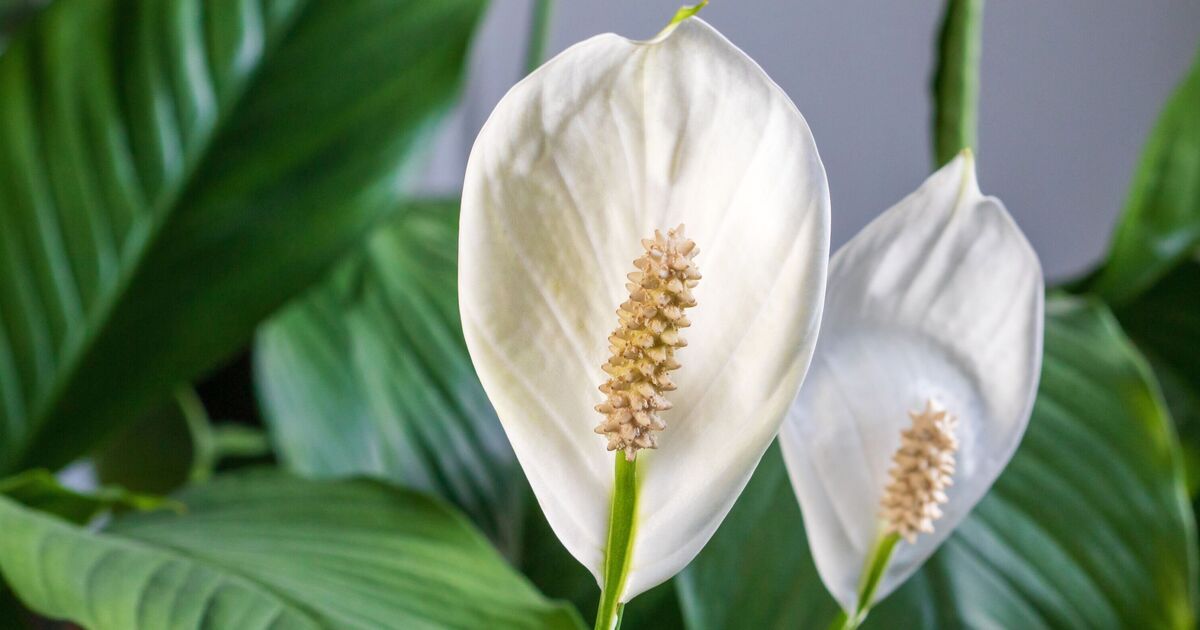
Peace lilies are stunning indoor plants recognised for their vibrant green foliage and graceful white flowers. Caring for a peace lily is generally simple, but it does have its quirks. It’s not unusual to see flowers fading too soon, leaves changing colour, or even a shortage of blooms – all of which can result from common mistakes and care errors with peace lilies.
Taking to the Peace Lily Family Facebook page, gardening lover Hannh Saunders shared a photo of her peace lily boasting eight glorious white blooms. In her post, she explained that her peace lily exploded with blooms after making one simple change to how she watered the houseplant. Instead of using tap water, the gardening enthusiast switched to using filtered water, which helped with flowering and the overall health of the indoor plant.
Hannah wrote: “I can see eight flowers total on my peace lily. She gets filtered water when needed, no more tap water. She didn’t have many flowers on her before, and her leaves were always droopy and brown.”
If you’ve seen the leaves on your peace lily turning brown, tap water can be particularly problematic.
Peace lilies can react negatively to fluoride or chlorine found in tap water. If you see brown tips on the leaves, consider using distilled water for watering instead.
Experts at Greeny Gardener claimed: “Peace lilies can be a bit sensitive to the chemicals found in standard tap water, particularly chlorine and fluoride.
“Over time, these can build up in the soil and cause brown, crispy leaf tips. They can also lead to a lack of blooms.”
Tap water isn’t inherently harmful to houseplants, but it’s not the ideal choice either, because of the chemicals present from the treatment process.
Instead, the experts claimed that the “best options” are either to use filtered water, rainwater, or dechlorinated tap water.
Filtered or distilled water is “the gold standard”, as it’s free of harsh minerals and chemicals. Rainwater is free, natural and “full of nutrients your plant will love”.
If you must use tap water, the pros recommeded leting the water sit out in an open container for at least 24 hours. This allows much of the chlorine to evaporate.
Comments are closed.