
CLARKSVILLE – Though we are currently in the middle of winter, people are already looking forward to spring. It won’t be too much longer when all the trees, flowers, and grass will come alive once again.
In all 92 counties of Indiana, the Purdue University Extension offers free classes to improve the lives and the livelihoods of Indiana residents. The courses focus on agriculture and health and human sciences.
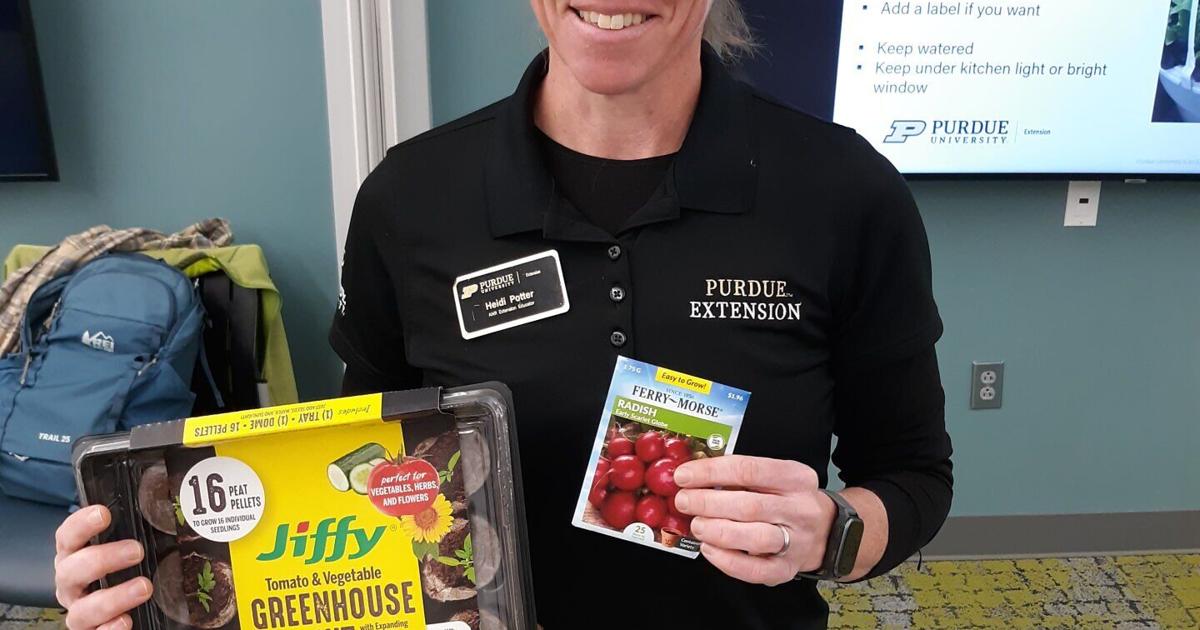
Plant enthusiasts gathered together at the Clarksville Library on Saturday afternoon to learn about backyard and in-home gardening. Purdue Extension staff member Heidi Potter presented a comprehensive course about the planting of seeds and the cultivation process.
“We’re trying to reach out to members of the community and get people interested in home gardening,” library employee Richard Deverell said shortly before the class began. “Growing and taking care of plants in a way can be very therapeutic, and it can even help improve your health.”
Once everyone settled in, Potter talked about different types of gardening, including potted plants, hanging baskets, cover crops, and raised flowerbeds.
The speaker then briefly talked about the season we are in and how outdoor plants are far less likely to survive during this time of year. “During times of less sunlight, planted seeds are not likely to grow and germinate successfully,” Potter said. “Choosing a great time and location to plant seeds is very important for the crop.”
Soil Health Principles include four key components and are another important aspect of gardening. Those four components include subcategories, such as: crop rotation, pollinator plantings, mulching, and organic fertilizers.
“The Clark County Soil & Water Conservation District can help you process your soil sample,” the speaker said. “The soil test will tell you what kind of nutrients the sample has, as well as the pH balance.” pH is an important factor for determining the health and the overall success of a future crop.
In addition to audience engagement, Potter taught participants how to read the back of a seed packet, which provides important information about planting and cultivation including: days to crop maturity, sunlight requirements, and planting directions.
As enjoyable as gardening can be, it also comes with some challenges. Predatory insects are the most common. There are free apps people can use to identify different types of garden pests. Those who want additional help in that department can contact their Purdue Extension educator or visit the Clark County Purdue Extension office in Charlestown or the Floyd County office in New Albany. Other challenges Potter covered included plant diseases and nutrient problems.
Participants had the option to plant seeds in soil in peat pots, or they could take home a packet of seeds to plant when it gets closer to spring.
Potter also provided handouts containing more detailed literature about home gardening, as well as provided a list of additional resources. Those included: the Indiana Small Farms Conservation, the Natural Resources Conservation Service, the Clark County Soil and Water Conservation District, and the Sunnyside Master Gardeners Association.
The Purdue Extension is a valuable educational resource that has a lot to offer members of our community. Those who would like to learn more about Purdue Extension, please visit the following website: https://extension.purdue.edu/.
Comments are closed.