
In The Bleak Midwinter
Even with the festivities of the holiday season packed away, some floral gifts remain on display. I always receive a poinsettia from a neighbor, so I’ll treasure this one for a few more weeks. Amaryllis bulbs received as gifts are blooming, and I will enjoy these glorious lilies throughout the bleak winter days. Once amaryllis completes its blooming cycle, I plant the bulbs outdoors. I appreciate getting flowers as a gift. I also love giving flowers throughout the winter season.
Several recent plant gifts have been unfamiliar, and I have to rethink their care. For instance, my daughter gifted me a small pink cyclamen. Floral cyclamen is typically a plant seen at Valentine’s Day. One morning, I discovered that it had wilted, so I overreacted and soaked it. It revived, for one day. Now I realize that cyclamen is a fussy plant, a type of corm or tuber that needs bright indirect light and fairly low temperatures (60 degrees) to thrive. If the cyclamen makes it through the winter, I may plant it out next to a calla lily. Like us, many plants like company. They encourage each other.
I also received a fabulous Queen of the Night (Epiphyllum oxypetalum) in a hanging basket. This Mexican native is easily cultivated, fast growing and produces nocturnal flowers late spring through late summer. My daughter’s reasoning for giving me this plant is that I won’t have to go outside at midnight to see it bloom. In midwinter, a premium warm space — with just the right amount of light, temperature and humidity — is hard to come by for the winter sojourn. Luckily, I found an open spot in a south-facing window.
Outdoors, some plants are ready for spring. I keep a bird bath near my front south-facing window. On a particularly frigid morning, a thrush and a cardinal tried to drink water around the edges of frozen water. Upon going out to fill it with clean water, I found several hyacinths pushing tiny stalks through the pine straw. A Lenten rose is also spreading out a cluster of white buds. Narcissus is beginning to send out green shoots ahead of the yellow blooms that typically open in mid-February too. Daffodils, glorious golden daffodils, are coming. Daffodils are the perfect flower to share with others, providing a blessing for the giver and the recipient.
A trailing sweet pea next to the kitchen door apparently doesn’t mind the cold, as it also has numerous green vines sprouting at its base. Sweet pea (Lathyrus odoratus) was a summer gift from a friend, and this perennial promises to be an early bloomer. If you have a trellis and want to try covering it with sweet pea, here are some tips: Plant sweet peas in late winter or early spring in a sunny spot. They can tolerate a light frost but prefer a protected area that gets several hours of sunlight. Sow two to three seeds together, about 1 inch deep in compost-enriched, well-draining soil. Add lime. Give water if the soil feels dry. Use more phosphorus- or potassium-heavy fertilizer instead of nitrogen to encourage more blooms.
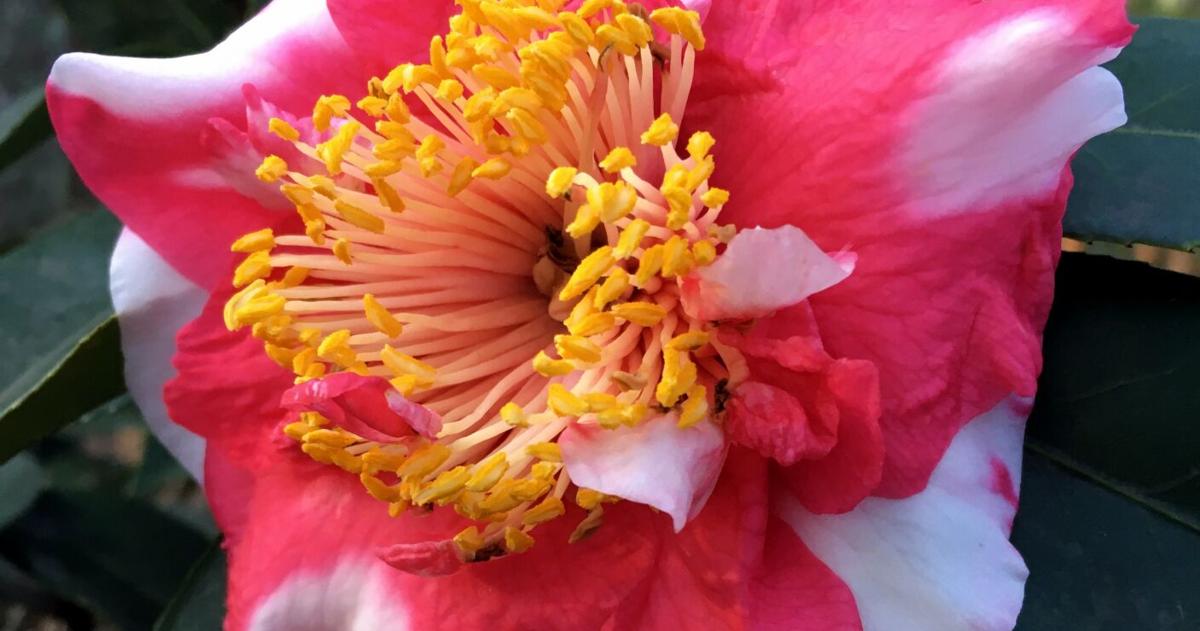
Midwinter camellias are blooming. They splash red, white and pink against the duller woodland hues of piney greens, grays and browns. Each day I pick camellia blooms to float indoors. I share camellias with friends when I get the chance. Camellias do not last long once picked, but the bushes are full of buds and between occasional freezes, they reward daily walk-arounds. The annual Aiken Camellia Show will be held on Saturday, Jan. 17 at First Presbyterian Church. It’s a lovely treat for midwinter with rows and rows and rows of gorgeous blooms.
Winter blooms in spite of the cold! In the bleak midwinter, I confess. I need flowers — and the friends with whom to share the blooms — for wellbeing.
Happy gardening!
Comments are closed.