
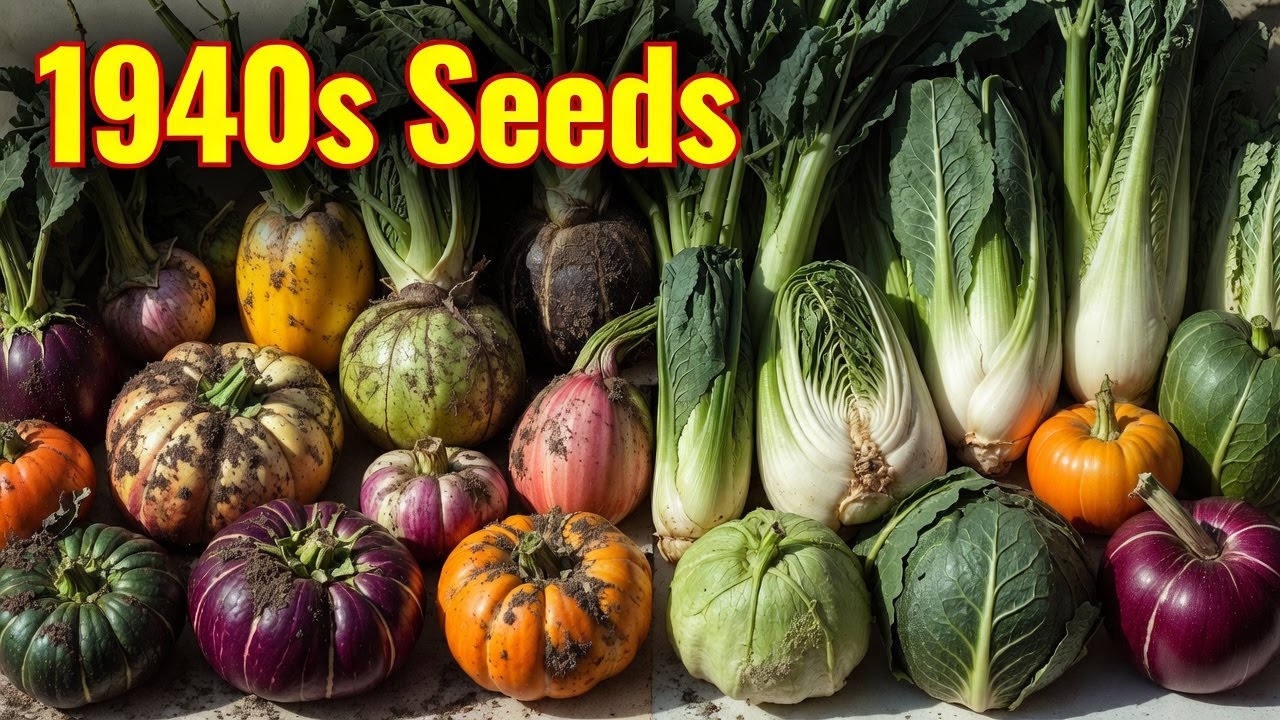
During World War II, survival was not theoretical. It was practical, urgent, and unforgiving. Governments didn’t ask civilians to grow food for morale—they did it because supply chains were breaking, imports were unreliable, and fertilizer, fuel, and labor were rationed. What made victory gardens work wasn’t clever slogans. It was the seeds.
In this video, we break down the lost WWII victory garden seed varieties that still outperform modern hybrid crops under real-world stress. These are not trendy heirlooms grown for aesthetics. These were wartime-proven, open-pollinated seeds selected for resilience, reliability, nutrition, and the ability to produce food with minimal inputs.
You’ll learn why WWII-era gardeners relied on specific beans, tomatoes, carrots, and cabbages, how these crops thrived without chemical fertilizers or pesticides, and why modern hybrids often fail when conditions are less than perfect. We explore seed independence, food security, nutrition density, and how ordinary families fed themselves during rationing and labor shortages.
This is a historically grounded, practical guide for serious history enthusiasts, survivalists, preppers, and anyone interested in how food systems function when industrial agriculture is not an option. We also cover how you can apply these same principles today by growing and saving seeds that were designed for disruption, not convenience.
If you care about World War II history, victory gardens, heirloom seeds, food resilience, self-sufficiency, or long-term preparedness, this video provides documented insight you won’t find in gardening trends or surface-level documentaries.
Topics covered include WWII victory gardens, wartime agriculture, heirloom seeds vs hybrids, open-pollinated seeds, food security history, survival gardening, seed saving, rationing era farming, and resilient crop selection.
Subscribe to the channel for historically accurate survival knowledge, share this video with fellow researchers and preparedness-minded viewers, and keep these hard-earned lessons alive.
Comments are closed.