
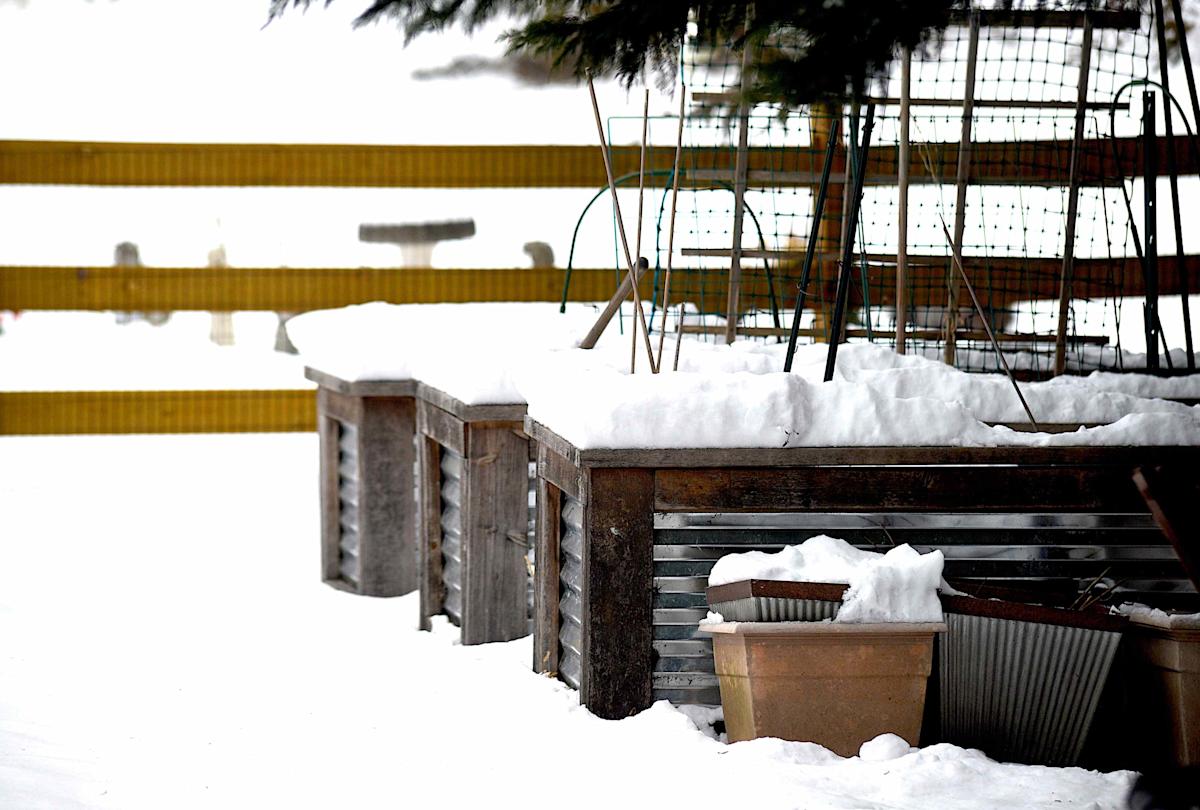
For most of the country, winter means at least a few inches of snow (and sometimes many more if you live in a northern state). But all of that white powder doesn’t have to go to waste at the edges of your driveway—there are actually a few ways you can use snow to benefit your garden this winter. While it doesn’t take the chore of shoveling off your list, it can help protect your plants this winter, leading to an even more lush and beautiful garden when spring arrives.
1. Use Snow to Insulate Plants
Frigid winter weather can sometimes be too much for delicate plants, even if they’re meant to thrive in your region. Luckily, fallen snow can act as natural insulation and actually provide some shelter from freezing temperatures.
“A layer of snow that’s anywhere from at least 2 inches deep can be great for insulating the soil and protecting any overwintering plants you have from the cold and harsh winds,” says Angelika Zaber, lawn care specialist and garden expert for Online Turf. “Simply leave it alone and over time, it will melt by itself.”
Lots of snow isn’t necessarily better, though. “When it’s heavy, it can break branches or flatten more delicate stems, so I gently brush it off shrubs and young trees after a storm,” says Tammy Sons, founder and CEO of TN Nursery. Keep an eye on how much snow you receive, and if it starts to really pile up, or becomes wet and heavy, you might need to uncover some of the more delicate plants in your garden.
2. Protect Buried Bulbs
Similar to insulating perennials, a layer of snow can also protect the bulbs in your garden, leading to beautiful blooms in spring. “Fallen snow can also be a gardener’s friend in winter,” Sons says. “When it has blanketed my beds, I use it as an insulator protecting perennials and bulbs from rapid temperature fluctuations that can heave roots or crack pots.”
While cold can damage plants, weather that’s too warm too soon can also have a negative effect on bulbs by tricking them into sprouting early. Insulation from leftover snow can help prevent early growth if you experience a few warm days in the middle of the season.
If you’re growing bulbs in containers, though, a layer of snow might not be enough protection. “For bulbs planted in pots, I bring them near the house or into an unheated shed or garage where they will still be cold but won’t be subjected to repeated freeze-thaw cycles,” Sons says.
3. Track Wildlife
If one of your favorite winter activities is watching the wildlife that visits your garden, a layer of snow can help. Watching out for critters’ footprints can help you track what animals are visiting your garden, and maybe make birdwatching easier, or even help you spot a deer.
“Regularly inspecting a fresh layer of snow is a great way to track any wildlife activity in your garden,” Zaber says. “After just a few days, not only will you be able to discover which animals frequently visit your space but also be able to see the trails that they have established.”
4. Add Moisture to Soil
It might seem obvious, but as snow melts, it can provide your garden with an early watering. “If it melts slowly, snow can offer deep, sustained moisture that soaks into the soil,” Sons says. A slow melt allows more water to soak into the soil, rather than running off quickly like a sudden downpour. This moisture is great for replenishing groundwater, and reaching root systems that are buried deep underground.
Plus, if you get a lot of snow, you can still save some for watering your garden later. “You can collect water using rainwater barrels and fill them with snow,” Zaber says. “Over time, the snow will melt and you’ll have lots of water that you can use for your garden for free.” Saving snow in a rain barrel also means less water you’ll need to use in spring to keep your plants hydrated.
5. Fertilize Your Soil
Snow also contains nitrogen from the atmosphere, which can help enrich your garden’s soil as it melts and soaks into the ground. Nitrogen is a key nutrient for healthy plant growth. However, snow only contains a tiny bit of nitrogen. While you shouldn’t skip your regular additions of compost or organic fertilizer, it’s still worth letting snow melt and release that nitrogen into your garden beds for an extra boost.
Read the original article on Better Homes & Gardens
Comments are closed.