
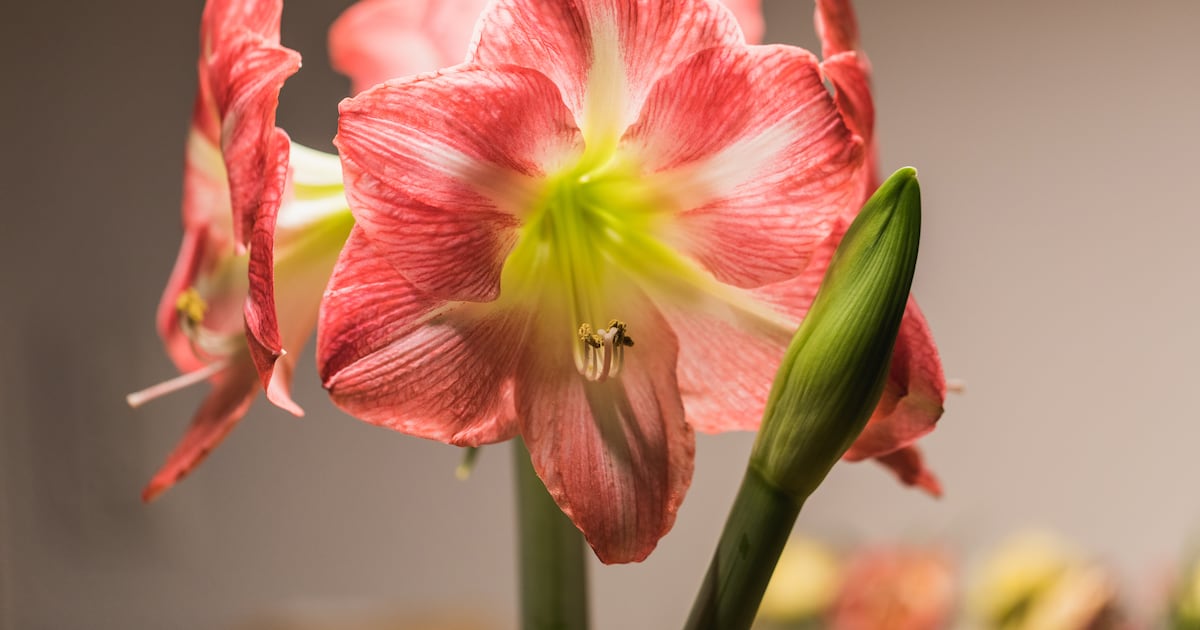
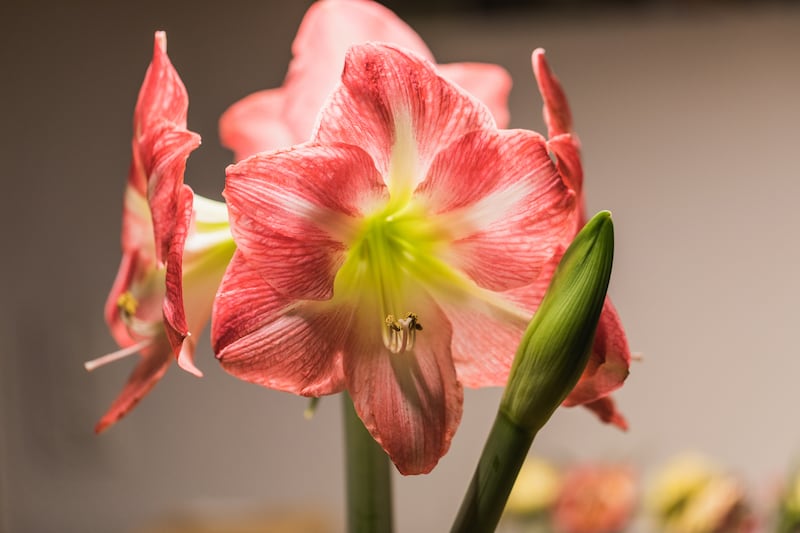
 Full bloom pink amaryllis flowers (Getty Images)
Alaskans are always asking me which houseplant is the best to grow during winter. I think we’re looking for houseplants that thrive all winter, with green leaves that stay on all season and don’t need extra lights (though these should still be provided, especially up here). So, they’re surprised when I suggest the amaryllis.
My reasoning is pretty straightforward. These bulbs can produce the biggest and flashiest flowers in the whole world. And, they do it without needing a greenhouse or other special conditions. All you need is a properly potted bulb and a growing medium that is kept slightly damp. Good light or not, step back because you’ll soon have some impressive flowers.
“Properly potted” means that when the bulb starts to flower, it has at least 2 inches of space between it and the pot’s walls. “Slightly damp” means the medium gets just enough moisture to keep the plant alive, but not enough to cause the bulb to rot. It’s an onion, after all, and even a tiny bit of rot can spread quickly and ruin everything. It gets nutrients and water from the growing medium.
Wait. Wait. Maybe not this year. Everywhere I go, I see amaryllises for sale, not in boxes but dipped in some sort of wax. They’re not taking up moisture, getting enough oxygen and don’t get nutrients. Forget rhizophagy, too. What you get is a “one-time use” bulb, instead of a bulb that keeps producing year after year as it gets bigger and better.
You only get one blooming season because of these waxes? This is what venture capitalists did to bed mattresses; they can’t be flipped anymore. Don’t let this happen to Amaryllis! Take off that pretty wax as soon as possible. It may look good, but it is not helping.
Typically, the amaryllis flower stalk pops out first, sometimes even before the bulb’s leaves show up! These leaves, which sprout from the top of the bulb, are smooth. The flowering stalk that also comes up will have a little notch at the tip. Once you get one to start blooming, all you have to do is give it water and then sit back and watch. These stalks can grow a few inches in just one day! This means they can require quite a bit of water to support all that cell growth.
This is a bit of a break from my usual advice that Alaska plants need light in the winter. Amaryllises actually don’t need it at all. You might even find them growing inside their dark little boxes, and sometimes they’re on sale! Get them while you can, because they’ll keep blooming for years to come if you take care of them.
Of course, it helps a lot to put your bulb and leaves under lights. At the very least, let the plant have natural light. Cut the flower stalk off after the flowers fade, but do not take out any leaves. These, through photosynthesis, will allow the bulb to gain nutrients and start the cycle of producing new flowers. In late spring, bring amaryllises outdoors and let them grow all summer. In early fall, bring the bulb indoors and lay the pot on its side in a dark, cool (55 degrees) spot for eight to 10 weeks. After that, you are good to go. Just expose the bulb to light and repeat!
Jeff’s Alaska Garden Calendar
Alaska Botanical Garden: No matter when you join, you get a whole year of great things, but if you are not a member, join and enjoy the year’s events. There is always something great going on, such as Winter Lights now! You get plant sale rights, discounts and so much more. Check it out at www.alaskabg.org.
Mushroom kits: I bet your furnace room would be a great place to grow mushrooms. Check out Fungi Perfecti for kits and more!
Houseplants: Lights!
Comments are closed.