

Another new gardening year is about to unfold, but although it’ll be nearly three more months before planting time outside, it’s not too early to plan what to plant.
On that front, growers are primed to unleash another round of new and interesting plant varieties for home gardeners in 2026.
Some of this new fare will be available by seeds. Those can be ordered now.
Others will show up in plant form via online orders and in garden centers as spring arrives.
In the future we’ll have a look here at what various experts see as some of the more intriguing new introductions about to hit the market.
Let’s start today with some of the best new edibles debuting in 2026.
This new purple-leafed kale has the distinction of being the first plant in the nearly 100 years of All-America Selections plant trials to win a national award as both an edible and an ornamental.
Rubybor has deep purple foliage all growing season on compact, tightly branched stems.
AAS’s professional-horticulturist judges called the variety a “showstopper” and said “it’s a rare plant that’s perfectly suited for both landscape design and dinner.”
Judges added that the flavor was good (no bitterness), the leaves were tender, and the heat-tolerance was very good for kale, which prefers to grow in cool weather and even survives moderate frosts.
That performance earned Rubybor a rare AAS Gold Medal, which only goes to the best of the best AAS flower and vegetable winners.
Plants grow a bushy three feet tall in full sun to part shade, in the ground as well as containers.
 Basil Treviso performed well enough in 2025 trials to earn a national All-America Selections award.All-America SelectionsBasil Treviso
Basil Treviso performed well enough at the 80 U.S. sites in national AAS trials to earn a “regular” 2026 AAS award.
Judges liked Treviso for its compact habit, mildew-resistance, heat tolerance, and slow-to-flower nature.
One AAS judge found the variety to be less attractive to Japanese beetles than other trial varieties, while another observed that Treviso’s “leaves resist becoming bitter after harvest, which greatly increases the harvest window.”
Treviso grows about 18 inches tall and is ready to harvest 60 days after transplanting a plant or 90 days after direct-seeding it.
The compact habit makes it a good choice for container growth.
 Butter Lamp is a new compact butternut squash that won a regional All-America Selections award for 2026.All-America SelectionsButternut squash Butter Lamp
This new butternut squash that looks more like a rounded mini-pumpkin is a third 2026 AAS edible winner, earning a regional award in Northeast ratings for its heat-tolerance and bug- and disease-resistance.
Butter Lamp also is a compact and early-maturing variety.
Its relatively short vines grow up or out about six-and-a-half feet (depending on whether you trellis it or not), and it produces mature fruits about 90 to 100 days after direct-seeding in the garden.
Figure on about four to six one- to two-pound, yellow-fleshed fruits per plant.
Butter Lamp plants grow best in full sun, and the best sweet, nutty flavor comes when you let fruits dry and cure for seven to 10 days after harvest.
Butternut squash also stores well into winter.
 Norfolk Healthy Produce’s three new high-nutrient tomatoes are Dark Hollow (top), The Beta (middle), and The Eleven (bottom).Norfolk Healthy ProduceThree new bioengineered tomatoes
California’s Norfolk Healthy Produce created lots of fanfare and a wild first year when it debuted The Purple Tomato in 2023. It was the world’s first bioengineered vegetable crop marketed directly to home gardeners – a high-nutrient, cherry-type tomato that was dark purple both inside and out, thanks to the insertion of purple snapdragon genes.
New for 2026 are three sequels that, like The Purple Tomato, are bioengineered both for color and high antioxidant content.
Dark Hollow is a similar purple to the original, only a slightly larger “cocktail” size and with a taste the company describes as a “savory umami flavor.”
The Beta is an orange-fruited, cherry-type tomato that’s engineered for high beta-carotene content.
And The Eleven is a cocktail type that’s yellow-and-hazel-striped on the outside and purple inside. It’s high in anthocyanin.
The original Purple Tomato also has been given the variety name Althea.
All four types are indeterminate tomatoes (they produce continuously until frost kills them), and they begin producing mature fruits about 60 days after planting.
The three newbies are priced at $15 for 10 seeds, while Althea is now $5 for 10 seeds (down from the original $20 price tag).
 Akoya, left, and Partyball, right, are two new tomatoes that scored well in 2025 trials at the Penn State Trial Gardens in Lancaster County.Syngenta FlowersTomato Partyball and Akoya
These two super-compact tomato varieties from Syngenta Flowers — aimed at container growing — were impressive enough to earn Garden Center Group Retailer’s Choice Awards at last year’s Cultivate ’25 industry trade show in Columbus, Ohio.
The group’s judges liked both for their heavy yields of cherry-sized fruits on bushy plants that grow only about a foot tall and slightly wider.
Partyball produces sweet, inch-wide, cherry-sized fruits that ripen from yellow-orange to red about 55 days from planting.
Akoya produces nearly two-inch-wide cocktail tomatoes that ripen from black to orange with both tones sharing the spotlight as the fruits mature. Akoya’s fruits are ready in 65 days.
Both varieties have good disease resistance and are determinate varieties, meaning they produce most fruits at about the same time as opposed to ongoing into frost.
Both also scored a perfect rating (five out of five) in last summer’s vegetable field trials at the Penn State Trial Gardens in Landisville, Lancaster County.
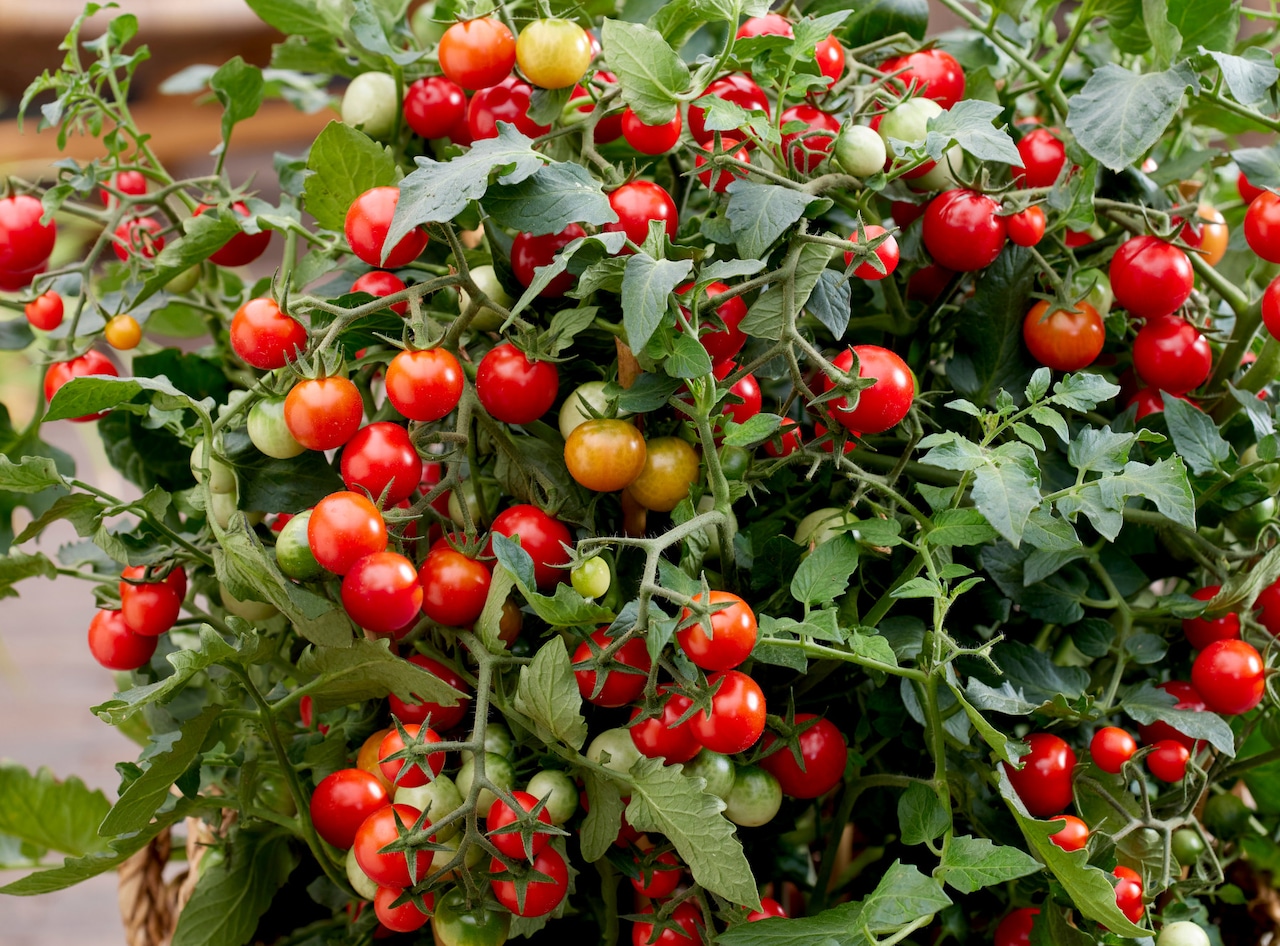 Sugar Basket Red produces a heavy yield of cherry tomatoes on a very compact plant that’s ideal for container-growing.Burpee Home GardensTomato Sugar Basket Red
Another high-yielding tomato in a small package is being rolled out this year in the Burpee Home Gardens line of vegetable plants.
Burpee Home Gardens’ Tiffany Heater says Sugar Basket Red is her favorite new edible of 2026 for its bright fruits and sweet flavor.
“When space is tight but you still want to fit fresh vegetables into your lifestyle, sometimes a hanging basket or window box is all you have room for,” she says. “Sugar Basket Red lets you experience tasty cherry tomatoes even in small spaces.”
Plants grow in a mounded, trailing habit to only 12 to 18 inches tall and wide, making it ideal for hanging baskets and patio containers.
Sugar Basket also comes in an orange-fruiting variety for those who like that shade better.
 Two new eggplants that scored well in Penn State’s 2025 trials are ‘Amethyst,’ left, and ‘Baby Jack,’ right.Syngenta FlowersBaby eggplants ‘Amethyst’ and ‘Baby Jack’
These two new eggplants with the demure fruits both earned perfect five-star ratings in last summer’s Penn State trials.
‘Amethyst’ produces three- to four-ounce, oval, magenta/purple fruits on two-foot-tall upright plants.
‘Baby Jack’ produces even smaller two- to three-ounce, dusky-purple oval fruits on two-foot-tall upright plants.
Both are being introduced by Syngenta, and both mature their fruits about 60 days after transplanting plants in the garden.
 Black Stallion is a new eggplant with excellent yield and few seeds in the fruits.Sakata SeedsEggplant Black Stallion
A third new eggplant was another perfect scorer in the 2025 Penn State trials.
Black Stallion from Sakata Seeds is a more traditional eggplant that produces eight- to nine-inch-long, tear-drop-shaped fruits of glossy purple/black.
Plants are high-yielding, have few seeds to their creamy flesh, and are ready 60 to 65 days after transplanting.
Columnar peach ‘Sweet Sensation’
Renewed interest in home-growing fruit and our smaller yard sizes intersect in this new columnar peach.
‘Sweet Sensation’ grows 10 to 12 feet tall but only four to five feet wide, making it a good choice for harvesting peaches in tight or limited spaces.
Monrovia Nursery’s chief marketing officer Katie Tamony, former editor-in-chief of Sunset Magazine, picks this producer of sweet, mid-size, peachy-pink fruits as her favorite new edible of 2026.
Trees are self-pollinating, meaning you’ll get fruits even with a single tree, although as in most tree fruits, multiple trees boosts yield.
‘Sweet Sensation’ has pink spring flowers and does best in full sun.
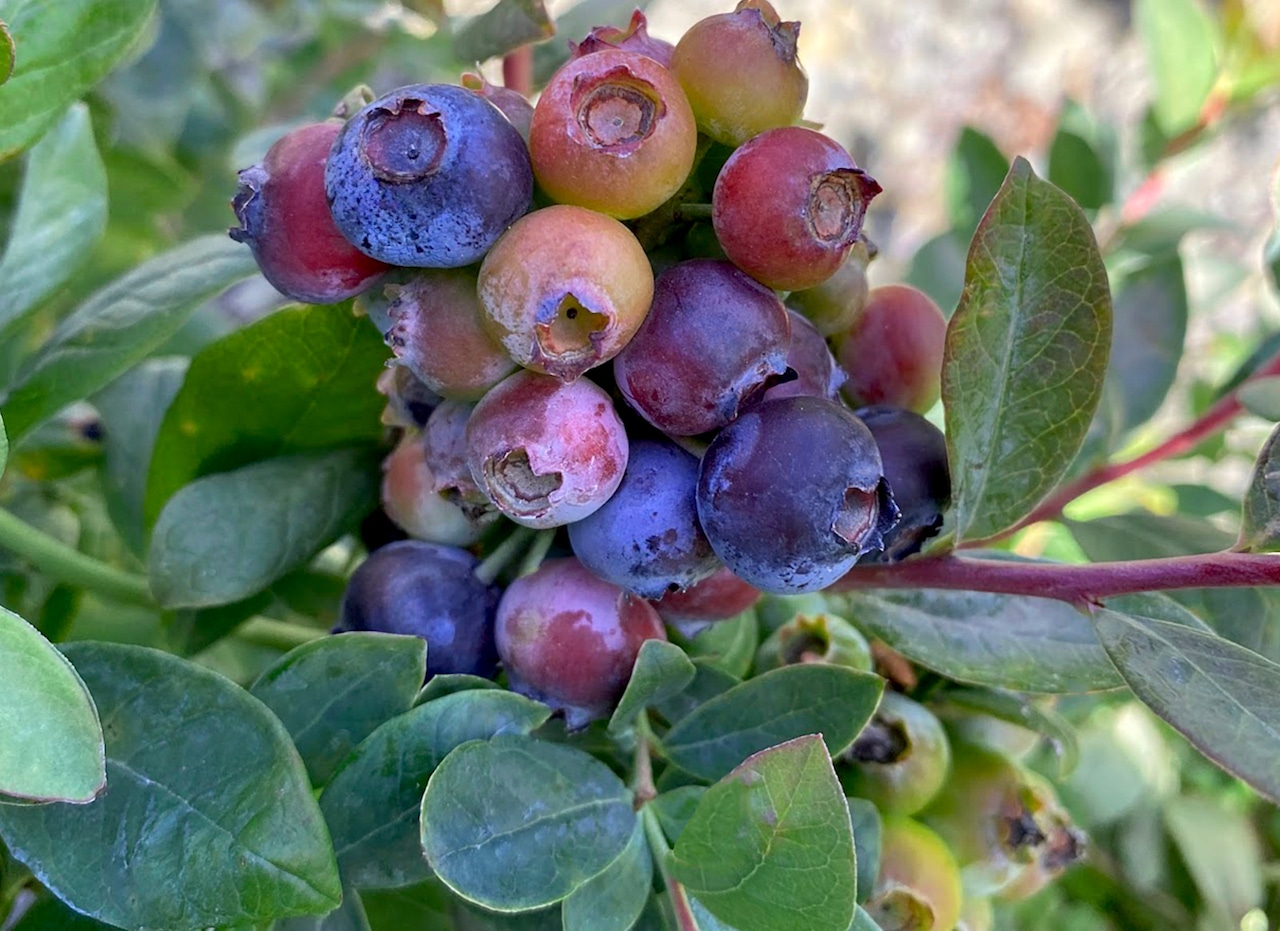 Bountiful Belle is a new blueberry that’s both tasty and good-looking.Monrovia NurseryBlueberry Bountiful Belle
Monrovia’s plant selections manager Georgia Clay likes this new fruit bush as much for its colorful foliage as its tasty early-summer berries.
“Bountiful Belle is exceptionally beautiful,” she says. “The foliage is super, super colorful. The new growth is icy-pink, then you get pink stems along with it.”
Clay says the variety is a perfect choice for those trying their hand at edible landscaping.
Bountiful Belle grows a compact three to four feet tall and wide and produces a good yield of large blue berries, ideally in full-sun locations.
High-bush blueberries are also native shrubs with showy fall color that produce best with at least two or three bushes in the vicinity. They prefer acidic soil.
 Yellow Submarine is a very large-fruited cucumber variety that produces surprisingly limited seeds.Seminis/Bayer/National Garden BureauCucumber Yellow Submarine
Really big cucumbers usually mean the fruit wasn’t picked soon enough, and the flesh will be seedy and probably bitter.
Yellow Submarine, though, is a newcomer that gets naturally big while maintaining an unusually small seed core.
The variety’s breeder, Seminis/Bayer, says the size and meatiness of Yellow Submarine adds up to a production in which a single fruit is enough to fill a canning jar with sliced cukes or pickles.
The fruits average seven inches long and three inches across, weigh an average of 10 ounces each, and have smooth light-green skin that matures to pale yellow. They’re ready about 45 days after direct-seeding in the garden.
Plants also have good resistance to cucumber scab disease.
Read George’s post on best new edibles that debuted in 2025
Comments are closed.