
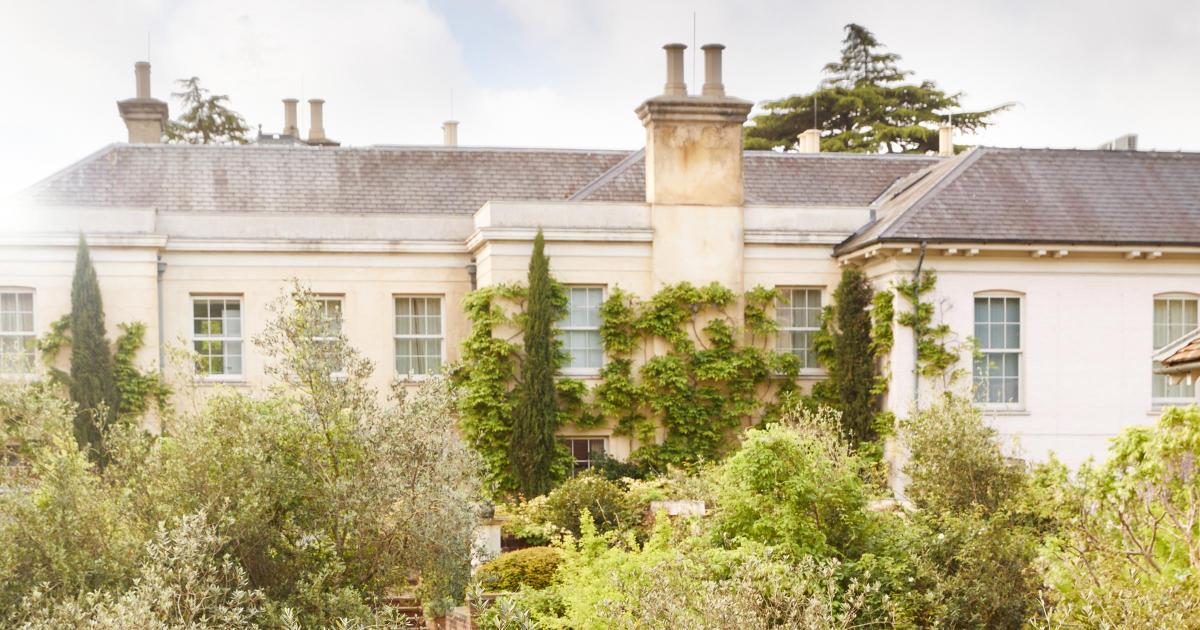
The most luxurious spas don’t just offer treatments and access to facilities such as gyms and saunas. A vital part of the experience is the surrounding setting; from the path walked to the spa door, backdrop for outdoor hot pools, and views seen from within. Spas that excel integrate living plants into their built environment. Spa gardens can’t rely solely on summer flowers, they have to look good throughout the year. Many aspects of spa gardens can equally enhance wellbeing at home including using aromatic and evergreen plants, allowing nature to diffuse into the cultivated, and bringing the outdoors inside.
Try different varieties of sage (Image: Susanne Masters)
Aiming to cultivate wellbeing, spas make use of the aromatic properties of plants, from soothing to invigorating, as well their efficacy in topical applications to skin. While some are exotic, others are familiar garden plants. Wildsmith Skin products, used in The Bothy at Heckfield Place, are inspired by the grounds of Heckfield estate and prioritise sensory experience. Their botanicals include fennel seed (Foeniculum vulgare), lavender (Lavandula angustifolia), Roman chamomile (Chamaemelum nobile), rosemary (Salvia rosmarinus) and sage (Salvia officinalis). Similarly in the roof garden of Herb House spa, at Lime Wood Hotel aromatic herbs are visual features in the garden and also part of the spa experience indoors. Bronze fennel’s feathery leaves dot flowerbeds and in winter its seedheads remain standing as strong verticals. In Raw & Cured, the spa restaurant, fennel seed tea is on the menu. Chamomile, lavender and rosemary infuse Ground massage oils used in spa treatments, and you can brush past them growing in the garden. A carpet of lawn chamomile, Chamaemelum nobile cultivar ‘Treneague’, is vibrantly green and exudes scent from its leaves when the sun shines. Lavender and rosemary edge the paths. Crimson flowers of pineapple sage (Salvia elegans) are a late season splash of colour above their scented leaves.
Vibrant tones can be seen in the summer, which turn to more muted colours in winter (Image: Amy Murrell)
Aromatic plants are equally at home in kitchens, as well as in gardens and spa products. Justin Pimm, head of fitness at Herb House, highlighted the working connection between garden and kitchen.
‘Raw & Cured’s seasonal produce includes herbs. What grows on the roof is not just aesthetically pleasing, there is practical use as well. Chefs work with the garden team. It fits with the ethos of bringing outside in.’
Growing herbs with attention to aromatic properties widens the palette of flavour available to chefs. Herb House’s collection of mints includes fruity applemint (Mentha suaveolens), banana mint (Mentha arvensis ‘Banana’) and pineapple mint (Mentha suaveolens ‘Variegata’), as well as classically minty black peppermint (Mentha x piperita) and garden mint (Mentha spicata).
Rosemary is a great choice for hardiness and also scent (Image: Susanne Masters)
Evergreen plants that keep their leaves in winter are a stalwart of gardening for all seasons. Aromatic as well as evergreen, hardy herbs such as lavender, rosemary, sage and thyme (Thymus cultivars) are invaluable. In Herb House’s garden, sage features in different colour morphs including purple sage and tricolour sage, which has white as well as purple and green on its leaves. The roof top garden contains many cultivars of thyme. Snowdrift thyme (Thymus serpyllum ‘Snowdrift’) and creeping red thyme (Thymus Coccineus Group) are spectacular in summer when covered in white and deep pink flowers respectively. Thymes will flower sparsely in cooler months too. Walking down from rooftop to outdoor hot pool the staircase banister is clad with tendrils of star jasmine (Trachelospermum jasminoides). Glossy and green even in the depth of winter it softens the built structure of the spa. Bay (Laurus nobilis) and olive (Olea europea) trees provide height as well as leaves in winter. In contrast, low growing wild mosses and liverworts, welcomed rather than planted, cover bare soil with a living veneer of green.
While spa gardens need to look appealing throughout the year, they reflect seasons and the passage of time. On the rooftop of Herb House a wooden chair is patterned with a coat of common greenshield lichen (Flavoparmelia caperata). Found in deciduous forests in the south of England, this lichen is slowly growing to cover the chair. Part of the forest moving into the garden it is also a marker of time. Tammy Kenyon, spa director of Herb House, has seen the garden become established over the 13 years she has worked there. ‘Fundamentally the layout is the same as when it was planted. It’s nice seeing the garden age. I love the change in seasons; in summer alliums and lavender come up, in autumn the colours of the forest leaves. We are literally touching forest.’
Increasingly planetary health is recognised as vital for human health. Certainly, spa gardens cultivating wellbeing are gardened gently. Rather than using disposable summer bedding, plants and features are supported to age. Herbicides and pesticides are not applied so wildlife has space to move in, and aromatic plants can be used in the kitchen as well as enjoyed for their scent on the spot.
Star Jasmine trails the banister at Herb House Spa (Image: Susanne Masters)
Hampshire spas integrated with gardens
Herb House
A masterclass in gardening for wellbeing. Alongside day visitors and hotel guests using the spa and gym, there is significant cohort of monthly members.
Beaulieu Road, Lyndhurst SO437FZ
Potting Shed at the Pig in Brockenhurst
Pig Hotels call their spa treatment rooms Potting Sheds and Shepherd’s Huts, as they are free standing in their gardens. At The Pig in Brockenhurst the Potting Shed is reached through the Kitchen Garden and then a walkway over a pond.
B3055, Brockenhurst SO42 7QL
The Bothy at Heckfield Place
Nature softens the stark architectural style with fresh and dried flowers, acorns in vases sprouting into trees, and a view from the sauna of field and tree changing through the seasons.
Heckfield, Hook RG27 0LD
Plants to add at home
To cover vertical space
Star jasmine (Trachelospermum jasminoides) is evergreen and offers seasonal changes with bronze-red leaf tints in the depth of winter, and fragrant white flowers in summer. Climbing by twining it will quickly cover trellis and railing, or fence panels and walls if given wire to wrap around.
Welcome lichen and moss as free coverings to add interest (Image: Susanne Masters)
For free
Mosses offer a splash of bright green through winter, growing in damp microhabitats they find in shady sections of lawn, crevices in tree bark and paving. Lichens mark the passage of time on brick or wood surfaces, as well as the branches and trunks of trees. Liverworts will grow on compacted damp soil, covering its surface with their flattened lobes. Mosses, lichens and liverworts reward gentle gardening, resist the urge to scarify lawn or scrub furniture.
Thyme ‘Silver Queen’ (Image: Susanne Masters)
For fragrant carpeting
Thyme’s summer flowers are loved by bees, not only evergreen in winter there is a vast selection of cultivars that offer colourful leaves. ‘Doone Valley’ has clusters of green leaves and clusters bright yellow leaves, ‘Silver Queen’s green leaves are edged in white, woolly thyme forms soft grey mounds with its furry leaves.
To add sculpture
Olive trees hold their silver-grey leaves throughout the year, and they can be grown in pots and pruned to the shape desired. Bay can also be pot-grown and cut to shape, with the bonus of aromatic leaves that can be used in cooking or enjoyed by picking and snapping in hand to release their fragrance.
Comments are closed.