


Towfiqu ahamed barbhuiya/Shutterstock
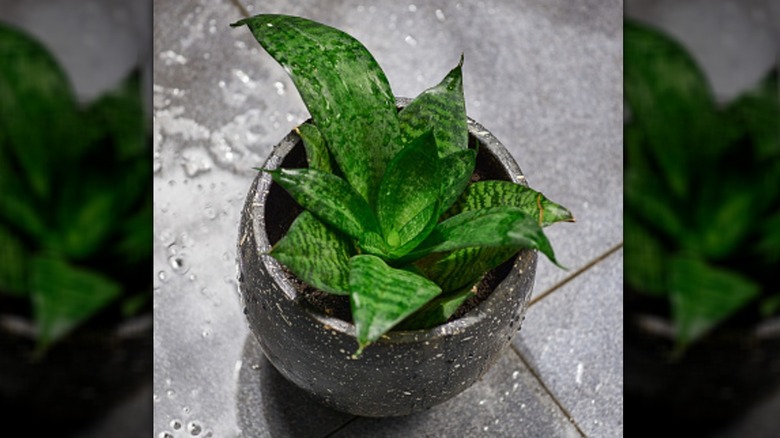
Cheekily called the mother-in-law’s tongue and St. George’s sword, snake plant (Sansevieria spp.) is a low-maintenance plant that commonly adorns indoor shelves, windows, or bathrooms. Its variegated, sword-shaped foliage adds a beautiful touch to the dreariest nooks and corners without requiring much effort from its caregivers. But to ensure it continues pushing out its best growth, Tiffany Selvey, House Digest’s garden editor and in-house Master Gardener, advised that you must avoid making one crucial watering mistake: deep watering your snake plants in the shower. “Deep watering plants in the shower is the practice of putting your houseplants in the tub and using the shower head to clean the leaves and soak the soil,” she said in an exclusive interview with House Digest. “Generally, you’ll do this until water runs out of the drainage holes, ensuring the soil is completely saturated.”
We understand why you’d want to try this. Showering your indoor houseplants has multiple benefits. “It thoroughly saturates the soil while flushing out any build-up of salts from fertilizer,” Selvey said. “This kind of watering also cleans the leaves, which helps the plant perform photosynthesis because dust and other debris can keep them from absorbing the light they need.” While this certainly works out great for tropical plants, palms, and large-leaved houseplants, such benefits do not carry over to snake plants.
Avoid giving your snake plants a deep soak in the shower

Cre8 design/Shutterstock
Deeply watering your snake plants in the shower can cause more harm than good, and there are several reasons behind this. “The first is the primary rule of growing these succulents: Don’t overwater,” Tiffany Selvey explained in her exclusive House Digest interview. “Snake plants need to dry out between waterings, and if you have a planter that doesn’t drain exceptionally well or the wrong kind of soil mix, having a drenched planting medium can quickly lead to root rot.” If you think you might be overwatering your snake plant, here are our tips on how often is too often.
Curiously enough, if you’ve potted your snake plants in a succulent mix, showering them will be of little use. Cactus and succulent mixes usually have a loose and porous texture to ensure excellent drainage. So, the water spray will just splash all the loose soil and make a mess of your shower. Apart from that, snake plants’ natural form can also play spoilsport. “Another issue with this process that is fairly unique to snake plants is that their leaves grow in a swirl that form a center cup that holds water,” Selvey said. “This can lead to rotten leaves.” Unless you want to kill your houseplant, or at very least, grapple with saving a snake plant with mushy leaves, stop showering with it.
When snake plants benefit from deep watering and ways to do it
Creatice Group Of Abahaja/Getty Images
Snake plants may not enjoy long showers, but they can certainly benefit from an infrequent deep watering session to help get rid of accumulated salt deposits. “Although snake plants don’t need much fertilizer, it can still be beneficial to flush the soil to remove any unwanted buildup,” Tiffany Selvey said during her exclusive interview with House Digest. For an easy solution, carry them over to your home’s workhorse, aka the kitchen, instead of your bathroom. “You can put your plant in the kitchen sink and use the faucet to soak the soil only,” she elaborated. “For this method, wipe the leaves with a damp cloth and make sure the soil dries out before watering again.”
But if you’d like to do it the right way, she advises making use of rainwater. “The best method for deep watering snake plants is putting them outside when it’s warm during a heavy rain,” Selvey said. “Rainwater lacks chemicals like chlorine, so it’s better for plants in general. The combination of a cleansing rain can really help a snake plant flourish.” Better yet, this will also help prevent root rot from taking hold, as the water will have evaporated by the time you bring them back in. Selvey advised letting them dry in a shady area, not in full sun, to prevent scorching.
Comments are closed.