

Popular gardening trends for this year include: gardening with more native plants, (including rewilding), planting for pollinators, houseplants – including collecting unusual and rare plants and kodedama, and cutting gardens.
More gardeners are incorporating native plants into their landscapes. Plants that are native to Minnesota (for example, purple coneflower, wild bergamot, little bluestem, black-eyed Susan, swamp milkweed, serviceberry, and wild columbine) are easier to grow than nonnative varieties. They are already adapted to our soil and climate, so need less water, fertilizer, and pesticides.

Plants that are native to Minnesota (for example, purple coneflower, wild bergamot, little bluestem, black-eyed Susan, serviceberry, wild columbine and swamp milkweed — as shown here growing in July — are easier to grow than nonnative varieties.
Contributed / Shutterstock
Rewilding is returning part of one’s yard to a natural state. The native plants in rewilding support local wildlife by providing essential food (nectar, pollen, and seeds) and habitat. Planting for pollinators goes hand-in-hand with rewilding and adding native plants. In creating a pollinator-friendly landscape the focus is on having a healthy environment — not a perfect landscape — by choosing plants (often native plants) that provide food and habitat for pollinators. Replacing lawn areas that are difficult to grow with a bee lawn or shrubs and flowers is another way to be pollinator-friendly. Eliminating pesticides is imperative for protecting pollinators.
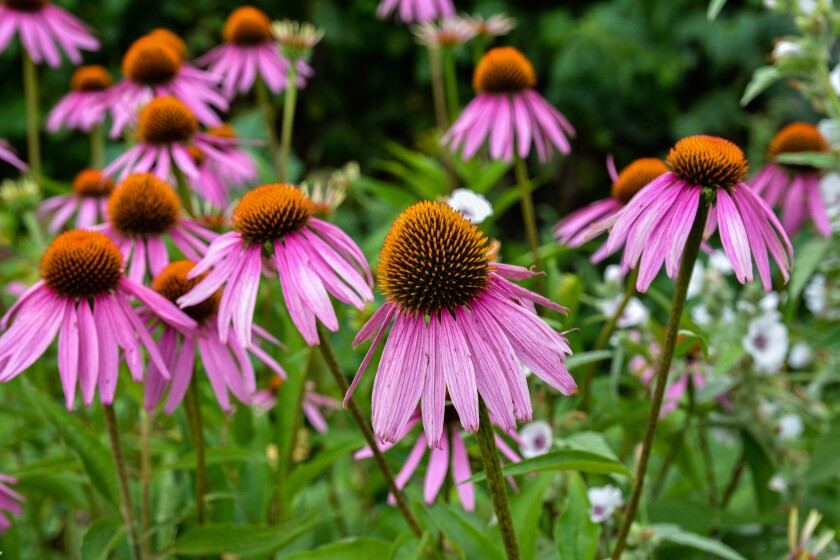
In creating a pollinator-friendly landscape the focus is on having a healthy environment — not a perfect landscape — by choosing plants (often native plants) that provide food and habitat for pollinators like these coneflowers.
Contributed / Shutterstock
Houseplants continue to be a very popular gardening trend and way to add aesthetic appeal to homes and work places. Many houseplant enthusiasts are collecting unusual and/or rare plants. Air plants (Tillandsia) continue to be popular because they are low-maintenance, there are some unique varieties, and they can be displayed in creative and interesting ways (glass globes, seashells, driftwood.) Kokedama is the Japanese garden art form of creating a beautiful moss-covered ball that features a unique plant and is usually suspended from string or exhibited on a platform.
Planting a cutting garden has been popular for the past few years and continues to be. It is a garden specifically for growing flowers and foliage used to create bouquets and floral arrangements.
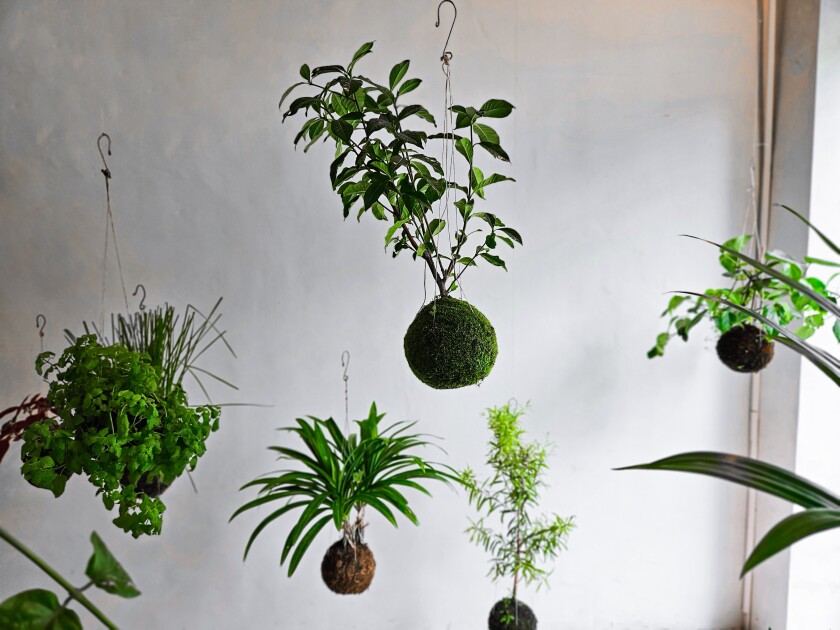
Kokedama is the Japanese garden art form of creating a beautiful moss-covered ball that features a unique plant and is usually suspended from string or exhibited on a platform.
Contributed / Shutterstock
Live evergreen trees and decorations become a fire hazard as they dry out. Remove them as soon as they begin to look dry. In addition, they often harbor spider mite eggs that will hatch in warm indoor conditions and inadvertently get transferred to your houseplants. Check your houseplants for signs of insects or spider mites. They thrive in our heated, dry homes. Look for fine webbing, discolored foliage, cottony clusters, or shiny, sticky patches on leaves. If you catch these pests early enough, washing the foliage may be all that’s needed to get rid of them. To increase chances of yielding fruit from citrus plants grown indoors (with no pollinators present) use a cotton swab to dab pollen from flower anthers onto the stigma or gently shake flowers to distribute pollen.Provide higher humidity for houseplants by placing them in groups. Each plant gives off moisture through its foliage creating more humidity in that area. Room or furnace humidifiers also help.Keep your indoor plants clean by wiping off the leaves with a soft, damp rag. This will enhance the photosynthesis process for your plants.Add a touch of color to your home with a low-maintenance Phalaenopsis (moth orchid) plant. Their flowers last six to eight weeks and it’s easy to get them to bloom again annually.Enjoy amaryllis bulbs in full bloom, but don’t ignore them after their flowers fade. Pinch flowers off once they shrivel, making sure you remove the ovary behind the petals. Water whenever the soil feels dry a little below the surface. Fertilize in about six weeks. Keep the plants in your sunniest window until you can safely move them outside next summer.Keep poinsettias looking their best for months by watering the soil as soon as the surface no longer feels moist. In February, apply a houseplant fertilizer at half-strength, then every four to six weeks thereafter. Prune them back in early summer, then either move them outside for the summer or keep them in a sunny window year-round.Check rabbit fencing around trees and shrubs to make sure it is well above the snow line. If needed, extend it by wiring another row to the existing fencing. Fruit trees in particular need protection from rabbits, mice, voles, and other bark-nibblers.Prune out cankers and fungal galls such as black knot on plum and cherry trees. Make a cut just above a lateral bud or a branch union 10-12 inches below the infection area. Pruning during sub-freezing temperatures reduces the chance of reinfection.Spread sand or kitty litter on icy sidewalks, rather than commercially prepared ice-melting chemicals. Runoff from deicing chemicals results in pollution of groundwater, the source of most Minnesotans’ drinking water. Chloride in high amounts negatively affects lakes and waterways and is toxic to fish, aquatic bugs, and amphibians. Excessive use of deicing salts can degrade concrete, asphalt, and natural stone, and corrode metals. Deicing salt harms and ultimately may kill plants. Order seeds early for the best selection. Some flower seeds should be started early indoors to have plants large enough to transplant into gardens next spring. January is the time to order begonia, coleus, geranium, heliotrope, and pansy seeds to start under lights by mid-February. Most other flowering annuals only need an eight-week head start.Floral arrangements and cut flower bouquets will last longer if you keep them in a cool location out of direct sunlight and keep the water refreshed.
You may get your garden questions answered by calling the new Master Gardener Help Line at 218-824-1068 and leaving a message. A Master Gardener will return your call. Or, email me at
umnmastergardener@gmail.com
and I will answer you in the column if space allows.
University of Minnesota Extension Master Gardeners are trained and certified volunteers for the University of Minnesota Extension. Information given in this column is based on university research.
Comments are closed.