
While many shrubs are resilient and can withstand tough growing conditions, such as deep shade and poor soil quality, intense wind is more challenging for these plants to handle. Certain varieties have shallow root systems, weak branches, and delicate foliage that can lead to breakage, bloom loss, and toppling over. To keep your landscape in peak condition, we spoke to gardening experts who shared which shrubs you should avoid growing in windy areas.
Abelia
Credit:
Photos by R A Kearton / Getty Images
Abelia is known for its arching branches that are beautiful but break in strong winds, says Mary Phillips, head of native plant habitat strategy and certifications at the National Wildlife Federation. She adds that its semi-evergreen foliage can scorch and brown with persistent winds. Instead, consider growing wax myrtle, which has thick, leathery leaves that sway in the wind, rather than break.
Rose of Sharon
Credit:
Philippe Gerber / Getty Images
Rose of Sharon boasts brittle, upright branches that can snap in wind-prone areas. Additionally, Phillips says that this plant has a shallow root system and can topple over when winds are strong. She recommends growing red chokeberry in its place, as it provides multi-season interest but has a dense, fibrous root system that makes it more resilient than rose of Sharon.
Bigleaf Hydrangea
Credit:
Catherine McQueen / Getty Images
Bigleaf hydrangea is a garden stunner, but these delicate shrubs won’t perform in windy conditions. Bigleaf hydrangeas have soft stems and large flower heads that are easily damaged or bent by strong winds, which can dry out the foliage and reduce bloom quality, says Kelly Funk, president & CEO of Jackson & Perkins. “They do much better in a protected spot near a wall, fence, or sheltered garden bed with partial shade and steady moisture,” she adds.
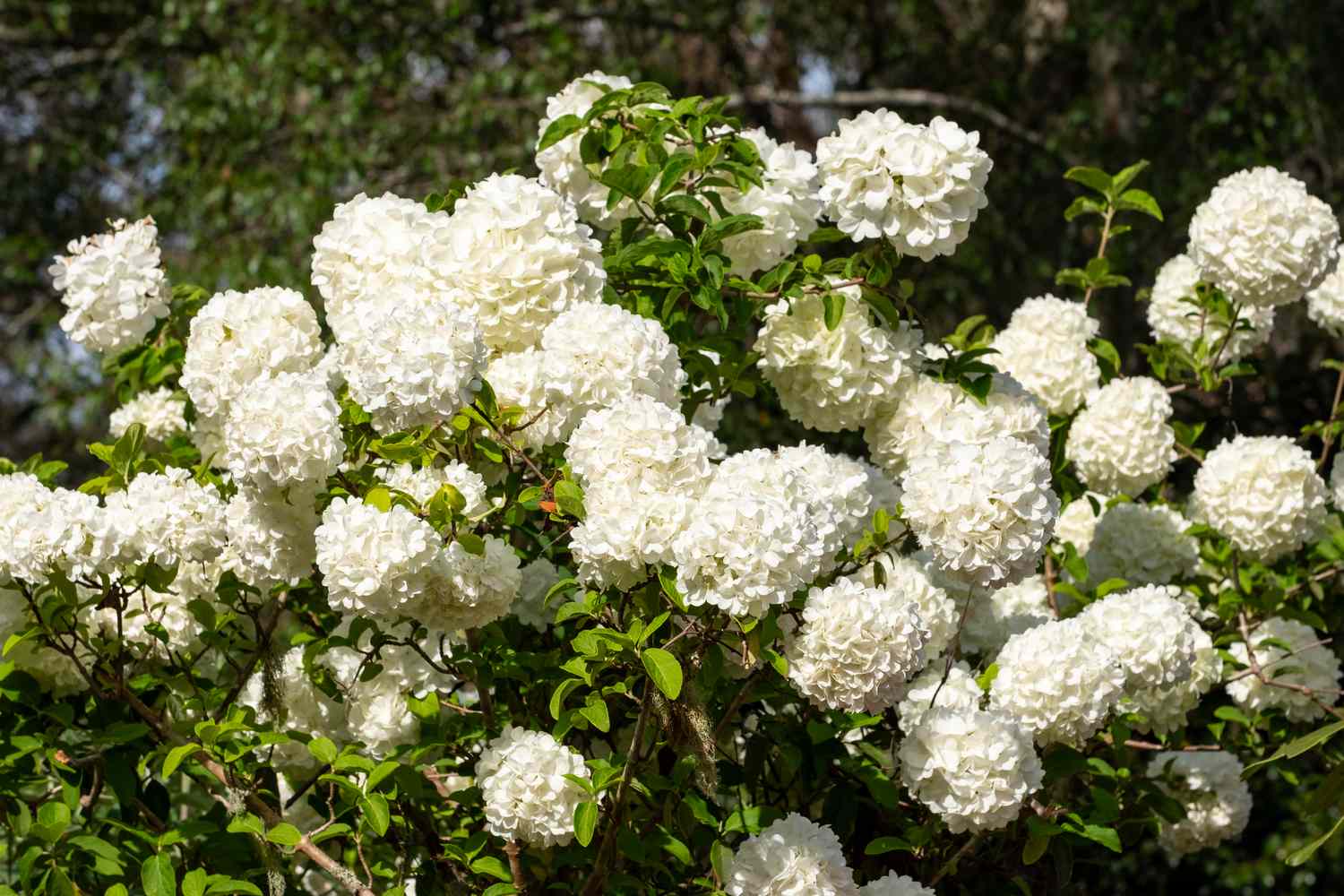
Snowball Viburnum
Credit:
Louise Docker Sydney Australia / Getty Images
Snowball viburnum is a popular shrub, but experts recommend avoiding it if you live in a windy region. “The Snowball viburnum’s large, rounded flower clusters and upright, open framework catch the wind, causing its brittle branches to whip and snap in strong gusts,” says Phillips. “Its broad, soft leaves also tatter and tear easily in exposed, windy areas.”
Azalea
Credit:
John Dreyer / Getty Images
The flowers and foliage of azaleas will suffer in windy areas. Their broad evergreen leaves lose moisture rapidly in cold or dry wind, says Ankit Singh, assistant professor and ornamental horticulture educator at the University of Maine Extension. Azaleas also have shallow root systems that provide poor anchoring, meaning they can fall over in windy weather.
Camellia
Credit:
T. Kurachi / Getty Images
Camellias dislike wind because their buds and glossy foliage are prone to drying and damage, which often leads to fewer blooms and stressed growth, says Funk. If you want to grow camellias in your garden, she suggests planting them in protected foundation beds or tucked beside structures that cover them from harsh or cold winds.
Weigela
Credit:
Orest Lyzhechka / Getty Images
Weigela are known for having stems made of brittle wood that snap under moderate wind, says Singh. Their delicate blooms will also fall off the plant quickly, and new growth will struggle to get established if the wind is too intense.
Comments are closed.