

This is usually the week I do my annual Felder Fesses Up, chronicling the previous year’s garden follies and foibles. But 2025 wasn’t so bad after all.
Mostly, in an attempt to reduce garden chores for my aging bones, I dug up scattered flower beds and planters, leaving just a handful I can manage while still maintaining a good “color echo” vibe. I rogued out nandina, pulled piles of Virginia creeper and Asiatic jasmine, and spread a lot of mulch.
I did kill a few plants through neglect, mostly potted plants that were either missed in the last-minute rush to bring them indoors before the first frost or from not having anyone water them while I was overseas for three months. One hundred percent my fault. Since then, I’ve lightened my load by giving away duplicate potted plants.
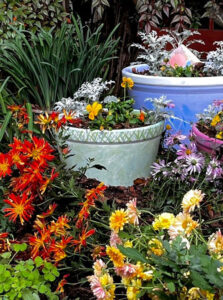
Felder Rushing’s garden mums in pastel pots brighten a partly sunny raised bed. Photo Courtesy of Felder Rushing
Now I mostly stick with tried-and-true annuals and minimize planting in the first place. Because of my consolidated beds, if a plant fails, I’m not out much time, effort, or expense. And the holes left behind can always be filled in later.
Once again, I failed to get finicky lavender – a dry, Mediterranean native – to survive past mid-summer. Luckily, I travel enough to appreciate them and other borderline plants in their natural settings, so I’ve stopped trying to coddle cool-climate or hot-tropical natives in our fickle corner of the world. There are plenty of locally adapted plants that thrive here, even with intermittent heavy rains, prolonged droughts, and heat and humidity so thick you can almost lick it.
I cleaned most of the summer plants from a partly sunny raised bed topped with colorful hand-painted pots hosting antique bulbs and a few complementary annuals. Now, that space holds more than a dozen super-hardy garden mums. This gives me winter and spring color from daffodils, followed by summer and fall flowers from mums, all in the same spot under the same conditions.
Unlike seasonally popular cushion mums or leggy florist mums, antique garden mums (Chrysanthemum rubellum) thrive here with little care. You may know the pink pass-along cultivar Clara Curtis, sometimes called “Country Girls,” but there are a couple dozen others that do equally well, filling an important mid-autumn niche when little else is exciting. I cut them back in late summer to make them bushier, producing more flowers and less sprawling.

Hardy garden mums (Chrysanthemum rubellum) thrive with minimal care, offering vibrant fall color in shades of pink, red, orange, yellow and white. Photo Courtesy of Felder Rushing
I’ve collected these mums, ranging from deep pink to red, rusty orange, yellow, gold, white and frilly bicolor, from Oklahoma and Texas to the Carolinas. They are stunning and require almost no care. Unfortunately, because they don’t display well in pots, they are largely unavailable in garden centers. I’ve begun sharing cuttings and divisions with growers who can get them into the landscape market, whose displays often drive demand.
I also reworked a couple of decks, added night lighting, collected more forgiving cacti and succulents, learned new maintenance-reducing garden tricks and spent time helping my daughter and granddaughter with their flower and herb gardens – which helps satisfy my gardening cravings at home.
All in all, 2025 wasn’t so bad. Still, here’s to doing even better next year.
Felder Rushing is a Mississippi author, columnist, and host of The Gestalt Gardener on MPB Think Radio. Email gardening questions to [email protected].
Posted in Columns
Quality, in-depth journalism is essential to a healthy community. The Dispatch brings you the most complete reporting and insightful commentary in the Golden Triangle, but we need your help to continue our efforts. In the past week, our reporters have posted 30 articles to cdispatch.com. Please consider subscribing to our website for only $2.30 per week to help support local journalism and our community.
Comments are closed.