
For The Union-Tribune
Happy New Year! I wish you a year filled with flowers, fruits and fabulous gardening! This is the best time of year for adding new plants to your garden. The air is cool, the sun is soft, and rain is on the horizon.
Ornamental plants
All native and non-native drought tolerant plants — trees, perennials, shrubs and vines — are best planted in the cool months.
• Start small. Just like when a family moves to a new neighborhood, the smallest ones adapt fastest and easiest. Plant a 1- or 5-gallon plant rather than the same plant in a 15-gallon container. Plant a 5- or 15-gallon plant rather than the same plant in a big box.
• Check roots. Skip the plants whose roots are visible, tangled, circle the trunk, sit above the potting soil, etc.
• Plant properly:
1. Water the plant in its pot
2. Dig a hole twice as wide as the pot and only an inch or two deeper than the pot is tall.
3. Fill the hole with water and let it drain out
4. Gently remove the plant from its pot and loosen up the rootball so the roots point out from the center (except for Bougainvillea and Matilija poppies). If there’s a stake in the pot, remove it now.
5. Do not add soil amendments to planting hole. You read that correctly: NO SOIL AMENDMENTS.
6. Gently set the plant in the hole, checking to be sure it will sit at the same height it was in its pot. Refill the hole a bit if it’s too deep. If the soil is clay, set the plants an inch or so higher than it was in the pot. That way, any extra water will drain away from the base of the plant.
7. Wet the native soil as you refill the hole.
8. When the hole is completely filled, water the soil around the base of the plant to settle it.
9. Mulch across the entire planting bed, taking care the mulch doesn’t touch the stems, trunks, nor any part of the plants. Use coarse wood mulch (not bark), in a 3-inch-thick layer.
• Water consistently if it doesn’t rain. New trees, shrubs etc., need to be kept damp (not wet) through their first year or two in the ground. Then, water less often but always for the same number of minutes.
• Cover all garden beds in a 3-inch layer of mulch. Leave patches of soil — 5 feet square to 10 feet square — bare for native ground-nesting bees (they won’t sting).
• Leave leaves. Leaves from ornamental plants (not fruit trees) make excellent mulch and recycle nutrients back into the soil. Rake pathways and patios but don’t rake garden beds. Just leave the leaves.
• Plant your holiday poinsettia in the garden. Choose a spot where the night sky is totally dark from September to December. Poinsettia plants need a long dark period in order to bloom again next winter. Poinsettias thrive with good drainage and little water. Fertilize monthly once daytime temperatures are above 60 degrees. Download my Poinsettia Care Guide at bit.ly/407Pf3X.
• Empty pots under potted plants so the plants don’t sit in water and to eliminate mosquito breeding grounds.
Plant new fruits
This is the best month to purchase and plant bare root deciduous fruit trees, vines, roses and shrubs. “Bare roots” are 1- or 2-year-old plants grown in the ground, dug up and their roots washed clean of soil. They look like scraggly sticks with a wad of roots at the base, but don’t worry, they grow into vigorous, productive plants.
Stone fruit, apple and pear trees are all grafted, which means they are two plants fused into one:
• The fruiting wood (also called the “scion”) is the top part of the tree, that grows leaves, flowers and fruits.
• The rootstock is the bottom part of the tree that grows the roots.
The best grafted fruit trees for your garden are the optimal combination of scion with rootstock. Growers graft different combinations so they can offer trees that meet different kinds of garden needs such as:
• Garden chill hours.
• Fruit flavor.
• Ripening time — early, mid, or late season.
• Soils — clay, sand, silt or a combination.
• Preferred tree size: full size, semi-dwarf, or dwarf.
• Resistance to common pests and diseases such as fireblight, peach leaf curl and others.
Make sure the plant you purchase matches your garden’s available chill. What’s a chill hour? Chill is basically an accumulation of overnight hours between 32 and 45 degrees from late fall through early spring. Chill is critical for deciduous fruit trees to set fruit in spring.
Different named varieties require different amounts of chill, so it’s important to choose fruit trees that produce with the amount of chill your garden gets. Find out how many chill hours your garden gets here: bit.ly/ChillHoursSanDiego.
See how bare root plants are bred, grafted, grown, harvested, processed, and shipped in the episode of “A Growing Passion: From Fruits to Nuts” kpbs.org/news/arts-culture/2025/07/31/growing-passion-fruits-nuts.
Bare root roses are grafted similarly to bare root fruit trees. The goal is to create a strong plant with the ideal flowers onto a strong rootstock. Don’t worry about chill hours when it comes to roses. Instead, look for the blooms you like best on a strong root structure.
Prepare the bare root planting spot before you shop:
• Choose a spot that gets full sun (6 hours-plus per day) from spring into fall. Deciduous plants are dormant in winter, so shade then is not a problem.
• Do a soil drainage test. Dig a hole 2 feet wide by 2 feet deep. Fill with water and let it drain. Fill again and track how long the hole takes to drain out. If water is gone in a few hours, that’s fast-draining soil. If water sits for a day or two (or longer), that’s slow draining soil aka “heavy” soil. The rest is in between. Choose rootstocks to match the drainage.
• Pre-plumb with inline drip irrigation. You’ll complete the irrigation once you finish planting.
Shop for bare roots
• Select bareroots that are the optimal combination of fruit wood and rootstock.
• Opt for plants with pliable roots that are not too tangled. It’s better for roots to fan out wide rather than grow in a circle.
• For fruit trees, choose individuals with low branches so fruits will be easy to reach.
The nursery will wrap bareroots in plastic, so the roots don’t dry out. Plant the same day you bring the plants home.
• Remove the plant from the plastic and spread out the roots. Notice the where the color changes on the trunk — that’s the “dirt line” from when the tree was planted in the field. Mark the dirt line with a sharpie you don’t lose track.
• With grafted plants, there’s a thickening on the trunk above the dirt line. That’s the graft, the point where rootstock and the fruiting wood are grafted together. When you plant, the graft must be well above the soil. Ungrafted plants are also planted to the dirt line.
• Cut the main trunk of stone fruits to hip height. As hard as it may be, it’s the best way to encourage low branches for easy care and easy harvest. It also balances the size of the plant to the size of the rootball. Shorten side branches to one or two buds long.
• Submerge the bare root in a bucket or trashcan of water to cover the roots while you finish prepping the planting hole. The container should be big enough to accommodate the roots without bending or kinking them. Don’t leave the roots submerged for more than an hour or two.
• If necessary, widen the planting hole so roots fit without bending, folding, or crunching; deepen it so once the plant is in the ground, the soil line is even with ground level.
• Once the planting hole is the appropriate width and depth, toss in a few handfuls of worm castings, Fill the empty hole with water and let it drain out.
• As you plant, refill the hole with native soil only — no potting mix, no compost, no fertilizer — just native soil. Wet the soil around the roots as you go so the soil settles with no air pockets.
• Make a watering moat a foot or two away from the trunk. Add two loops of in-line drip, the first 8 or 10 inches away from the trunk, and the second a foot out from the first loop. You’ll add more loops as the tree grows.
NOTE: If you can’t plant right away, put each bare root tree into a very large pot that can fit the roots without their folding. Cover the roots with damp construction sand or wood shavings. Be sure to plant within a week or two.
Prune
This is annual prune and spray time for established deciduous fruit trees and roses includes:
• Prune established roses to remove dead and diseased branches and to stimulate flowering in spring. Don’t cut remaining branches to the nubs. Instead, prune them back by a third and remove lingering leaves.
• Prune deciduous fruit trees to stimulate fruit production. Different kinds of fruits (peaches, plums, apples, etc.) fruit on different parts of the branches (branch tips, fruiting spurs, the length of the branch, and so on). So, each kind of fruit tree gets pruned differently. If you prune them incorrectly, you risk cutting off the fruiting wood.
• Learn how to prune from knowledgeable groups like the California Rare Fruit Growers, and the local Rose Society. Be cautious about videos you find online. While some of those people know their stuff, many do not.
• Local nurseries and other experts offer pruning workshops. My favorite pruning book is “How to Prune Fruit Trees and Roses” by Ken Andersen and R. Sanford Martin.
Protect
• Over the last few years, invasive black fig flies have decimated fig crops across Southern California. Take time now to bag your figs while they are still tiny. I recommend drawstring mesh bags like these to exclude flies and prevent them from laying eggs in the developing fruits, destroying them. Pull them over the ends of branches as far as they’ll go, then draw the string tight.
• Spray dormant fruit trees and roses now to prevent leaf curl, fire blight, downy mildew, aphids, scale, and other problems in spring and summer. Use products similar to Liqui-Cop or Daconil, along with mineral-based horticultural oil (not Neem). Spray each product three times before the trees’ buds start to swell in February/March.
• Follow all label directions.
Citrus
Winter is citrus bounty time!
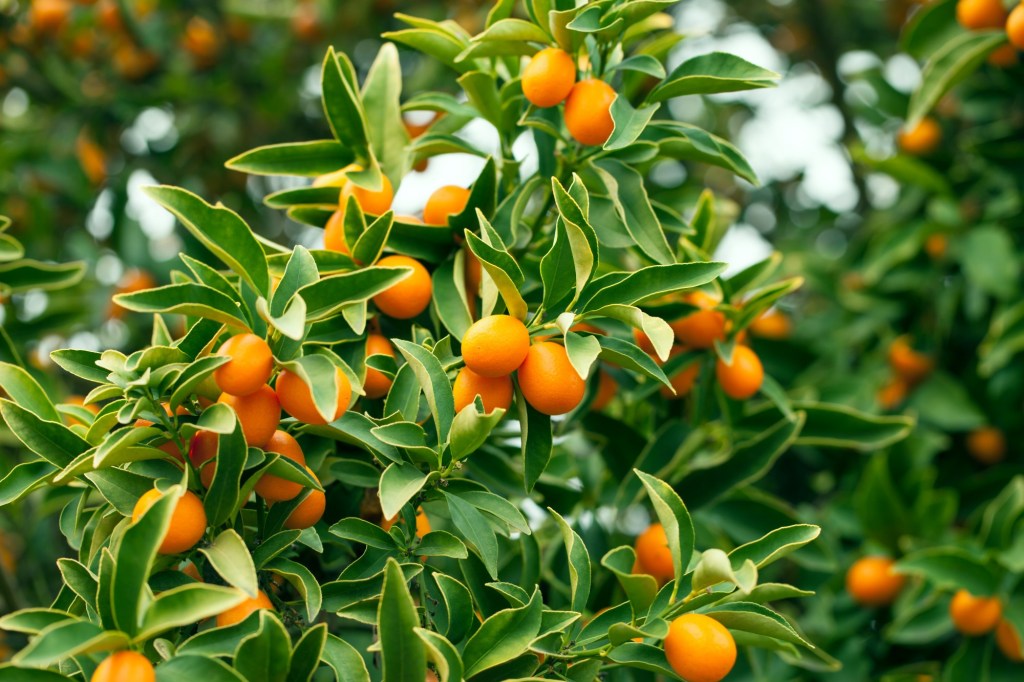
• Harvest kumquats, Washington navel, Oro Blanco grapefruits, pummelos, Eureka lemons, limes and more as they ripen.
• Color does not indicate ripeness when it comes to citrus. If oranges are orange but taste bitter or sour, they’re not ripe. Taste is the best test for ripeness.
• Unlike with stone fruit trees, pruning does not stimulate citrus production. Prune only branches that are dead, diseased, crossing, or growing straight up vertically.
• Paint any exposed bark with orchard paint to protect the tree from deadly sunburn.
• Do NOT spray citrus with dormant sprays.
• Control ants — they bring aphids, scale, mealy bug, etc. to citrus, followed by black sooty mold. Use Terro Ant Bait Stations or Advion Ant Bait Stations.
 If you haven’t already, now’s the time to make sure rain gutters are cleared out from fall debris, before the next rainstorms arrive. (Adobe Stock)
Prepare for rain
• Keep rain gutters clean.
• Use the clean water collected in rain barrels between rainstorms so your barrels don’t overflow.
• Clear drains and culverts to prevent water from backing up and flooding your property.
• Set your irrigation controller to “rain sensor” so it doesn’t turn on in the rain.
• Add places for water to pool and percolate into your garden’s soil: a dry stream bed, swale, or simple depression filled with mulch. This “banked” water will support your plants into spring.
• Don’t stand or walk on wet soil — doing so compacts the soil, making it hard to dig, to work in, and destroying the critically important soil microbes.
• Weed seeds sprout quickly in warm, wet. Once soils begin to dry out, use a hoe to scrape them away the sprouts. Most important, do not let weeds go to seed.
Irrigation management
• We irrigate soil so water is readily available to plant roots — including the deep roots. Some plants do better in soils that dry out between waterings, some do better in constantly damp (not wet) soil. Research the moisture preferences of the plants in your garden to make sure they are grouped and irrigated according to their water needs (this practice is called “hydrozoning.”) You may need to move some plants and replace others.
• Until we get significant rainfall, don’t turn off your irrigation. Native plants and others that don’t “want” summer irrigation hydrate now in preparation for hot, dry conditions.
• Even without rain, the cooler weather and shorter days mean soil stays wet longer, while plants need less water. Time to dial back your irrigation.
• In winter, water less often but always run the irrigation for the same number of minutes. Whether in the heat of summer or the cool of winter, it takes the same amount of time for your irrigation to deliver enough water to saturate soil and your plants’ rootballs.
• Check your irrigation system for leaks, breaks, kinks, etc.
– Run irrigation zones one by one.
– Flush each line, whether drip or spray.
– Convert overhead spray to inline drip irrigation.
Winter cleanup
• Collect fallen leaves from deciduous fruit trees: peaches, plums, apples, etc. and put them in your greenwaste can, not into compost. They are likely infected with diseases and insect eggs or larvae.
• Do a scratch test to figure out which branches are alive (green under the outer bark), and which are dead (brown under the outer bark). If they were killed by cold, leave them until spring to protect the rest of the plant through winter. If they died from disease or insects, cut them off.
• Do NOT prune off cold and freeze-damaged leaves, stems, or branches. Leave the damaged parts to protect the rest of the plant from upcoming freezes.
• Deadhead spent flowers from perennials, flowering trees, and flowering shrubs. Cut each flower stem down to their base. Compost cuttings and stems narrower than a pencil. Larger stems won’t break down well enough for home compost. Send them off in the greenwaste.
• Rake walkways. Wet or decomposing leaves are very slippery.
• Mulch under and around plants with coarse, wood mulch (not bark) for nonsucculent ornamental plants, use straw for vegetable plants, and rock for succulent plants.
• Turn and mix cold compost piles. Use the finished compost to mulch your garden.
• Empty and clean pots unused pots. Recharge old potting soil with worm castings and compost; then use it with new plants.
• Collect rakes, shovels, pruning shears, and other tools scattered across your garden. Clean them, then organize them into drawers, hang them on hooks, etc. in a potting shed, garage, or other dry spot protected from critters.
• Store bagged granular fertilizer, potting soils, and soil amendments containers with water- and critter-tight lids.
Vegetable gardens
• Plant onion sets (tiny onion plants), artichokes, rhubarb, and more sold in nurseries now.
• Harvest root vegetables like carrots, radishes, turnips, etc. Plant a new crop right after harvest.
• With lettuce, spinach, and other leafy greens, pick only as many leaves as you need at the moment. The plant will grow more leaves.
• Feed brassicas ( broccoli, kale, cabbage, etc.) with all purpose vegetable fertilizer.
• Shoot aphids off plants with a hard spray of water using a Bug Blaster hose end nozzle.
• Holes and ragged edges on leaves are usually from snails, slugs, or tiny green worms.
– Though ugly, treat only when the damage is so extreme that the plant is truly dying.
– If the damage is extreme, use Bt organic pesticide which is specifically for worms and mosquito larvae.
– Bt kills butterfly caterpillars too, so keep it away from passion vines, parsley, dill, fennel, milkweed, and other plants that attract butterflies.
• Let some parsley, dill, and cilantro plants reseed for an ongoing supply. Leave more for caterpillars.
• Continue to plant from seed: rutabaga, carrots, beets, turnips, radishes, leafy greens.
 Running the heat inside dries out your plants and their soil, so a once-a-month spa day for houseplants is a smart idea in winter. (Adobe Stock)
Houseplants
• Since indoor heat dries out the air and the potting soil, give your plants a spa day once a month. Fill your bathtub with a few inches of water for humidity. Set houseplants on top of plastic containers or Mason jars, etc. placed upside down in the tub so houseplants don’t sit right in the water. Leave them for a day or so.
• Check houseplants for aphids, mealy bugs, or scale. Use a cotton swab dipped in alcohol or spray insecticidal soap — NOT dish soap — to kill the critters.
• An inch layer of fine gravel or rounded pebble over the top of potting soil stops fungus gnats from laying eggs in damp potting soil. Mosquito Bits granules crumbled over the surface help, too.
Events
Spring will be here before you know it — the perfect time to start seeds for your summer vegetable garden. This year, learn to start seeds or polish your seed starting skills with my virtual course “Easy Seed Starting: the Ultimate Seed to Harvest Course,” plus optional in-person workshops, all of which kick off in March. Want to know more? Attend an informational webinar on Jan. 27. Sign up for the wait list at nanstermangardenschool.com/easy-seed-starting.
Sterman is a garden designer, journalist and the host of “A Growing Passion” on public television. She runs Nan Sterman’s Garden School at waterwisegardener.com.
Comments are closed.