
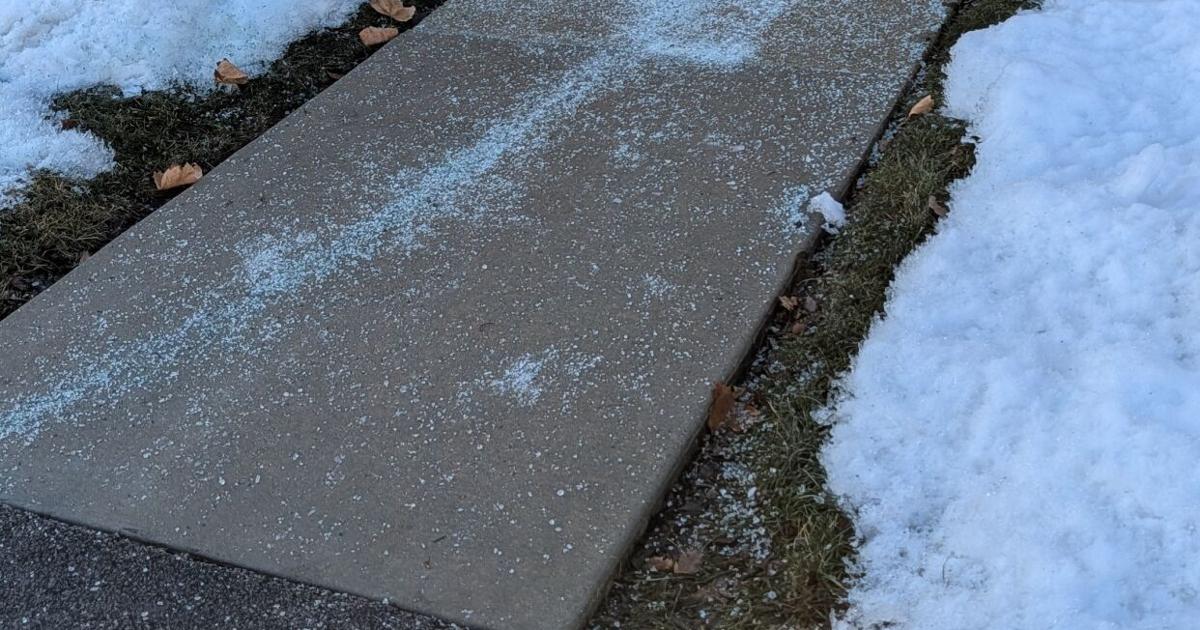
As we’ve already experienced this year, winter in Illinois commonly means snow and ice. Though plowing and shoveling are the primary means of removing snow and ice where they aren’t wanted, de-icing salts also help prevent slick, hazardous conditions. While salt is great in its place, it’s not so great for many things that may encounter it.
Rock salt (sodium chloride) is the most common de-icer. It’s cheap, effective and plentiful, but it does have some drawbacks. It is corrosive to both vehicles and concrete, and it can also damage soil and plants. As rock salt dissolves in water, its ions (sodium and chloride) separate. These ions can cause damage in our landscapes in high enough concentrations.
High levels of sodium can damage the soil’s structure, preventing it from clumping and making it susceptible to compaction. This can then lead to reduced permeability in soils (water and air can’t get into and through the soil). High sodium levels can also raise soil pH.
Nutrient imbalances can also be caused by high soil levels of sodium and chloride. These high levels can restrict plants’ uptake of other essential nutrients, leading to nutrient deficiencies. Chloride ions can also accumulate in the growing points of plants and become toxic, resulting in stunted, yellow foliage; leaf scorch; twig die-back; and overall stunted growth.
Just like the salt in a salt shaker, rock salt absorbs water. As it holds onto water, there is less available for plants to use. This can create drought-like conditions for plants, even when there is adequate soil moisture.
Salt spray from passing vehicles can also damage plants. Salt that lands on plant tissues can dry them out by pulling water out of plant cells. It can also enter the plant and accumulate in the growing tips to toxic levels. This most commonly occurs on the sides of trees facing a road.
Many evergreen plants are very susceptible to salt damage, developing pale green, yellow or brown foliage in late winter and early spring. Deciduous plants may suffer from killed or damaged buds, and if flower buds are damaged, plants may have fewer or no blooms. Branch tips can also be damaged, which can lead to the formation of dense clusters of twigs, known as witches’ brooms. Fortunately, if the damage is not extensive, plants may recover from it.
So how can we help prevent salt damage to our soil and plants? There are various steps we can take:
Use salt judiciously, especially after March 1. Once plants begin to break dormancy, they become even more susceptible to damage.Limit salt applications to high-risk locations like steps and walkways and driveways on an incline.Use appropriate amounts of salt. According to the Salt Smart initiative, 12 ounces of salt, about as much as would fill a coffee mug, is enough to treat a 20-foot-long driveway or about 10 squares of sidewalk.Finish clearing snow before applying salt. This will help prevent the movement of salt into the landscape.Small amounts of salt can be applied before a storm arrives. This helps prevent ice from sticking to pavement, making removal easier and reducing the amount of salt required.Avoid using pure salt by mixing it with an abrasive material such as sand, ash or kitty litter to help with traction.Spread salt evenly instead of in clumps. Aim to leave about 3 inches of space between the salt grains.If there is leftover salt after ice has melted and surfaces have dried, sweep it up to prevent it from washing or blowing into plants or bodies of water.
If there are areas in a landscape, such as near a road, which commonly have issues with salt damage, consider growing plants that can tolerate higher levels of salt. There are several ways plants can protect themselves from salt. Some plants may have physical features that protect them from salt spray (these adaptations won’t protect them from salt in the soil). This can include thick, waxy surfaces or tightly arranged bud scales. When it comes to salt in the soil, some plants can prevent salt from entering their cells or can simply withstand higher salt levels in the soil. It’s important to note that even plants with some tolerance to salt can still be damaged by high levels of it.
Some plants that have tolerance to both salt in the soil and spray include sweet gum, bald cypress, Kentucky coffeetree, common horsechestnut, red oak, juniper, eastern red cedar, sumacs, potentilla and rugosa roses.
Ken Johnson is a horticulture educator with UI Extension, serving Calhoun, Cass, Greene, Morgan and Scott counties. This column also appears in the ‘Good Growing’ blog at go.illinois.edu/goodgrowing.
Comments are closed.