
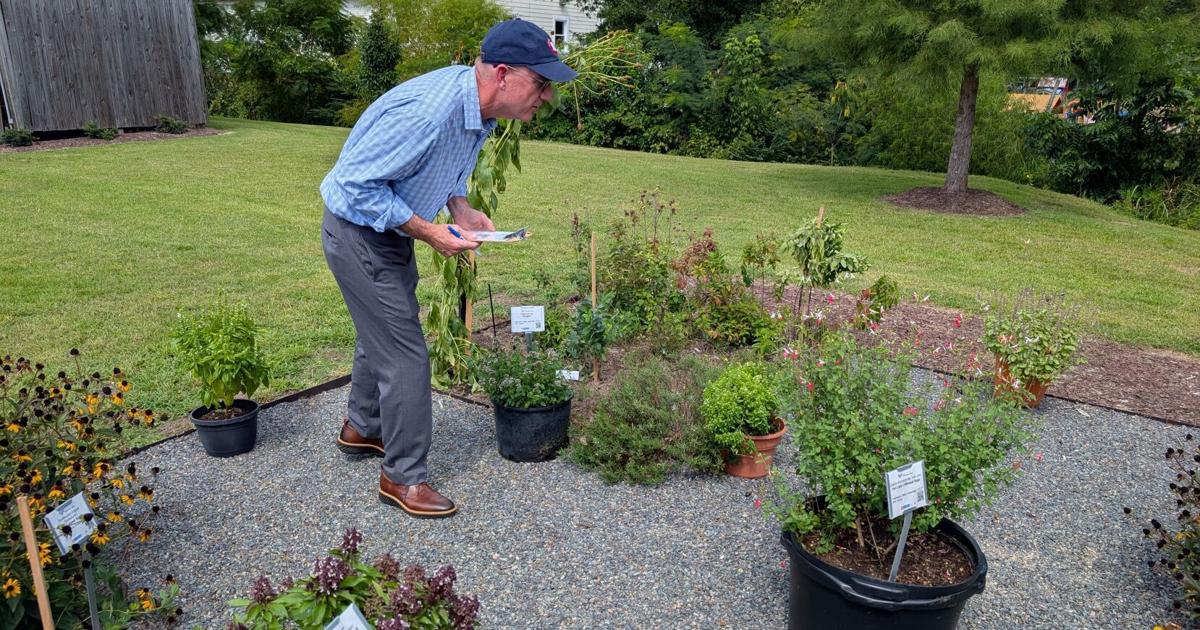
On the cusp of 2026, we are reflecting on the great success we had in Lee County through the Great Southeast Pollinator Census (GSEPC) in 2025. North Carolina has much to celebrate! The 2025 GSEPC saw the state shatter its ambitious goal of 5,000 counts, proving that community science is a powerful tool for conservation. While 92 counties participated, Lee County’s enthusiastic engagement was a highlight, more than doubling its participation from 2024 to set a new record.
What is the Great Southeast Pollinator Census?
The GSEPC is a two-day, regional community science project held annually in late August (Mar your calendars for Aug. 21-22, 2026!). Originally designed by Becky Griffin of UGA Extension in 2017, its goal is simple: generate useful data for scientists, create sustainable pollinator habitat across the region, and increase awareness of insects around us. Volunteers spend just 15 minutes observing a flowering plant, tallying every time a bee, butterfly, beetle, wasp, or other insect lands on it on a pictorial datasheet. Community scientists can do this as many times as they want in the two-day counting window. The participation has been growing across the Southeast, where folks in Ga., S.C., Fla., Ala. and NC can count. Mississippi is joining the team for the first time in 2026.
Lee County’s Record-Breaking Success
Lee County demonstrated a massive surge in local commitment. Led by the NC Cooperative Extension and Extension Master Gardener℠ volunteers, the county’s participation has grown exponentially: from 51 counts in 2023 to 144 in 2025! Lee County, despite its small size, ranked in the top 14% of the state for participation, too.
This success was driven by nine organized counting events, including at the Pollinator Haven Garden, the Sanford Farmers Market, San-Lee Park, and the City of Sanford Pollinator Garden. We also saw participation for the third year by the sustainable agriculture class at Southern Lee High School. They counted in their pollinator garden near the chicken coops. The data collected from these counts will eventually be able to help support local habitat development and the more than 70 farms in Lee County that rely on pollinators for crops like berries and pumpkins.
How to Be a Pollinator Hero in 2026
Your help is needed to maintain this momentum! Just do it! The process takes less than 30 minutes. Find a flowering plant at home, in a park, or at an organized event. Use the official datasheet (available on the GSEPC in NC website) to tally landings for 15 minutes, then upload your count.
Make sure you make your property pollinator-friendly! You don’t have to wait for the Count to start helping! Here are three simple things you can do in 2026 to support insect health:
• Plant more native species: Include plants like milkweed, goldenrods, beebalms and asters in your garden, which are crucial nectar and pollen sources for local pollinators. It doesn’t have to all be native, but working towards increasing diversity and removing invasive species are critical.
• Reduce Chemical Use: Avoid using pesticides, especially when plants are blooming and pollinators are active, as you are able! New research has shown that mosquito sprays can be especially harmful to non-target organisms and still not be effective at controlling mosquitos. If you need help with managing a pest, please contact your local NC Cooperative Extension office for more information. There are usually other options!
• Provide Habitat: Consider leaving a patch of bare soil or allowing a small corner of your yard to go wild; many native bees nest underground and benefit from reduced management and disturbance. The less “management” the better!
To learn more about the 2026 Census or find resources for pollinators and the Census, visit the NC GSEPC website at https://go.ncsu.edu/gsepcinnc.
Amanda Bratcher is the horticulture agent with NC Cooperative Extension- Lee County Center. You can reach out to the office at 919-775-5624 for more information or questions regarding this article, but also any other questions about your garden, farm, land or plants! We’re here to help! You can check out our website at https://lee.ces.ncsu.edu/events/ for more information and to register for upcoming programs.
Comments are closed.