
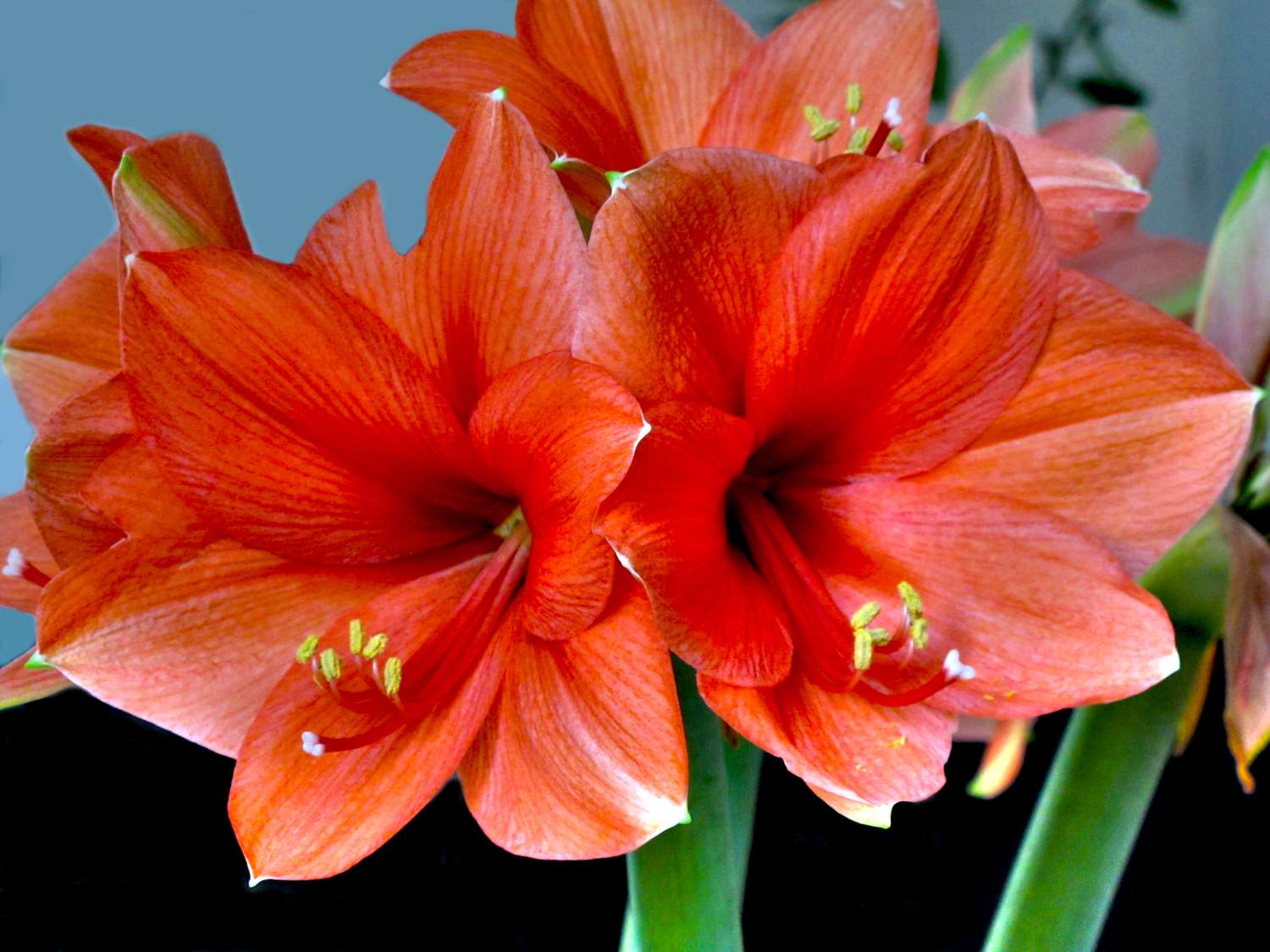
Amaryllis are spectacular flowers with red, white, and pink blooms that appear right around the holidays. These tropical blossoms develop on tall, thin stalks, giving them a unique, lively appearance that’s the perfect addition to your Christmas décor.
These show-stopping blooms will fade after New Year’s. However, you don’t necessarily have to toss them—they can thrive for many years if you follow the right steps.
Kathy Jentz, host of the GardenDC Podcast and co-author of The Urban Garden
Teri Speight, landscape gardener, garden coach, podcast host, and co-author of The Urban Garden
After Blooming
After blooming, your amaryllis needs time to rest. “The bulbs need a period of recovery and rejuvenation,” says author Kathy Jentz. Prune the blossom before seed development, as seed production consumes energy that could otherwise be used for more flowers.
“Cut off the flower stalks, but leave the foliage intact and reduce watering,” says Jentz.
Amaryllis is usually grown as a houseplant, but you can place these flowers outside in the summer. This will help them gather more energy so that they can bloom again next winter.
After the blossom fades, the amaryllis will develop a few glossy leaves to aid in energy production. Give these leaves plenty of light, and your bulb should bloom again.
Care Instructions
To keep your amaryllis thriving—and encourage it to bloom again next year—there are a few essential steps you’ll want to follow.
Sun
Sun is important for your amaryllis both before and after blooming. “[It] needs sufficient light to bloom,” says Jentz. “If it doesn’t get enough, its stems will stretch out and need support. Rotate the pot a quarter turn each time you water the plant, to keep yours growing evenly.”
Temperature
The ideal temperature is also important.
“They prefer a room temperature between 68 and 74 degrees Fahrenheit,” explains Jentz. “If you live in USDA Zones 8 to 11, then they can be planted outdoors in the spring and stay there year-round.”
In colder regions, it’s a good idea to place the amaryllis container outdoors during the summer for maximum sun exposure and photosynthesis. “Remember to bring them in before the weather gets cold, and discontinue watering,” she says.
Water
Water your amaryllis regularly, but avoid overwatering. However, never water amaryllis during its dormancy period.
Container Size
You don’t need a large pot for amaryllis, just look for something a few inches larger than the bulb. Fill it with a basic potting soil or perlite combination. Since they don’t demand a large pot, you can easily display your amaryllis in any convenient windowsill. “Repot them every three to four years,” Jentz says.
Where to Store
Amaryllis should experience a simulated winter to maintain blooming. “Place them in a cool, dark place to remain dormant for at least two months,” says Jentz. “Then take them out of storage, water them thoroughly, and put [them] in a sunny spot again to start the bloom cycle over.”
“I bring mine back indoors and place it in a dark area (under my indoor potting bench), a dark closet, or even the garage,” says gardening author Teri Speight. The location shouldn’t be in danger of freezing or getting too much light. “Allow the foliage to die back naturally and allow the soil to dry out.”
Comments are closed.