
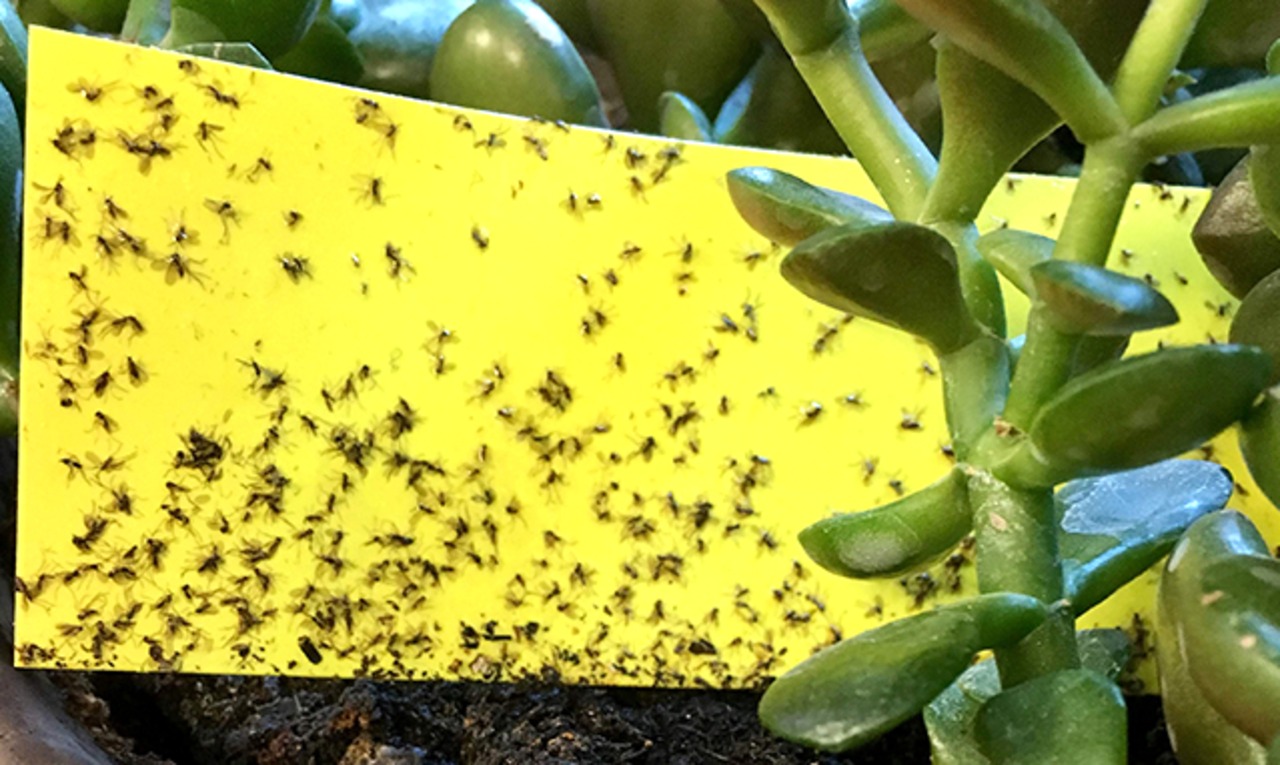
Houseplants can be a bit more at risk of bug trouble than outdoor plants because our homes generally aren’t patrolled by the many predator (i.e. “good”) bugs that keep a lid on so many outdoor bugs.
The best way to deal with bugs on the houseplants, says Costa Farms horticulturist Justin Hancock, is to prevent them in the first place.
He offers three main ways to do that in a post on the GardenSmart blog:
1.) Keep those plants as healthy as possible
Healthy plants are best equipped to both head off and withstand bug attacks.
“A stressed plant practically sends out signals that make it more attractive to pests,” says Hancock.
Among the good things you can do on that front are:
Make sure the plant is getting the right amount of light for that species (“Too little or too much can stress it out,” says Hancock).Deliver the right amount of water (overwatering and underwatering can both lead to dead roots).Provide good air circulation (“Low air flow can create a breeding ground for some pests,” says Hancock).2.) Inspect new plants for bugs before bringing them into the house
One main way bugs infest houseplants is that they infest plants in the greenhouse or garden center, then ride in unnoticed on the purchased plants.
Since it’s impossible for any grower to completely head off all bugs all the time, Hancock suggests giving new plants a thorough examination before taking them home, where they then might infest other existing plants.
Hancock says to look for four things:
Are there tiny dots, sticky residue, webbing, or any unusual bumps on the leaves? “Examine the undersides, as well as the tops of the leaves,” he says. “Some pests prefer hanging out underneath the leaf. Pay special attention to the junctions of leaf and stem.”Are there any insects visible — or at least signs of their activity, such as sticky “honeydew” that’s actually bug waste. Hancock suggests running your fingers along the stems as a feel test in addition to a close look.How are the roots and soil? “Watch for flying insects, crawling critters, or signs of mold,” Hancock says. “If you’re comfortable doing so, slip the plant out of the pot so you can see its roots. Healthy roots are firm and white. If the roots are mushy or the wrong color, there may be a problem.”Are there any pests on or underneath the pot? That’s a subtle source of brewing bug trouble that’s often overlooked.
“This scouting can save you time down the line,” Hancock adds. “It’s so much easier to deal with a few pests on a single plant than a full-blown infestation across multiple plants.”
3.) Quarantine new plants
“Separating new houseplants for a couple of weeks helps ensure they are not hiding pests that could spread to the rest of your collection,” Hancock says.
To quarantine, store a new plant in a location away from other houseplants for at least two to four weeks.
“A different room is best,” says Hancock, “but the other side of a room can work too. A terrarium or glass case works really well, too.”
Care for the new plant as usual, but regularly inspect it until the end of the quarantine period. If you’re confident by then that no pests have hitchhiked in, incorporate it with other plants in its intended location.
One of the most common indoor pests is fungus gnats – those tiny black bugs that are often confused with fruit flies.
Comments are closed.