
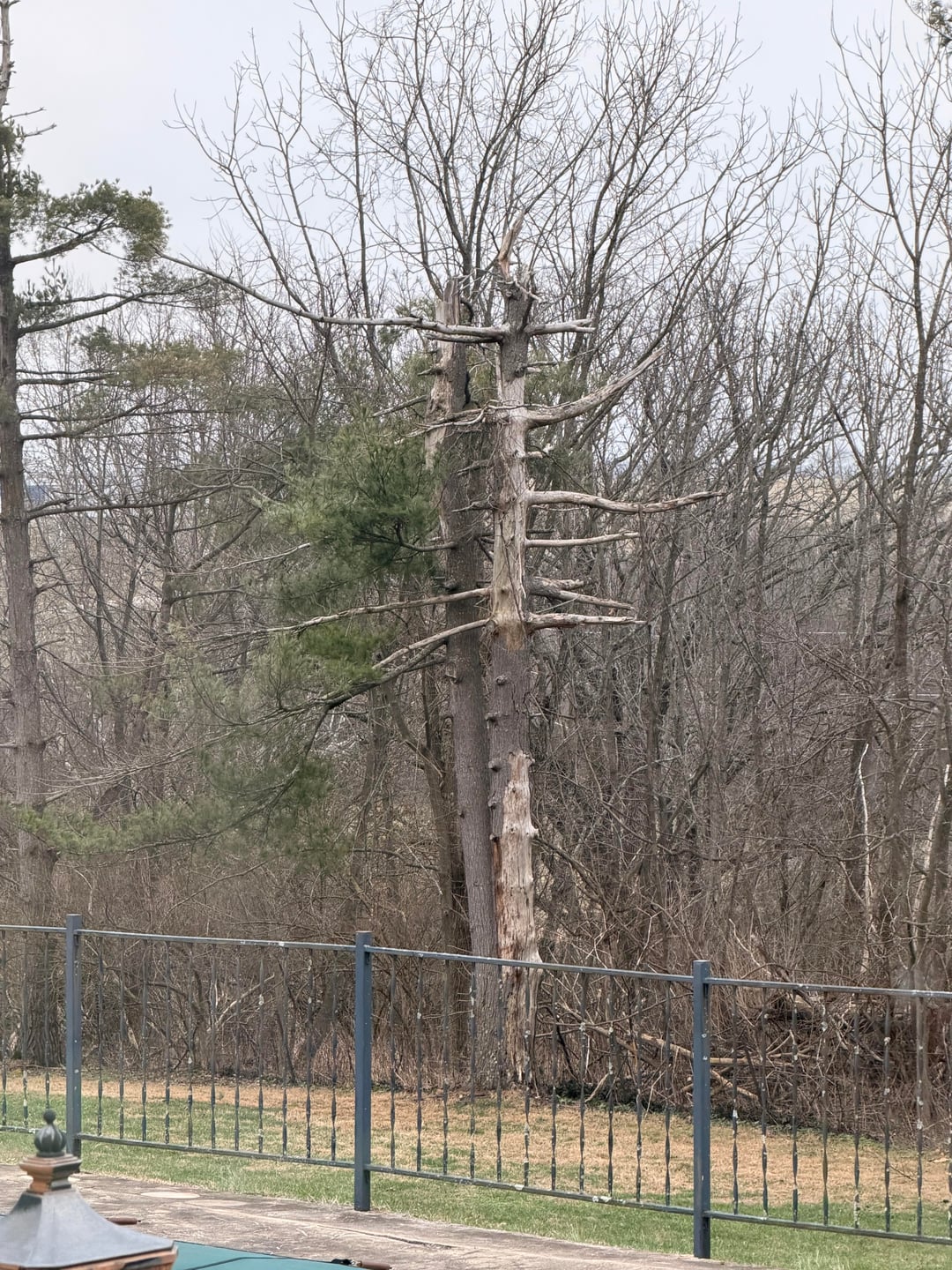
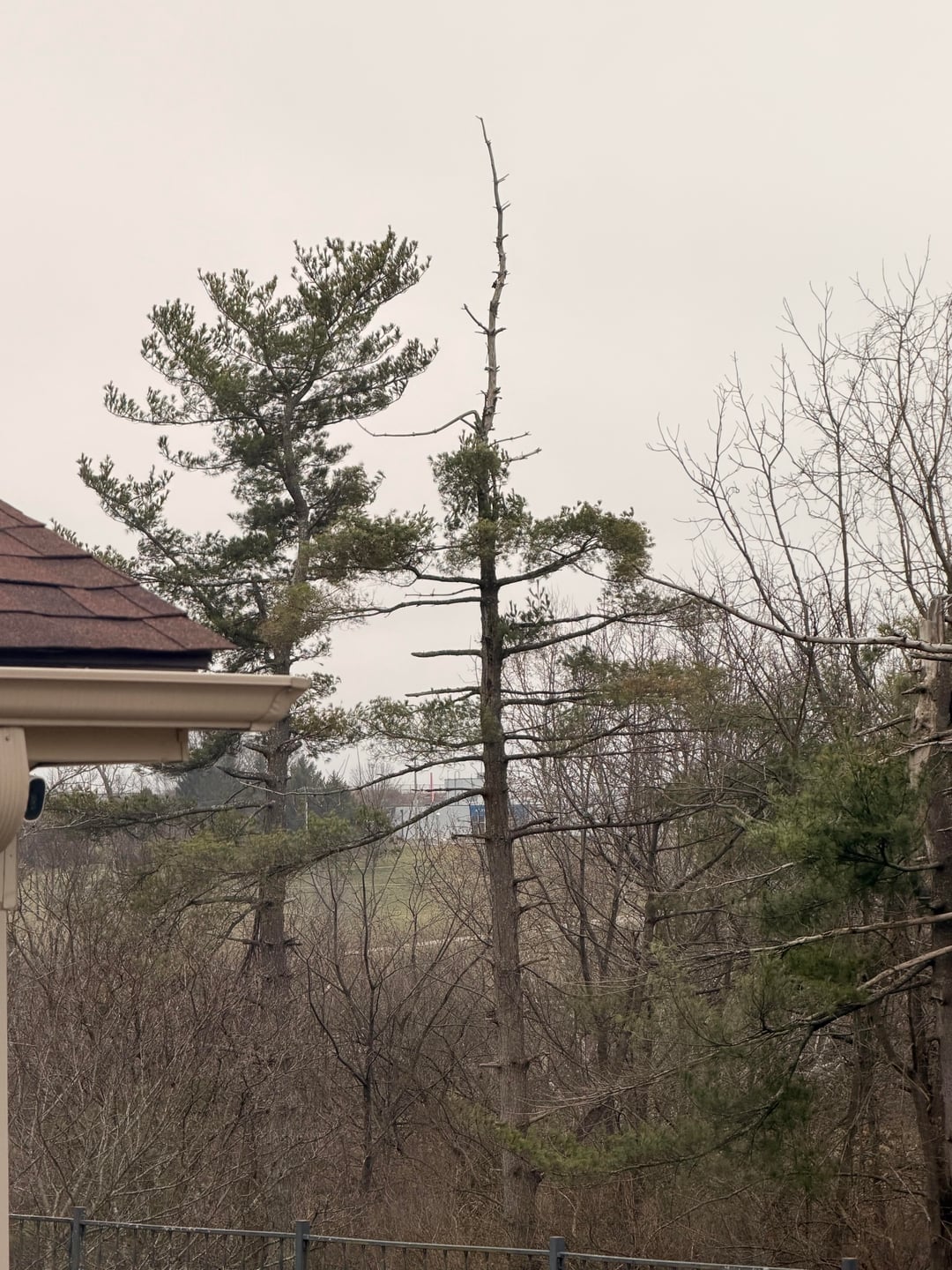
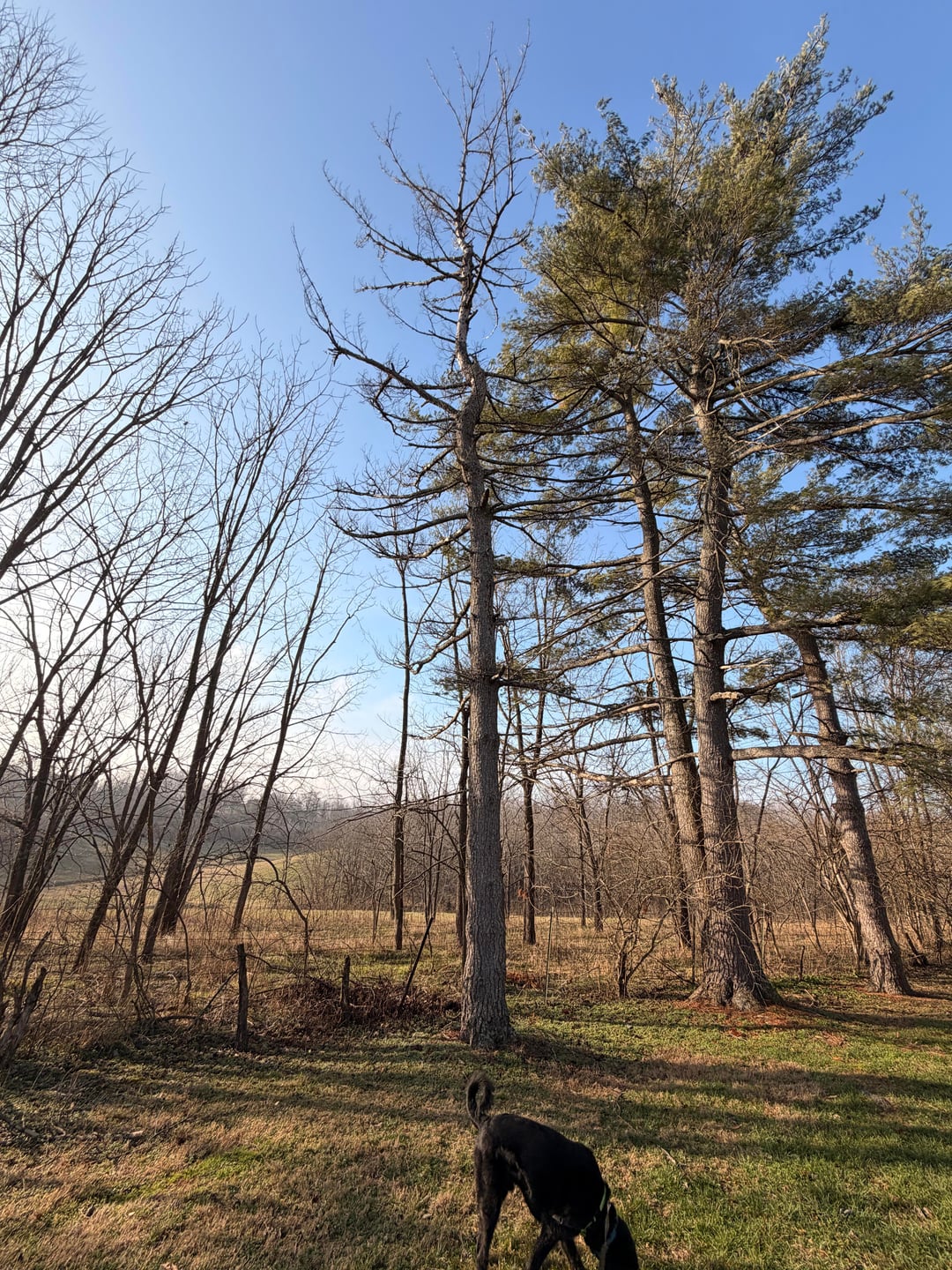
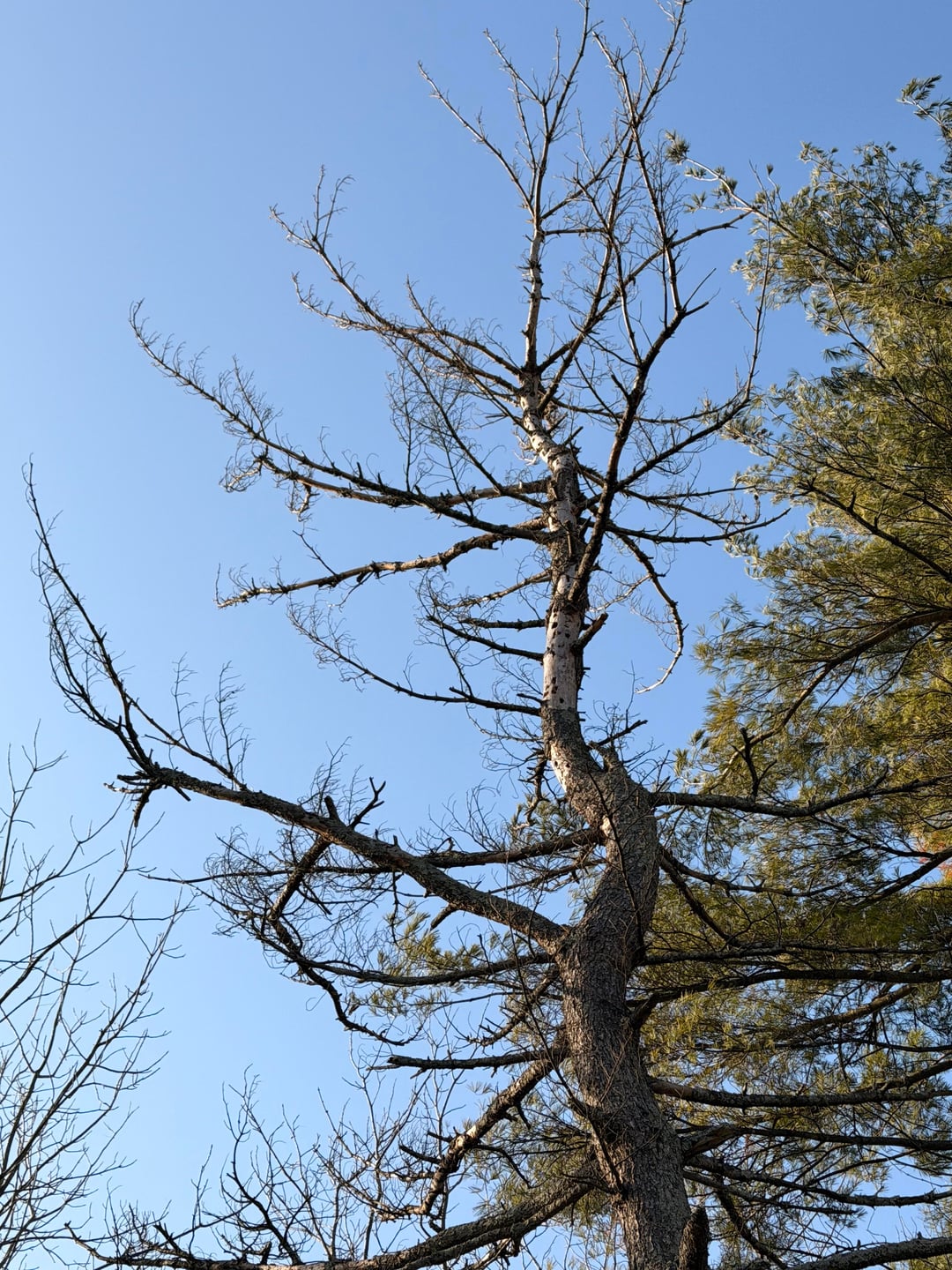
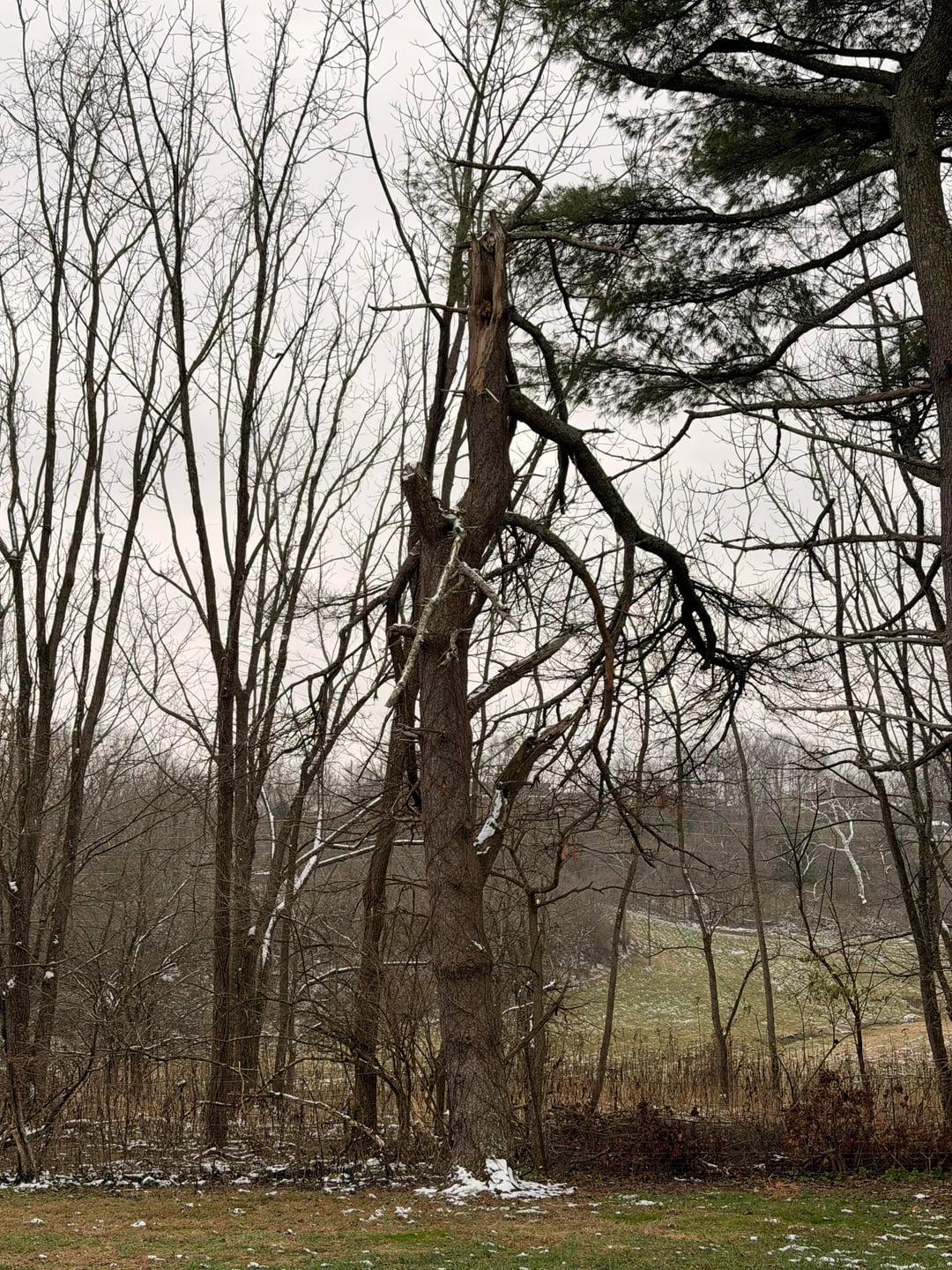
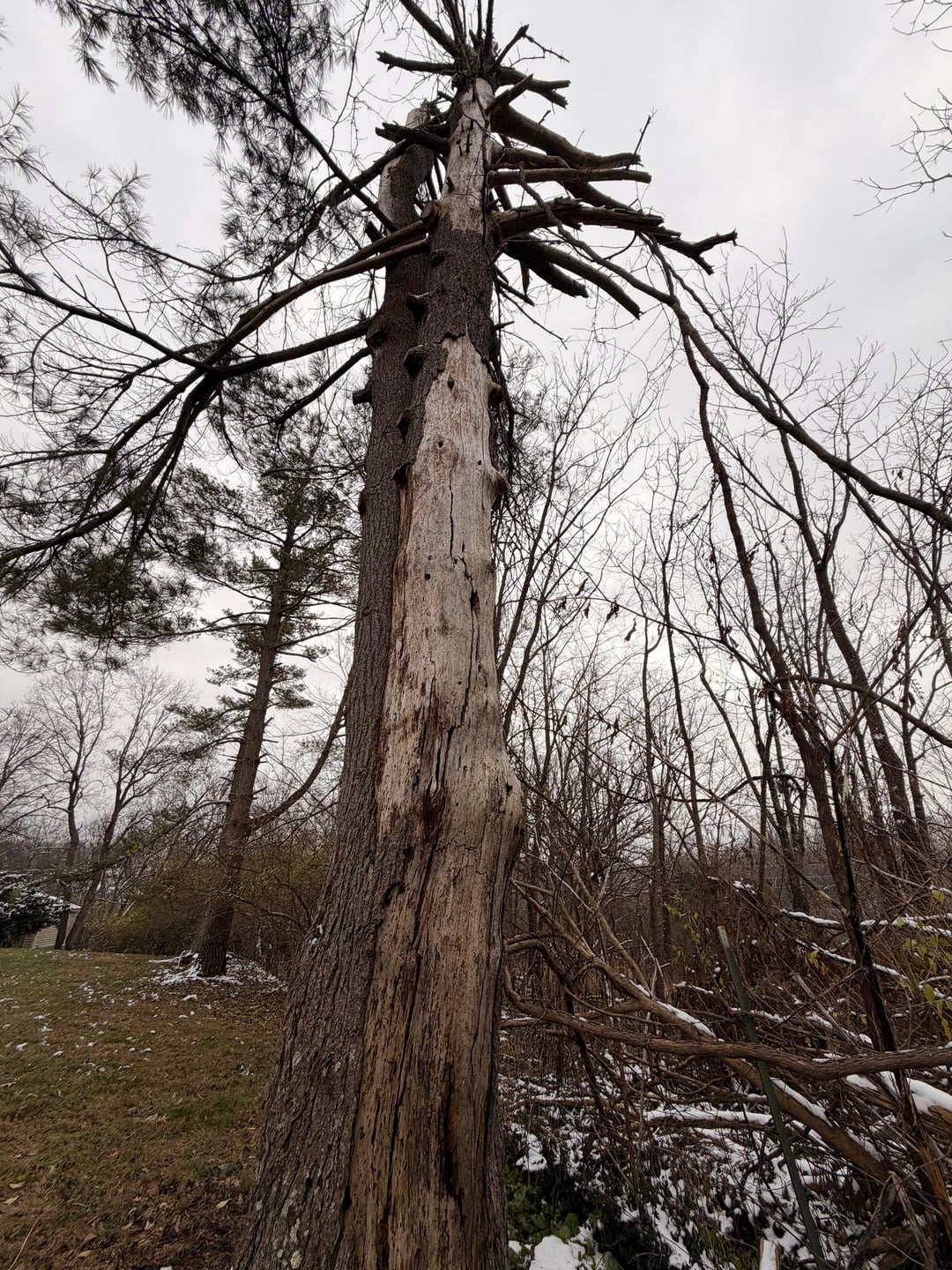
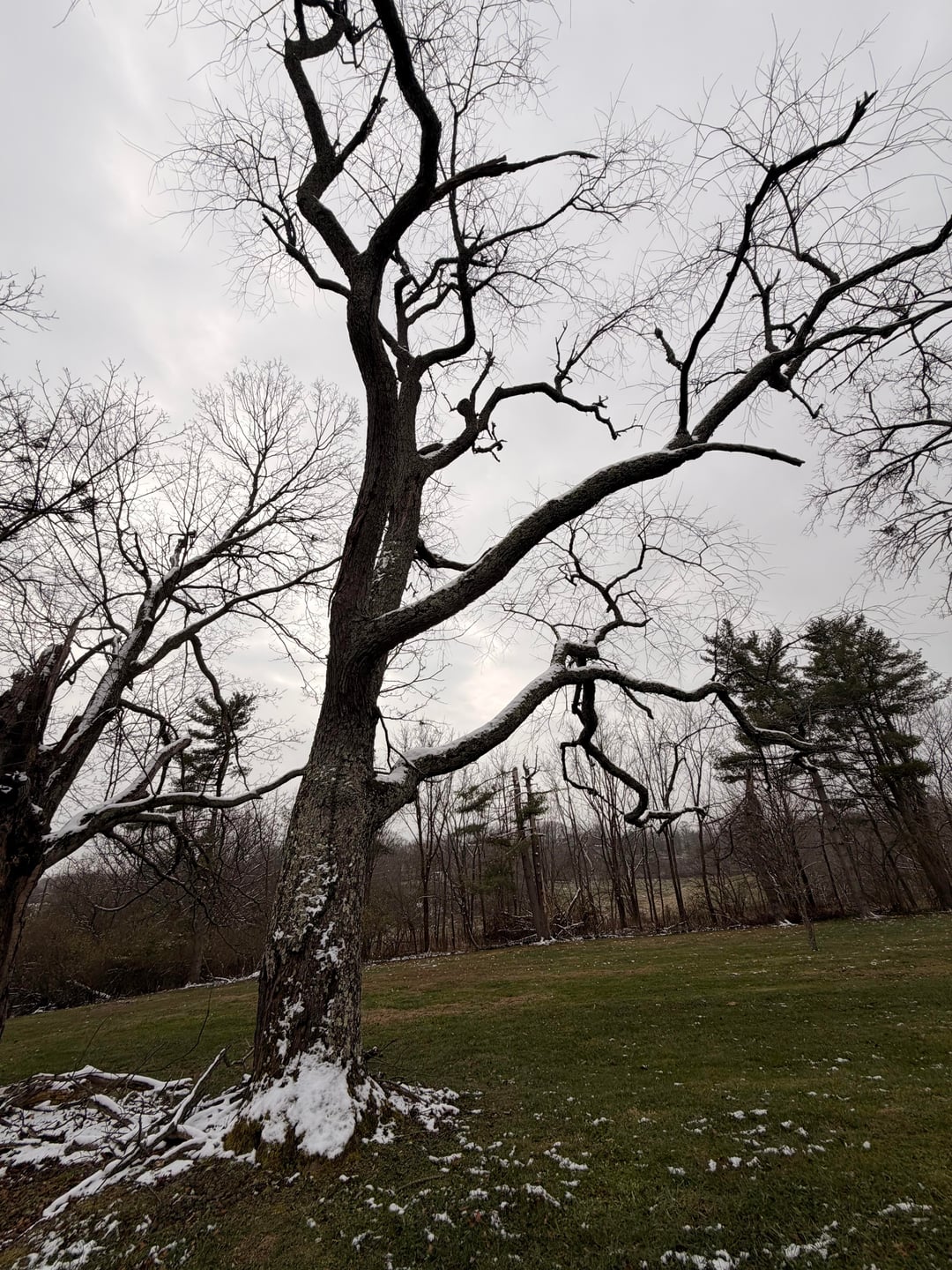
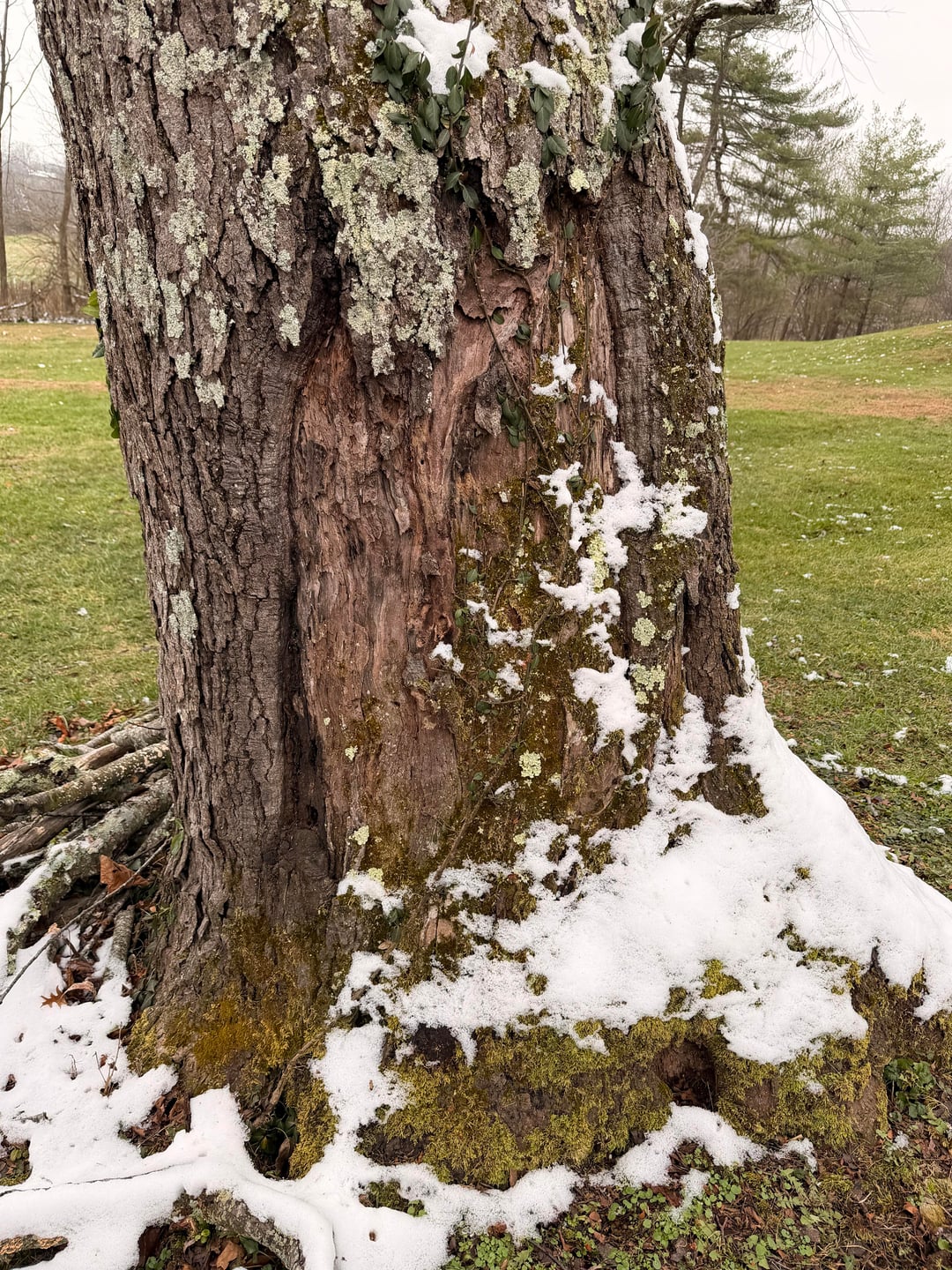
We just bought a house and I noticed with every visit, another tree was crumbling from the top down. They’re all very mature trees, so I’m stumped as to what can kill practically a whole tree line of pines.
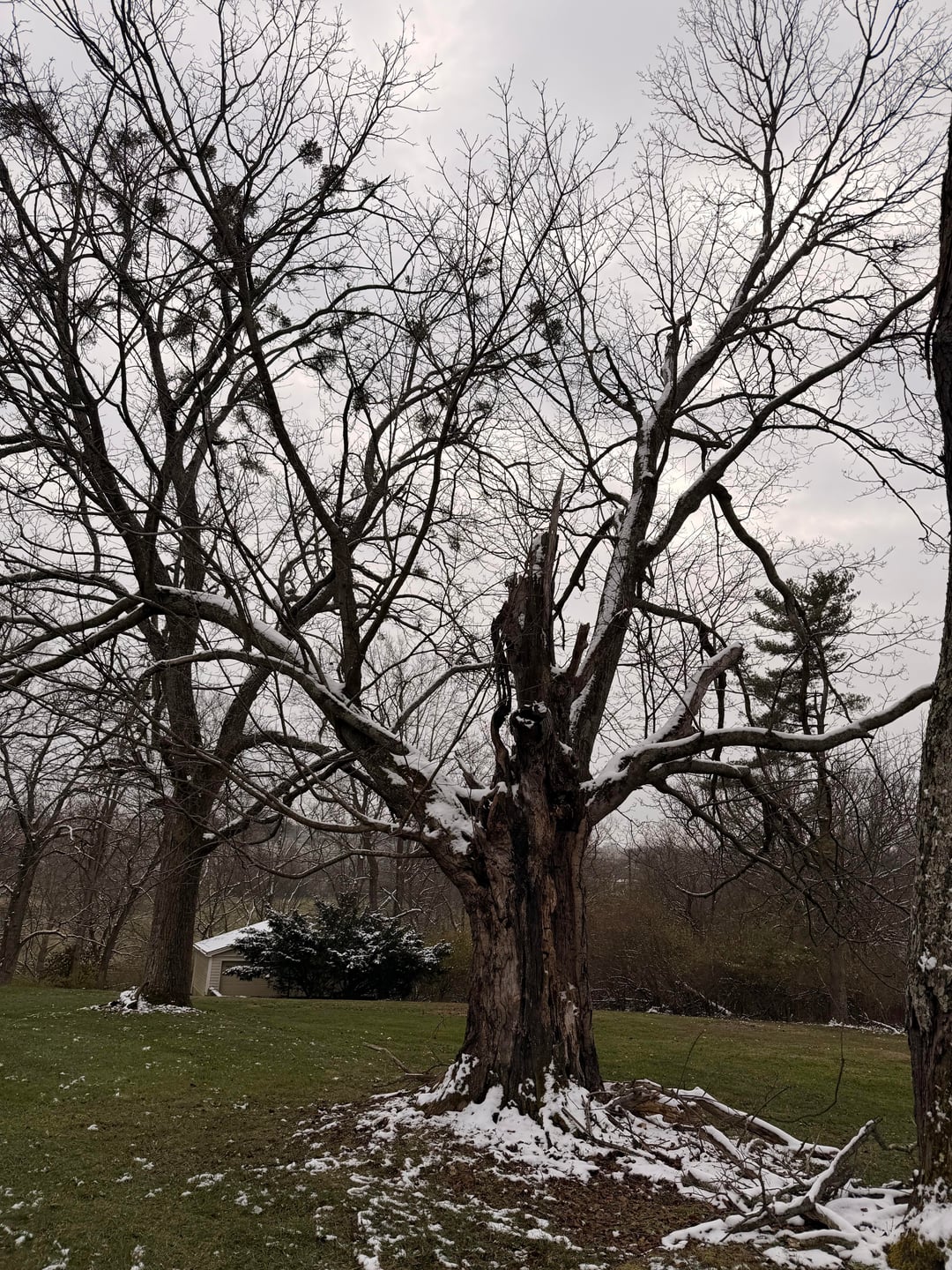
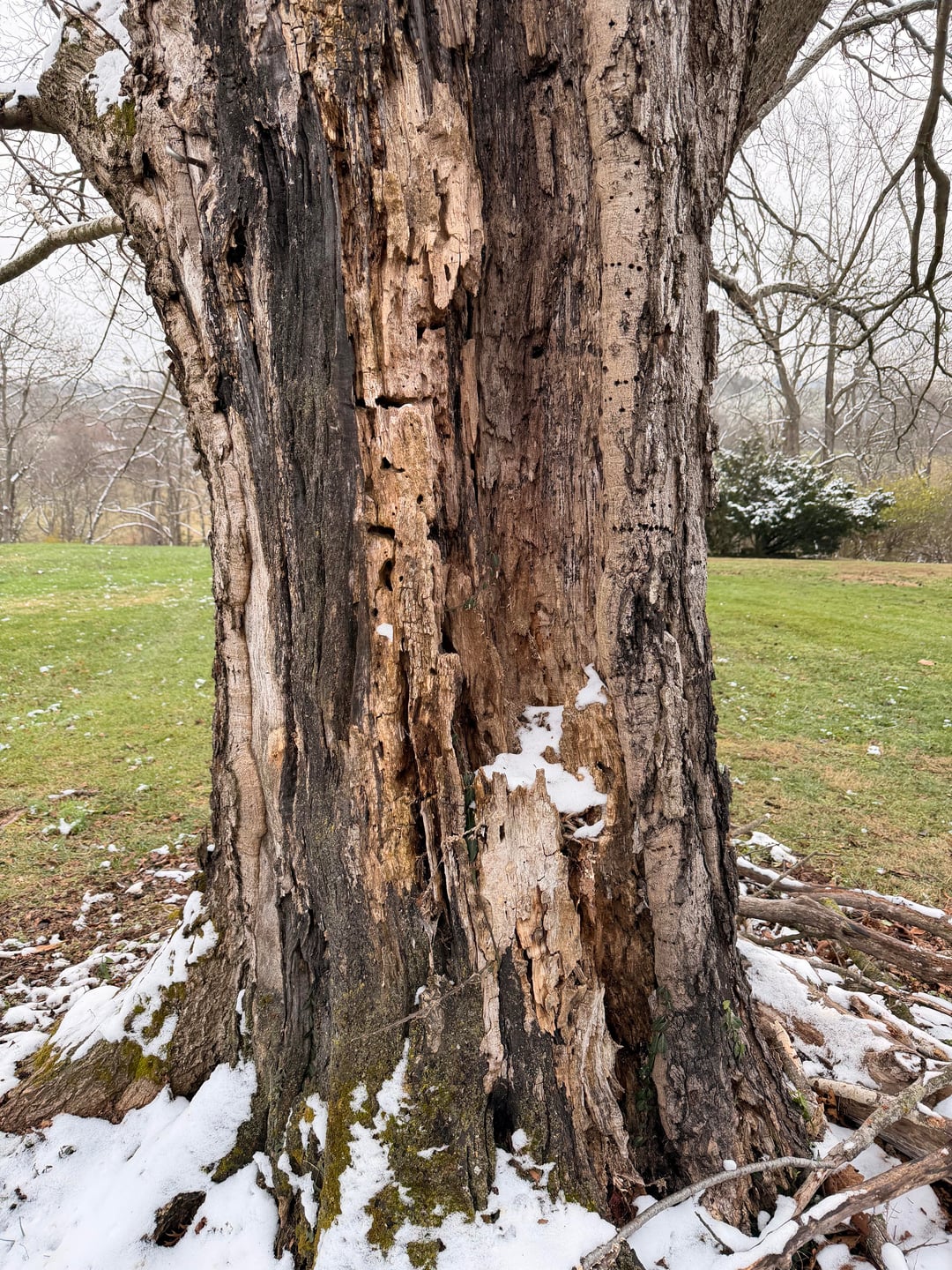
We also have a couple of trees that are away from the tree line that are not pines (I won’t insult this forum by trying to guess what they are) that has been dead for some time, and the other I’m thinking we’ll have to take down because of the lean.
Extra indoor on the property: the land behind/downhill from us is a flood plane. We have a septic tank system, and SEVERAL mole/vole tunnels riddling the yard. We live in zone 7a, KY.
by cjstroup
9 Comments
It could be a wide variety of things, these trees look like they’ve been dead for a while.
Looking at that a lot of them are/were in the turf area and the right on the woodline there’s a chance that the soil compaction from the initial property build-up could have started the decline process, but that’s pure speculation.
Get an ISA and ideally TRAQ arborist out to do a walkthrough to see if they can identify anything specific
God. He’s in control of everything. Even Satan.
Do you have Pine Bark Borers in your area? Those trees look like they have been dead for awhile
I have seen this happen when people spray too much roundup on the grass where the trees have roots below
They all look like they are on the older side and they may just be dying of natural causes/age.
Has there been any storms or high wind events? White Pines and related ones have softer wood and can be damaged more by higher winds.
Did you see them alive, previously?
Its important to keep in mind that trees cant move, they just grow where seeds land. They dont always get a suitable spot. Plants are incredibly genetically diverse, some just dont have what it takes to survive all conditions.
Dead trees arent necessarily an indicator of a problem, they are a feature of an older forest.
Anywhere adjacent to managed lands has the possibility of human-induced damage, like damage to roots from pipe installation, changes to water level and quality, etc.
None of that is to say there isnt a single culprit, like beetles or disease, absolutely could be, but could also be coincidence.
Also, while we may find them unsightly, dead snags are crucial wildlife habitat. Unless your snags and leaners are in a dangerous spot, its best to leave them for nature.
Grass fertilizer runoff, root compaction, roots cut during building, excessive water, pine beetles. These are just a few things that can cause tree deaths.
Based upon the information provided, who knows? Have an ISA Certified Arborist assess on site.
In recent years in the Northeast there have been a number of disease complexes affecting White pine. They have the delightfully vague names of white pine needle disease and white pine decline. The general consensus is that they are opportunistic and have begun affecting pines that are stressed due to multiple years of drought. This is the prevailing theory. I’m going to assume that conditions in Kentucky have been similar. This is an oversimplification but basically what is happening is after the needles have flushed and used carbohydrate reserves in the tree they are shedding before they begin replenishing said carbohydrate reserves. Consequently the tree is being depleted and not replenished over seasons. Initially we were treating these with fungicides. Foliar applications of fungicides on White pine is nobody’s idea of a good time. Subsequently we have started injecting biostimulants and nitrogen fertilizer into the root zone to help replenish. This is practical only for preservation of important trees. In terms of the pines along the wood line you might remove and chip the dead trees back into the forest floor. A thick layer of composted wood chips will help. But ultimately mother nature will have the final say.