
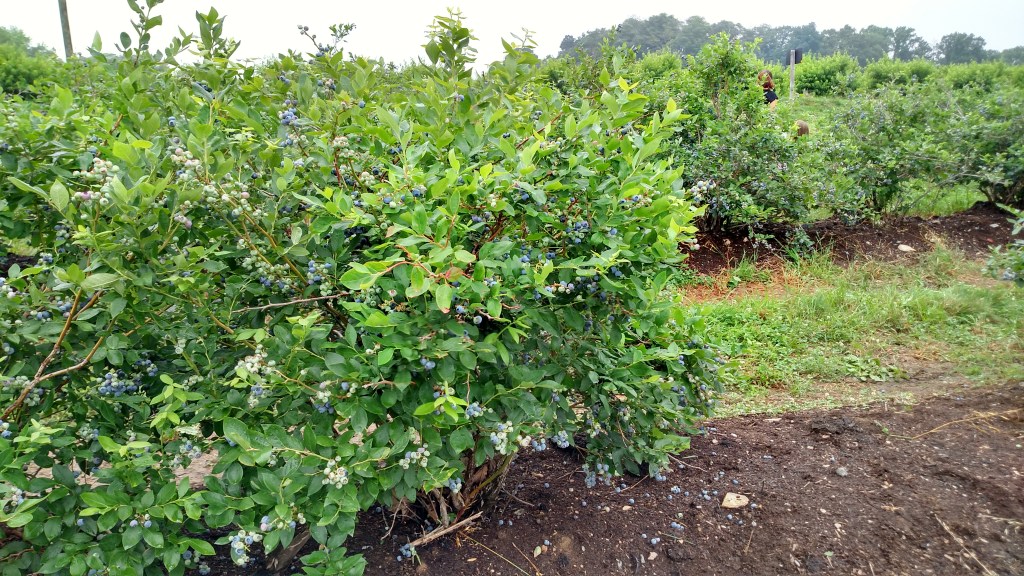
I want to plant a blueberry bush this spring, but prior attempts have failed. I’ve read that they require acidic soil. Could I collect my coffee grounds until planting season, and use them to improve the soil?
Coffee grounds won’t acidify the soil by a measurable amount (if at all), as noted in the Washington State University Extension fact sheet “Using coffee grounds in gardens and landscapes.” Grounds can be added to a compost pile; however, the resulting organic matter provided by finished compost is a great soil amendment. Organic matter in the soil supports the health of plant roots and their associated microbes.
The planting site should receive at least six hours of direct sun in summer for good plant vigor and productivity. A laboratory soil test will tell you what the current soil pH is, how much organic matter it contains, and what levels of nutrients are present. One-half of the volume of the top foot of soil within the shrub’s root zone should be compost or compost and peat moss to increase organic matter content.
Blueberries grow best in the 4.5 to 5.5 pH range, and most home garden soil is not that acidic. The pH can be lowered with a form of sulfur: either elemental sulfur or iron sulfate. Do not use aluminum sulfate as a substitute, due to risks of aluminum toxicity for the roots. How much you apply depends on the form of sulfur and what your soil type is (clay vs. sandy loam). Lab test results typically include application rates if a pH adjustment is recommended, and they are expressed in pounds of material per square foot of planting area to achieve a specific pH.
A link within our Growing Blueberries page (under the “planting” section) provides a soil acidification calculator to help with DIY adjustments, but you still need to know what the starting pH is. Home-use soil test kits may not be as accurate or have results that are easy to interpret compared to lab testing. If the soil pH needs changing, but it’s outside the ideal range, you can still plant a blueberry this spring and follow all the other care tips to get it established while you wait for the sulfur to work. If you prefer to delay planting while the sulfur works, early autumn is a great time to install shrubs, and nurseries should still have some fruit shrubs available for sale at that time.
If testing reveals that the soil is acidic enough, other factors were responsible for blueberry losses in the past. It’s hard to guess what those were without knowing the plant’s symptoms, but make sure you loosen any tangled roots upon planting, water regularly during dry periods, and mulch exposed soil.
Since you refer to a singular blueberry shrub, I’ll mention that you may want to consider adding another. Blueberries can somewhat self-pollinate, but they fruit best when cross-pollinated with a second blueberry variety.
I’m curious about the pros and cons of using coconut coir instead of a peat-based soilless potting mix for indoor plants and seed-starting.
Coconut coir, derived from the husk of coconut palm fruits, is becoming more widely used in potting mix as a way to reduce our reliance on peat moss. Coco coir processing has a large impact on the material’s end quality and water-holding capacity and aeration, at least in comparison to peat moss.
Overall, when used at a coarseness grade similar to that of typical peat in a potting mix, coir tends to hold more air and less water. This is not necessarily a good or bad trait, as adjustments in plant needs and irrigation practices can greatly influence how successful or not any given plant species will be in either substrate.
When sourcing coir, look for material that is processed to have low salt levels, as this is another trait that might vary considerably from one manufacturer, source, and even batch to another. Excess salts can be leached out of the coir with water before planting. Some growers mix coir with peat to use less peat overall but retain some of the familiar attributes of that material, but you may need to experiment if you want to use coir for seed starting or container plantings to see how it works with your style of cultivation (how often you’re watering, fertilizing, etc.). Some plant species might be more picky about substrate properties (moisture or nutrient retention, for instance) than others.
University of Maryland Extension’s Home and Garden Information Center offers free gardening and pest information at extension.umd.edu/hgic. Click “Ask Extension” to send questions and photos.
Comments are closed.