
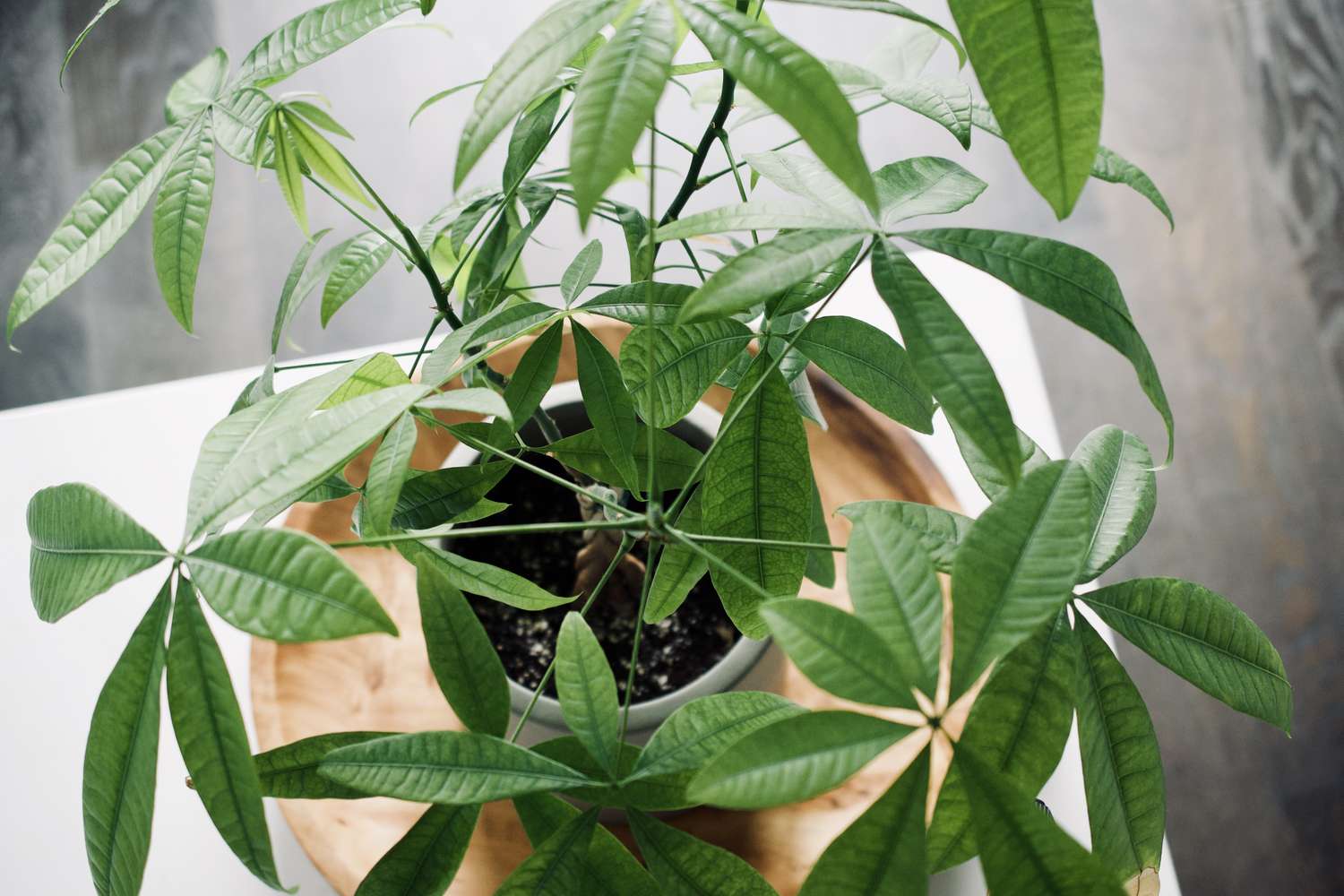
Key Points
Pruning a money tree helps keep it compact and healthy indoors, preventing leggy growth as the plant matures.While money trees can be pruned at any time, trimming in spring or summer supports faster recovery and stronger new growth.Make clean cuts just above leaf joints, focus on leggy branches, and never remove more than one-third of the plant at once.
Money trees (Pachira aquatica) are beautiful and beloved houseplants that are said to bring good luck to their owners. However, they can also grow to be upwards of 60 feet in their natural habitat, so it’s important to prune them when growing them indoors.
Fortunately, money trees are pretty forgiving, so pruning is a relatively straightforward process. To help you avoid any pitfalls, we spoke with gardening experts about exactly how to do it.
Lee Miller, landscape and garden designer, gardening coach, and author of The Houseplant Guide
Justin Hancock, horticulturist at Costa Farms
Benefits
Pruning a money tree “encourages new growth and fullness,” says Lee Miller, a garden designer and coach. For example, if your tree doesn’t get enough light, it can become long and leggy. Pruning can make it look full again, reducing this less-than-appealing appearance.
“Depending on your space and the look you’re going for, you may also want to prune to shape or train it,” says Justin Hancock, horticulturist at Costa Farms.
When to Prune
You can prune your money tree any time, regardless of the season. “That being said, a lot of gardeners prefer to prune in spring and summer, because that’s when the plant is in active growth,” says Hancock. Lee agrees that this timing is best.
If your money tree is showing signs of long, lanky growth, then it’s time to consider pruning. Keep an eye on the internodes, the sections of stems and branches between the leaves. “The longer the internodes, the leggier your plant will appear,” he says.
How to Prune
You don’t need any fancy equipment for pruning—just a good pair of scissors or pruning shears. Make sure yours are clean, and then you’re good to go.
First, identify where to prune. “Keep in mind that wherever you make your pruning cut, new growth will activate from the junction of the first leaf and stem below your cut,” says Hancock. He recommends focusing on branches that are growing especially long or in a weird direction. Trim any branches that are starting to look leggy, so the tree can look its best.
Then, cut a half-inch above where a leaf emerges from the stem. “If you prune higher above that junction, you’ll leave a stub that may eventually start to yellow and look unsightly,” warns Hancock. You can prune multiple branches, but make sure you don’t cut too many all at once. “It’s best to never prune off more than about one-third of the total leaf mass at one time,” he says. “Pruning too many leaves at once can shock the plant.”
Comments are closed.