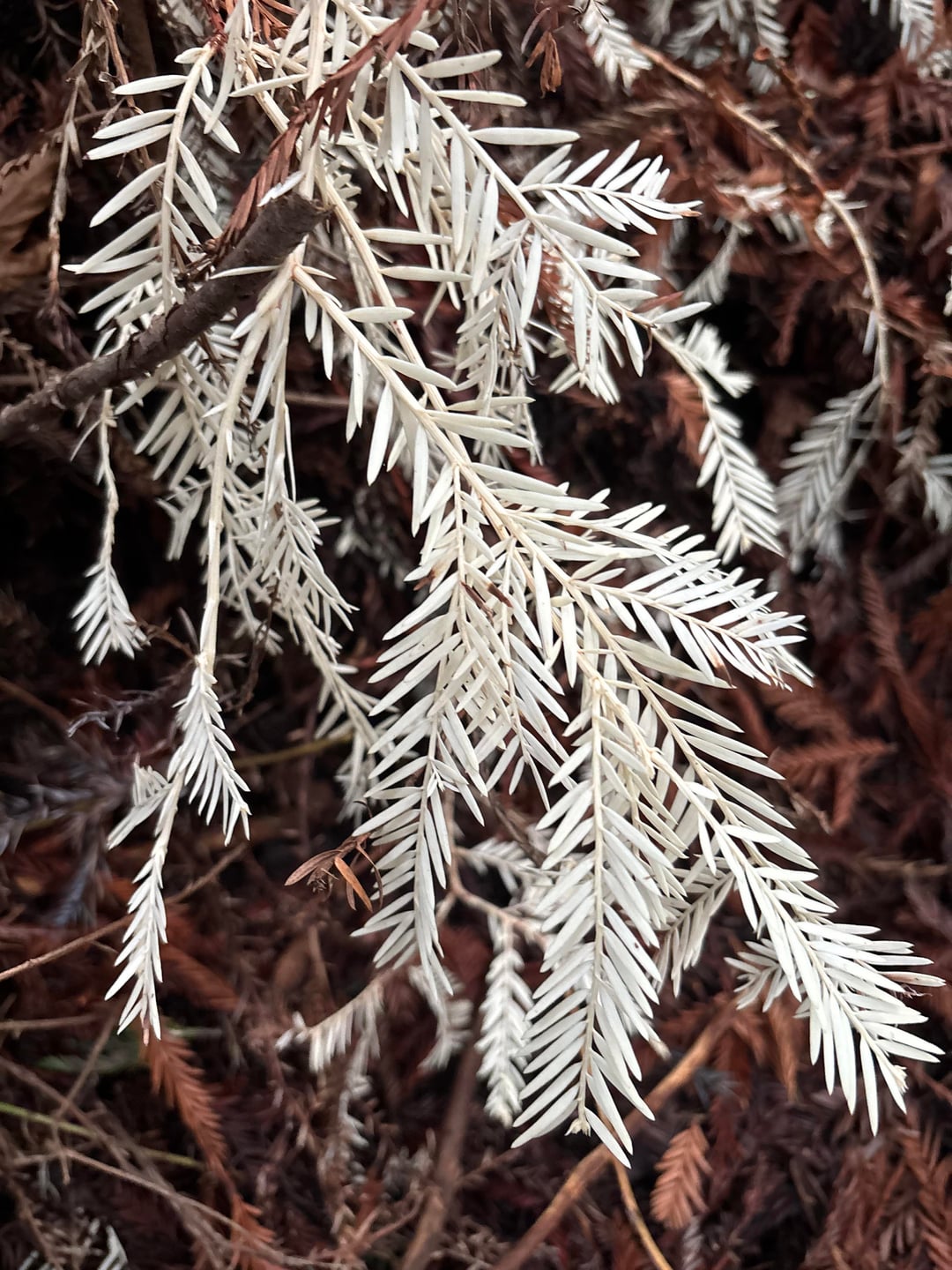
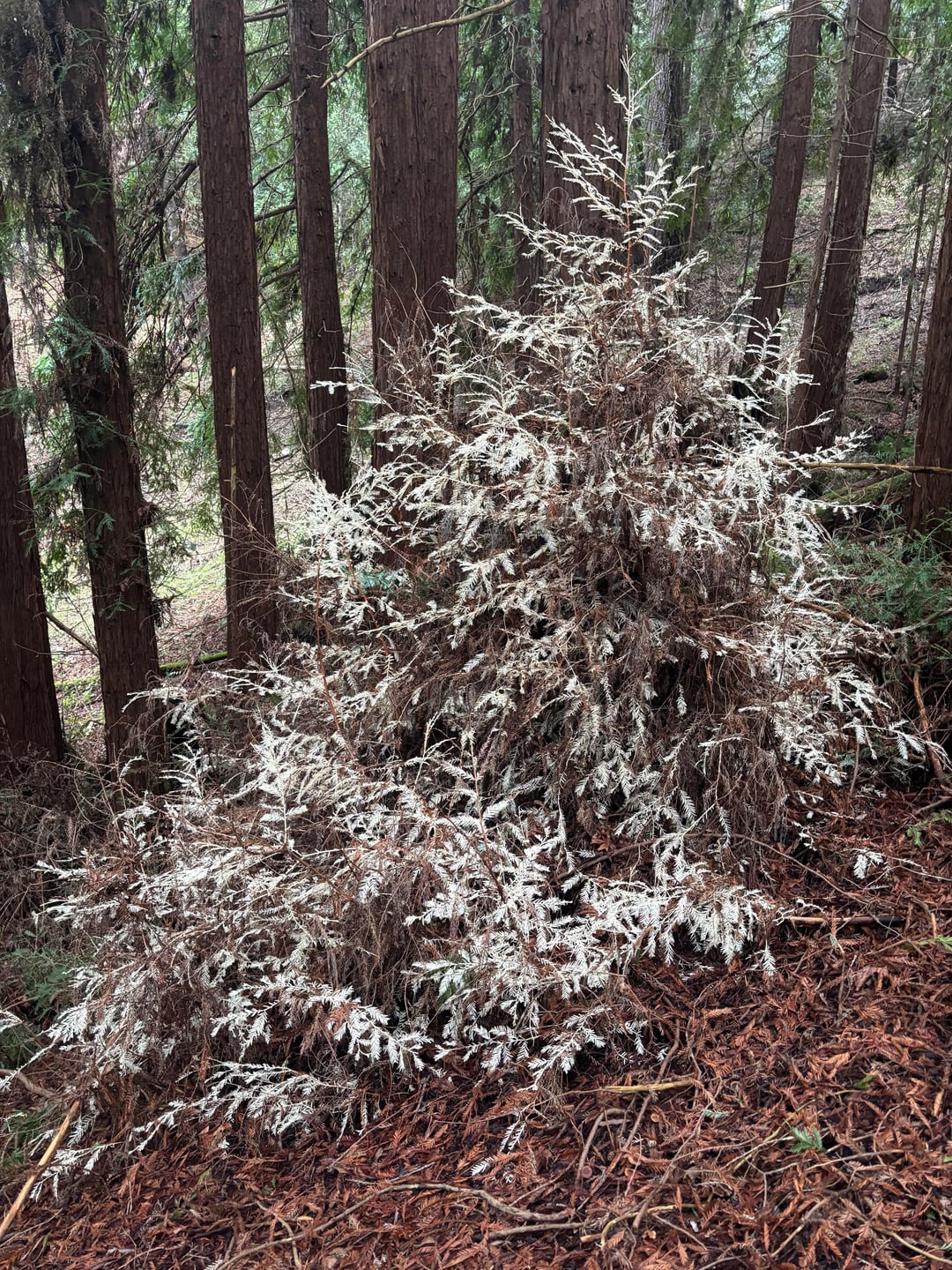
Not sure how you could measure this but it would interesting to quantify the extent to which its roots are intertwined / fused with the neighboring trees. I’m assuming that’s how it’s still alive since it can’t photosynthesize on its own.
Wikadood
Id say this could be in mildlyinteresting cuz its pretty cool
princessbubbbles
This is so cool! I’d love to see how it does 5-10 years down the line.
princessbubbbles
There’s a lot of dead bits on there. Are the leaves delicate?
Riptide360
Check the soil and tree materials for heavy metals. This is a ‘parasitic/mutualism’ sibling that gives up chlorphyl to take on the task of uptaking heavy metals like mercury. It is feed by its much bigger siblings who benefit from having the metals removed. This is common in the Santa Cruz mountains near the New Almaden mines that did mercury mining for use in the Sierra Nevada California gold rush.

5 Comments
Not sure how you could measure this but it would interesting to quantify the extent to which its roots are intertwined / fused with the neighboring trees. I’m assuming that’s how it’s still alive since it can’t photosynthesize on its own.
Id say this could be in mildlyinteresting cuz its pretty cool
This is so cool! I’d love to see how it does 5-10 years down the line.
There’s a lot of dead bits on there. Are the leaves delicate?
Check the soil and tree materials for heavy metals. This is a ‘parasitic/mutualism’ sibling that gives up chlorphyl to take on the task of uptaking heavy metals like mercury. It is feed by its much bigger siblings who benefit from having the metals removed. This is common in the Santa Cruz mountains near the New Almaden mines that did mercury mining for use in the Sierra Nevada California gold rush.