
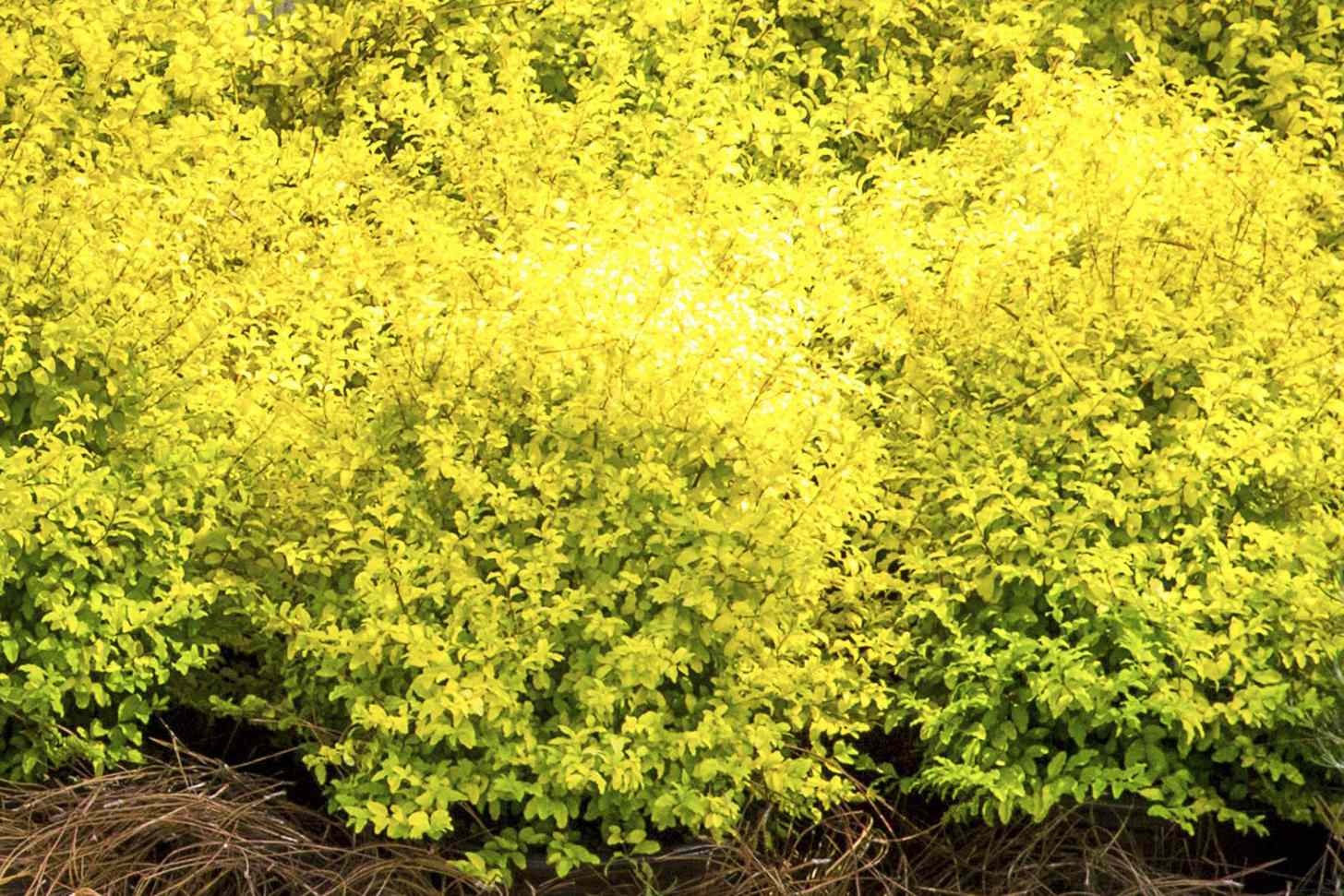
Color has a dramatic effect on a garden, setting the mood or overall feel of a planting. While gardeners often reach for flowers to establish their palette, the greatest source of color in the landscape comes from foliage. Foliage color is lasting, carrying garden designs from one season to the next. Golden foliage plays an outsized role in planting designs. It brightens shady areas of the garden and balances darker foliage in sunny beds. Evergreen shrubs paint the garden all year long, but even deciduous foliage provides color for months at a time. From soft yellow to vibrant gold, these shrubs are sure to illuminate your garden and lift your spirits.
When planting yellow-foliage shrubs in the landscape, pay attention to sun exposure. Read plant labels and catalogue descriptions to get a feel for an individual plant’s preference. Some produce the best color in full sun, while others benefit from protection against the hot afternoon sun. Repeat
yellow hues throughout the garden, echoing the foliage in seasonal blooms and autumn berries.
Night Light® Hinoki Cypress
Credit:
Southern Living Plant Collection
Botanical Name: Chamaecyparis obtusa ‘Conschlecht’Sun Exposure: Full sunSoil Type: Average, medium, well-drainingSoil pH: Acid to alkaline soil (5.0 to 8.0)USDA Hardiness Zones: 5 to 8 Botanical Name: Spiraea japonica ‘NCSX1’
This compact Hinoki cypress adds soft texture to the garden with sprays of fern-like scaled leaves. Night Light® shines year-round with golden foliage that takes on bronze and chartreuse hues in winter. Plants grow as a dense mound that maintains its form with no pruning. Plant Night Light® Hinoki cypress as an accent or a low, informal hedge, or tuck it into containers.
Highlights™ Arborvitae
Credit:
Southern Living Plant Collection
Botanical Name: Thuja occidentalis ‘Janed Gold’Sun Exposure: Full sun to part shadeSoil Type: Average, medium, well-drainingSoil pH: Acidic to slightly alkaline (5.0-8.0)USDA Hardiness Zones: 5 to 8
Say goodbye to sun-burnt foliage with this improved arborvitae. Flattened sprays of foliage fill the dense, pyramidal canopy of Highlights™ Arborvitae, with new growth emerging bright yellow in spring and deepening to rich golden hues in summer. Plants hold this radiant hue through winter without bronzing. With a slender profile, Highlights™ fits effortlessly into gardens of all sizes.
‘Florida Sunshine’ Anise Shrub
Credit:
Southern Living Plant Collection
Botanical Name: Illicium parviflorum ‘Florida Sunshine’Sun Exposure: Partial shadeSoil Type: Rich, moist, well-drainingSoil pH: Acidic (5.0-6.5)USDA Hardiness Zones: 7 to 9
The fragrant foliage of this stunning anise shrub turns from chartreuse in summer to brilliant gold in autumn. The rich color lasts through winter, when the stems turn red, adding even more color to the garden. ‘Florida Sunshine’ is a compact variety of the Southeastern native, growing 5 feet tall and up to 3 feet wide.
Touch of Gold® Holly
Credit:
Southern Living Plant Collection
Botanical Name: Ilex crenata ‘Adorned’Sun Exposure: Full sunSoil Type: Average, medium, well-drainingSoil pH: Acidic to neutral (5.0-7.0)USDA Hardiness Zones: 6 to 9
This compact Japanese holly provides four seasons of dazzling color. With small, rounded foliage, Touch of Gold® Holly makes a gorgeous accent, container planting, or low-growing addition to foundations and borders. Plants grow just 2 feet tall and spread up to 4 feet, maintaining their petite size with no pruning. This holly is pest-free and deer resistant for easy maintenance.
‘Sunshine’ Ligustrum
Credit:
Southern Living Plant Collection
Botanical Name: Ligustrum sinense ‘Sunshine’Sun Exposure: Full sun to part shadeSoil Type: Average, medium, well-drainingSoil pH: Neutral to alkaline (6.0-8.0+)USDA Hardiness Zones: 6 to 10
‘Sunshine’ Ligustrum lives up to its name, with soft, semi-evergreen foliage that simply glows. A sterile, non-invasive selection of Ligustrum, ‘Sunshine’ does not re-seed in the garden so you can enjoy this low-maintenance beauty without worry. From accents to hedges, this plant is extremely versatile in the landscape. It thrives in any type of soil, so long the drainage is good.
Japanese False Cypress
Credit:
Getty Images
Botanical Name: Chamaecyparis pisifera cltvs.Sun Exposure: Full sun to part shadeSoil Type: Average, medium, well-drainingSoil pH: Acidic to neutral (5.0-7.4)USDA Hardiness Zones: 4 to 8
Japanese false cypress is a low-maintenance, scale-leaved evergreen with good drought tolerance and excellent winter hardiness. Numerous golden varieties are available, most of which grow much more compact than the species and are commonly planted as an accent or specimen. They perform well in containers and look at home in rock gardens, borders, or foundations.
Abelia
Credit:
Getty Images
Botanical Name: Abelia x grandifloraSun Exposure: Full sun to partial shadeSoil Type: Average, medium, well-drainingSoil pH: Acidic to alkaline (5.0-8.0)USDA Plant Hardiness Zone: 5 to 10
Looking for a pollinator-friendly shrub bursting with color? Butterflies, bees, and
hummingbirds adore the fragrant blooms that cover abelias from spring through fall, and with varieties like Twist of Mango™ and Funshine® (just to name two),
colorful golden foliage is just a bonus. Abelias are drought-tolerant, deer-resistant, and endlessly adaptable. You’ll love these low-maintenance beauties!
Smokebush
Credit:
Getty Images
Botanical Name: Cotinus coggygria cltvs.Sun Exposure: Full sun to part shadeSoil Type: Average, medium to moist, well-drainingSoil pH: Acidic to alkaline (6.0-8.0)USDA Plant Hardiness Zone: 5 to 8
Smokebush is adored for its brilliant fall color and airy cloud-like blooms, their tolerance to drought and deer, and their ability to thrive in clay soil. Two bold and beautiful cultivars add golden foliage to that list. Golden Spirit (Cotinus coggygria ‘Ancot’) and Winecraft Gold® (C. coggygria ‘MINCOJAU3’) shine like beacons in the summer garden before taking on those fabulous amber, burgundy, and scarlet autumn hues we so love.
Lemony Lace® Elderberry
Sambucus racemosa ‘Sutherland Gold’.
Botanical Name: Sambucus racemosa ‘SMNSRD4’Sun Exposure: Full sun to part shadeSoil Type: Rich, medium to moist, well-drainingSoil pH: Acidic to alkaline (5.0-8.0)USDA Hardiness Zone: 4 to 7
Here’s a stunning bird-friendly shrub for the Upper South and cool mountain regions. The distinctive, deeply cut foliage emerges bright yellow with a fine red edging, then ages to chartreuse. Clusters of white blooms attract butterflies and other pollinators to the spring garden. Songbirds love to nibble on the red summer fruits which are also cooked for use in wine, jelly, and pies.
‘Mickie’ Rockrose
Credit:
Getty Images/Dmitri Zelenevski
Botanical Name: Cistus hybrid ‘Mickie’Sun Exposure: Full sunSoil Type: Lean, dry, well-drainingSoil pH: Adaptable (<6.0-8.0+)USDA Hardiness Zone: 7 to 10
Though the foliage of ‘Mickie’ rock rose is variegated green and yellow, it is the golden hues that dominate, turning this broad-leaf evergreen into a glowing mound. Plant this tough shrub in dry, exposed areas of the garden, as it thrives in full sun and requires little to no irrigation once established. ‘Mickie’ rock rose is also a great selection for coastal gardens, as plants tolerate the warm, salty air.
Bluebeard
Lil Miss Sunshine.
Credit: Proven Winners
Botanical Name: Caryopteris spp. and cltvs.Sun Exposure: Full sunSoil Type: Medium, well-draining, averageSoil pH: Adaptable (6.0-8.0)USDA Hardiness Zones: 5 to 9
Bluebeard, also called blue mist shrub, is a pollinator favorite, producing an abundance of blue blooms in late summer when many other plants are taking a break from the heat. The cultivars Lil Miss Sunshine®, ‘Sunshine Blue II’ and La Barbe Bleue™ feature vibrant yellow foliage that complements the blooms. A woody shrub in warmer areas of its range, bluebeard dies back to the ground in zones 7 and colder. This does not impact flowering, as bluebeard blooms on new growth.
Weigela
Weigela Middendorfiana.
Credit:
Getty Images
Botanical Name: Weigela florida cltvs.Sun Exposure: Full sun to part shadeSoil Type: Medium, well-draining, averageSoil pH: Adaptable (6.0-8.0)USDA Hardiness Zones: 4 to 8
A staple of sunny borders, Weigela is widely grown for its long-lasting blooms that open from late spring into early summer to the delight of hummingbirds. While many varieties boast colorful burgundy foliage, only a handful glisten in hues of yellow. Golden Jackpot® (Weigela florida ‘MonRigney’) is perhaps the brightest of them all, with brilliant golden foliage all season long. Bubbly Wine® (Weigela florida ‘FLORACLAR’) is a variegated variety, whose yellow-edged foliage lends plants an overall lemony appearance.
Comments are closed.