
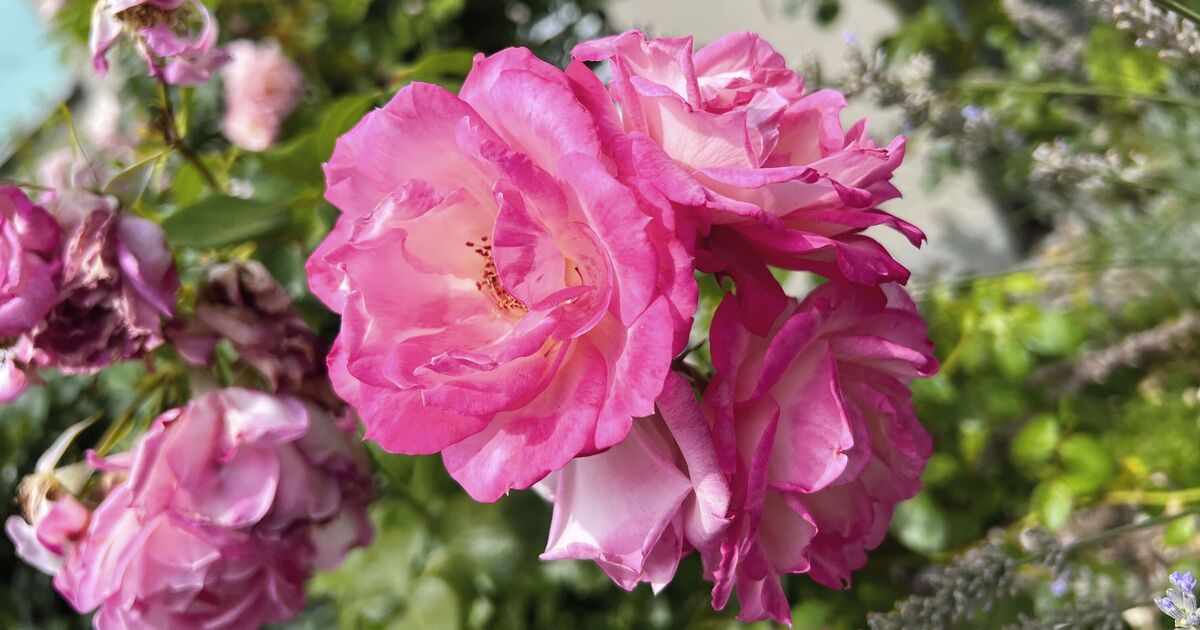
Roses are celebrated for their beautiful blooms, but gardeners need to stay alert during winter when a destructive disease can take hold, potentially stopping the plants from flowering altogether. Louis Hooft, a horticultural specialist and founder of Moowy, has cautioned that rose bushes require immediate examination for dark spots on their leaves, as this indicates the “most common and troublesome” affliction affecting these cherished garden favourites.
He explained: “Black spot is a fungal disease affecting rose bushes, manifesting as circular black spots on the plant’s leaves. If left untreated, affected leaves will turn yellow and fall off. However, these unsightly black spots can eventually merge and spread, causing the entire plant to lose its leaves.”
Whilst black spot disease won’t directly kill roses, it will seriously weaken the plant’s constitution, rendering it perilously vulnerable to other diseases, pests and the impending winter cold that could prove fatal.
The worrying element of black spot disease is how quickly it spreads, which is exactly why spotting it early and taking prompt action are absolutely essential.
If black spot disease remains untreated, the rose plant will be too weak to produce blooms and might drop all its foliage, potentially resulting in a bare and flowerless garden by spring and summer.
How to prevent black spot disease?
Black spot disease spreads chiefly through moisture, which accounts for why it becomes significantly more common during winter, if the weather is wet and mild.
The most successful prevention is to spread mulch, as it can assist in retaining moisture whilst preventing black spot disease from establishing itself in your garden.
Louis continued: “Mulch acts as a barrier […] if spores are present in the earth, the mulch will help stop black spot from spreading to the roses. However, avoid adding rotting wood to your compost, which can create a moist environment conducive to other fungal diseases. Always apply well-rotted compost.”
Always ensure to apply compost to roses, but other beneficial mulches to consider include shredded bark, wood chips, pine needles, straw and even hay.
Avoid using fallen rose leaves or other plant debris when mulching roses, as they can harbour black spot disease, and should always be disposed of in the bin rather than your compost.
Comments are closed.