
Key Points
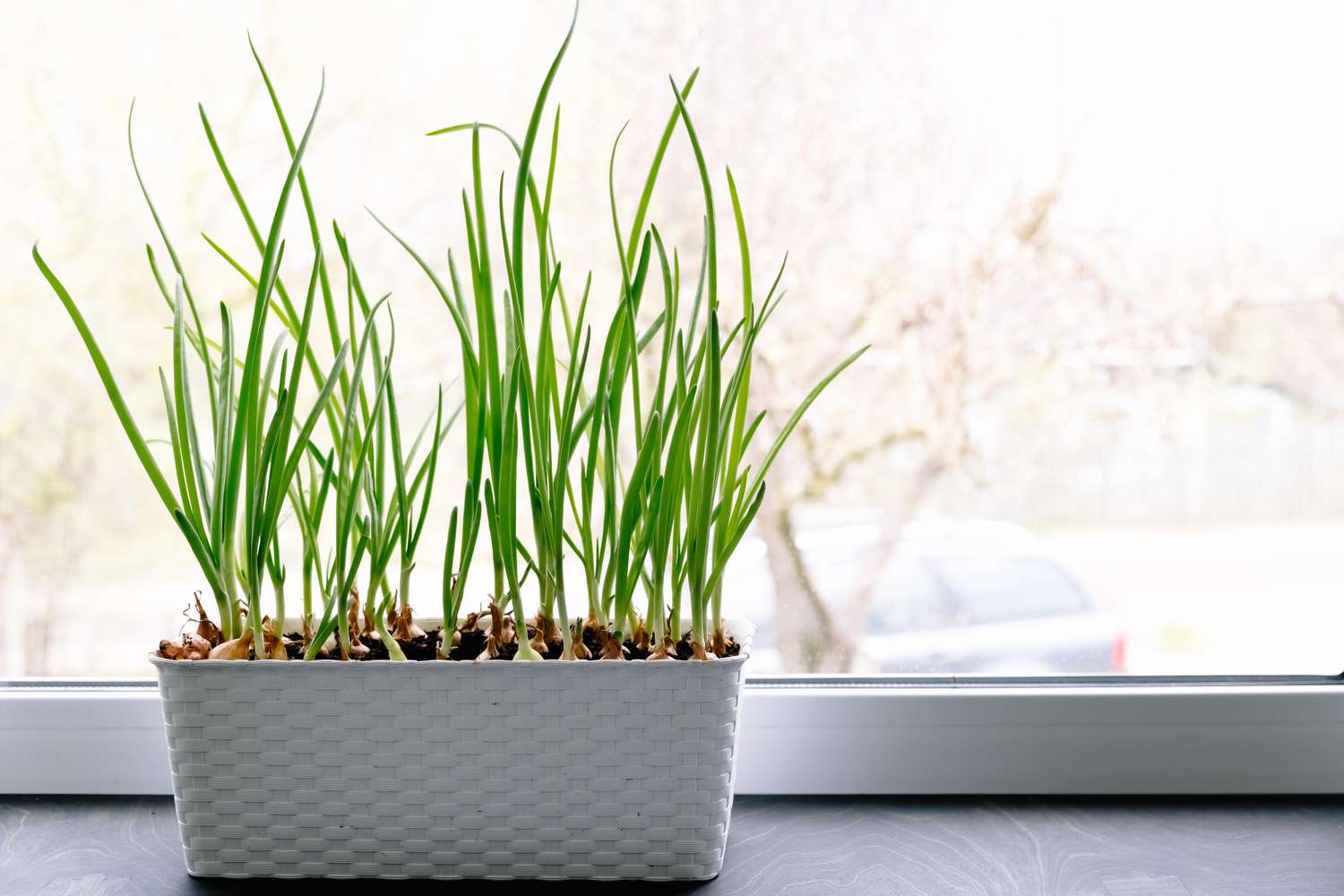
Growing green onions indoors is an easy, space-saving way to enjoy fresh flavors all winter.Start from seed, sets, or rooted ends, keep soil warm and moist, and give plants 6 to 8 hours of bright light to grow strong.Trim shoots as needed to encourage regrowth, and easily propagate new plants from rooted ends or cut scraps in water.
Green onions are one of the easiest and most rewarding vegetables to grow indoors. They require very little space, and they grow quickly, even from kitchen scraps. These plants can also be harvested repeatedly, so they’re perfect for the colder months when outdoor gardening is often a challenge.
Growing them can also be “fun and entertaining for kids,” says Laura Matter, natural yard care program director at Tilth Alliance. A successful crop guarantees a continuous supply of fresh, tasty greens—here’s how experts say you should care for them.
Varieties
Green onions are often sold as scallions or bunching onions, but they’re all Allium fistulosum—a type of onion that doesn’t form a bulb, or only forms a very small one.
When choosing seeds or sets for indoor growing, Matter recommends experimenting with different varieties. “Try different types—some green onions are not green, but red or purple,” she says. “Japanese varieties are lovely and long-stemmed.” Varieties with better heat tolerance tend to perform well indoors.
Planting
Green onions can be grown from seed, from sets (small immature bulbs), or by regrowing the rooted ends of store-bought scallions.
If planting from seed, Matter advises sowing seeds at the soil surface and covering them lightly. “The seed only needs to be 1/4 inch into the soil, 1/2 inch at most,” she says. Keep the soil consistently moist with gentle misting until the roots are established, then water normally.
Green onions can take time to germinate. “[It] can be 1 to 2 weeks before they come up, so people should be patient,” Matter says. While you wait, be sure to keep the soil evenly moist—not waterlogged—and well lit.
For best germination, soil temperature matters—it should ideally be around 75 degrees Fahrenheit. Heat mats or warm household surfaces can help, though Matter recommends measuring temperatures and using a barrier if necessary.
If planting bulbs or rooted ends, place them root-side down, about 1 inch deep in soil. “My favorite way to grow them is to take the white bulb ends with roots still attached from store-bought green onions, and plant those the same way,” says Marcy Lautanen-Raleigh, owner of Backyard Patch Herbs.
Care Instructions
Light is the most important factor for indoor success; green onions need bright conditions to grow strong, flavorful shoots. “Give them adequate light either with a south or west-facing window, or with a grow light,” Matter says. Lautanen-Raleigh recommends 6 to 8 hours of bright light per day.
If plants become leggy or pale, it may be a sign that they need more light. Lautanen-Raleigh recommends watching for warning signs like tall, thin shoots, yellowing leaves, or mushy bases.
Use a light, well-drained potting mix and containers with drainage holes. Water when the top inch of soil begins to dry, and avoid letting pots dry out completely—overwatering can lead to issues like root rot. “Soil should stay moist, but not soggy,” Lautanen-Raleigh says.
If fertilizing, Matter recommends organic, nitrogen-rich options. “These are leafy plants, and they thrive with nitrogen—avoid chemically based fertilizers,” she says. She recommends slow-release options, like alfalfa meal or blood meal.
Harvesting and Pruning
Green onions are ideal for cut-and-come-again harvesting, which also acts as regular pruning. Once shoots reach 6 to 8 inches tall, trim leaves as needed for cooking. Regular trimming keeps plants compact and encourages fresh growth.
Rather than pulling up the entire plant, “you can trim the tops as needed and let the plant regrow,” Matter says. “Trim into the base if you want some of the white part of the stem, but leave enough to regenerate.” Cut at least an inch above the base so the plant can regrow. If you prefer a full harvest, plants can be pulled and replanted, or regrown from rooted ends.
When grown from seed, full-size scallions are typically ready to harvest in about 60 days, though smaller cuts can be taken earlier.
Propagating
Green onions are uniquely easy to propagate, especially from kitchen scraps. Lautanen-Raleigh recommends a simple water-regrowing method for quick results. “Save the white ends of store-bought green onions with the roots,” she says. “Stand them upright in a glass with just enough water to cover the roots.”
Place the glass on a sunny windowsill and change the water every two to three days. Once new growth appears, the onions can be harvested directly, or transplanted into soil for longer-term growth.
“You can grow green onions in soil or regrow them from cut ends in water,” Lautanen-Raleigh says. “After a while, you can transfer the regrown bulbs into soil for more robust growth.”
Comments are closed.