
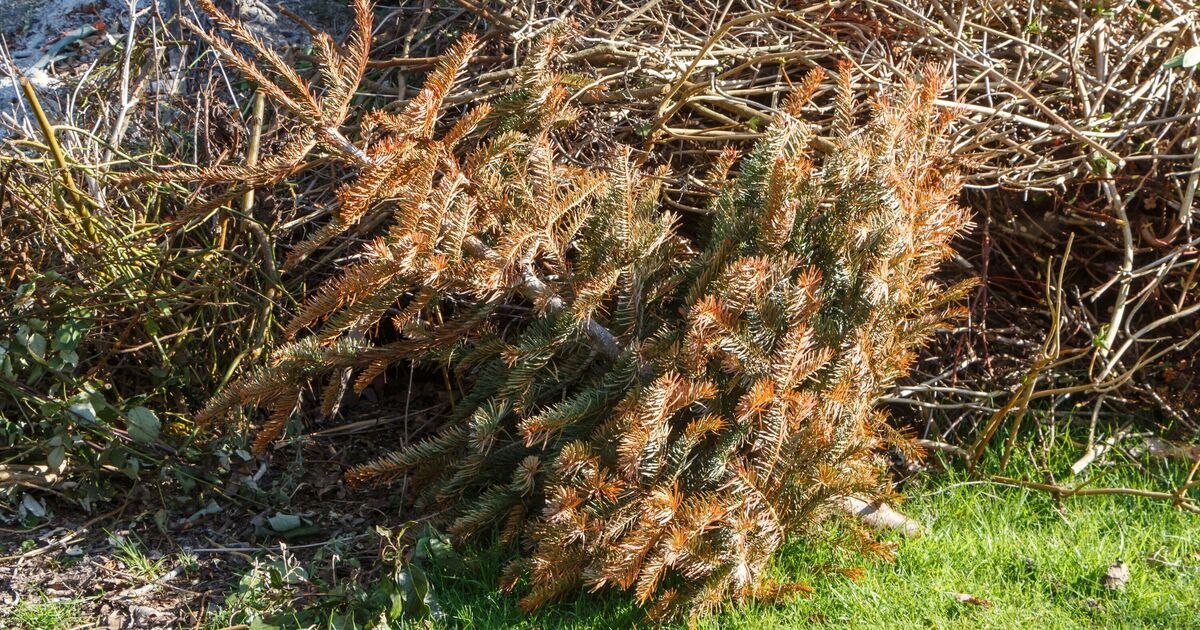
Households across the UK with real Christmas trees in their homes are being urged to put them in their gardens in January, rather than throwing them away.
The start of 2026 is just around the corner, which means it’s almost time to start packing up the festive decorations for another year, including the arduous task of taking down the Christmas tree. For those who opt to get a real tree, taking it down is a job that isn’t relished and inevitably leaves your home littered with pine needles that you still end up finding by the time next Christmas rolls around.
But rather than painstakingly trying to fit the tree into your green bin or heaving it into the car to be taken to the tip, gardening experts recommend putting it in your garden instead. Christmas trees don’t need to be discarded as soon as the festivities end, as they can actually be reused as natural mulch in your garden, helping to insulate plant roots, improve soil health and deter slugs and snails during the coldest months of winter.
According to garden expert David Denyer from Eflorist, January and February are the ideal time to mulch Christmas trees as the needles can help to protect plants from the harsh cold temperatures.
He said: “Many people don’t realise just how valuable a Christmas tree becomes once the decorations come down. When broken down into mulch, your Christmas tree can be endlessly useful for your garden.
“Once mulched, the needles and branches of a Christmas tree can help your garden soil retain moisture, suppress any weeds, and gradually enrich the soil as they decompose.
“A layer of mulch during January or February will also help protect any plant roots from frost, giving plants extra protection during the coldest weeks of winter while preparing the garden for early spring growth.”
As Christmas tree needles are naturally acidic, they are particularly beneficial for acid-loving plants, such as blueberries, azaleas, camellias and rhododendrons.
While the needles are acidic, they won’t dramatically alter the pH levels of your soil as they quickly neutralise once broken down, meaning they can safely be used around most shrubs, perennials and fruit bushes this winter. The needles are also effective to use around strawberries as the sharp and prickly texture can help to deter slugs and snails.
Mr Denyer explained: “The timing works perfectly, as January and February are when plants need protection most to ensure they have a successful spring.
“A fresh layer of mulch helps shield roots from frost, reduces soil erosion during wet spells, and maintains moisture during dry, cold winds.”
To use your Christmas tree in your garden, shredding the branches is the quickest method, but if you don’t have a shredder, simply lay the tree outside and as it dries out, the needles will naturally fall off over a few days.
Then just sweep these up and use them as light mulch around shrubs and fruit bushes, and cut the remaining branches by hand and add them to the compost heap.
Mr Denyer added: “Once you’ve collected your needles or shredded branches, spread a layer around 5–10 centimetres deep around the base of shrubs, perennials, and fruit bushes. This depth helps lock in moisture, stabilise soil temperature, and protect exposed roots from frost.
“Just make sure to keep the mulch slightly away from stems and trunks, as leaving a small gap will prevent excess moisture, which can cause rotting.
“Any leftover branches can become a real winter lifeline for wildlife. Stack them loosely in a sheltered corner to create a simple habitat for insects, frogs, and hedgehogs, which rely on dry, protected spaces during the coldest weeks.
“The gaps between the branches help trap heat and keep predators out, making it an ideal makeshift refuge until spring.”
Comments are closed.