
Most people would acknowledge that Christmas represents a period of indulgence — from feasting and present-giving to lavish decorations — with many going to extraordinary lengths to mark the festive season in December.
For those mindful of waste who constantly seek methods to reduce and repurpose, a former Royal gardener has revealed how to achieve precisely that during the Christmas period — by channelling the waste towards your garden to help it flourish.
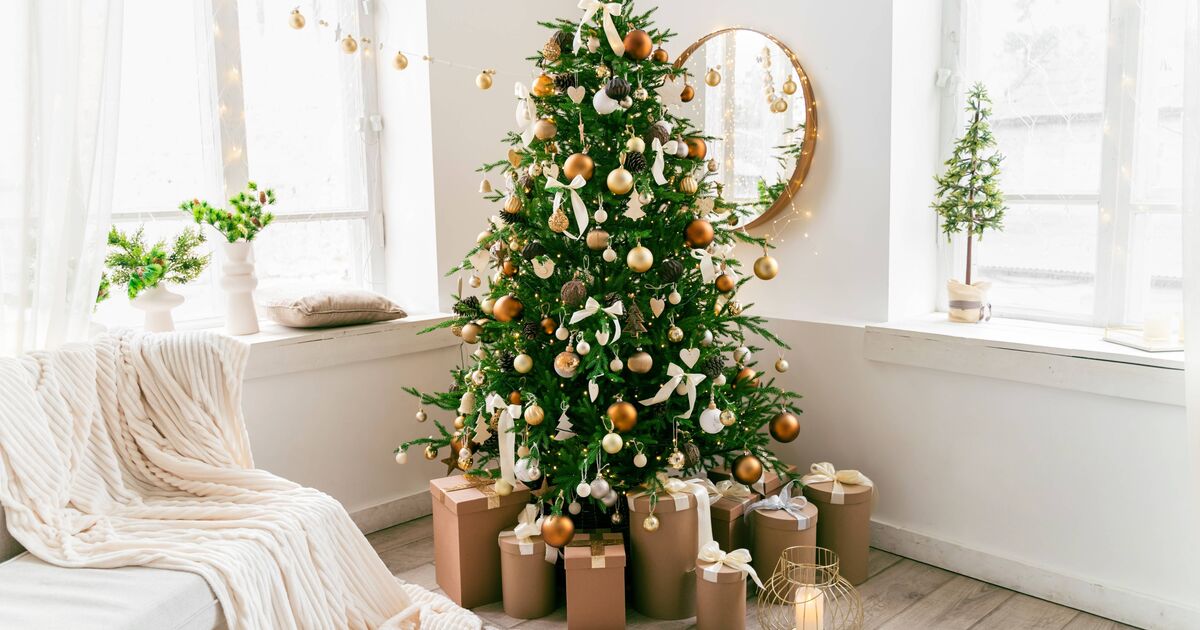
A Christmas tree typically serves as the focal point of household decorations, yet it can become a substantial and wasteful item — particularly once the festivities conclude. The solution lies in understanding how to utilise it after Christmas ends.
Jack Stooks, who served at Highgrove for two decades, has collaborated with Heart Bingo to reveal his expert advice on repurposing a Christmas tree for gardens beyond December 25.
The King’s former gardener explains: “The problem we’re seeing nowadays is a massive throwaway society. After one use at Christmas, they are chucked out to be recycled. Instead, that tree should go straight through a shredder and be turned into a woodchip that can be composted.”
“There’s really no way you can use a dead tree in the garden – it just starts to look vile as soon as it goes brown. But if you’ve got a shredder, you can shred it into woodchips to use on your garden borders or put it into your compost. The easiest option for most people with a fire or wood burner is to let it dry, chop it up, and burn it.”
The gardening specialist stresses the importance of removing decorations beforehand, cautioning: “There is also the added problem of people leaving Christmas lights, plastic baubles, tinsel on the trees, which obviously can’t be recycled in this way, so this just creates another problem later on.”
Jack suggests an alternative disposal method: “Another thing I would advise to do, would be to get your Christmas tree and cut the branches off. The wood can be used on an open fire and slowly burned over a few weeks – but it needs to be dried out first.
“This is then essentially a free way of keeping your house warm, as it’s free wood, whilst getting rid of your tree in a sustainable way. If you don’t have an open fire, then you should still chop it up and put it into the recycling bin. Chopped up is easier for people to take away if needed as well.”
Discussing the increasingly popular rooted varieties, Jack notes: “You can actually get Christmas trees with roots now, and they are obviously beneficial as they tend to last longer in your house. You can keep them watered and then you can either put them into bigger pots and keep them going into the summer, or even plant them out into your gardens and then re-buy a new Christmas tree next year.”
Food waste represents another significant concern during the festive period. Jack has shared innovative methods for repurposing Christmas leftovers in the garden, offering practical solutions to reduce seasonal waste.
The gardening expert advises: “Ideally, if you’ve got anything that’s not cooked, like vegetable or potato peelings – all of those kinds of things, that’s always perfect to put in the compost. So there’s no need to waste cooked food, but any of the raw peelings, like I say, that’s all compostable and quite easy to go into the compost for use in the garden next year.”
But what about leftover cooked food? The former Royal gardener explains: “You don’t want to be putting cooked products into the compost. For cooked foods, what you’d want to do with that is use it up in soups or stock, or even in pet food. Avoid anything containing garlic, onion or chocolate though if giving to dogs.”
There’s another festive item that can create significant waste if binned incorrectly – wrapping paper. Fortunately, Jack has offered suggestions for how wrapping paper can be utilised in gardens, reports the Liverpool Echo.
The ex-Highgrove employee reveals: “You can shred paper and you can add it into the compost and that will just slowly rot down. This is useful if you have a small amount of paper from a small gathering or something, but if you have large amounts then it’s a bit harder. Just make sure you are putting small amounts in there at a time. A reasonable amount can be shredded and composted.”
However, Jack warns that it’s crucial to be cautious with wrapping paper featuring a metallic coating, encouraging people to verify which type of paper they’re attempting to dispose of.
The famed horticulturist suggests: “You can also recycle wrapping paper into mulch to regulate soil temperatures and prevent weeds. It’s the same principle — if you’re making it into compost, you can use that on the borders. Paper’s made out of wood pulp, so it’s similar to wood chippings.
“But if you shred your paper and chuck it on your border, the wind will blow it everywhere. You’re better off composting it, mixing it into the compost, and then adding it to the soil once it’s rotted down.”
Comments are closed.