
EAST LANSING, Mich. – Thirty acres of Michigan State University campus are being stripped of grassy turf and replaced with pollinator-supporting landscaping.
The university’s Department of Entomology and professional groundskeepers collaborated to reduce maintenance work and improve natural habitats for insects and pollinators like bees and butterflies.
Pollinator gardens use native plants to produce pollen and create habitats for beneficial insects. MSU intends to create pollinator-focused gardens, meadows and clover fields.
 Thirty acres of Michigan State University campus are being stripped of grassy turf and replaced with pollinator-supporting landscaping.Sheila Babbitt/MSU
Workers created spaces filled with native plants and established meadow areas by halting mowing.
“Turning areas that had been maintained turf grass into meadows made a lot of sense operationally. After the first-year investment into seeds and plants the annual maintenance cost reduces significantly,” said Joshua Ridner, MSU landscape services coordinator.
He said this new initiative also reduced the daily workload for the university’s groundskeepers. Reactions from those on campus have been positive, Ridner said.
Related: Incredibly rare bumble bee ‘ghost’ reappears in Michigan after 25 years
Meghan Milbrath, an entomology apiculture professor, said the project reflects a core message she shares in her public outreach: do what you can where you can.
“The reason this project is so exciting is that it shows that in some places pollinator plantings are more cost efficient than lawn maintenance,” Milbrath said.
So far, the initial efforts have converted 22 acres of previously mowed lawn into pollinator gardens and meadow habitat. Native plantings were added to campus along Service Road, on the north side of the Business College, at Bailey Deck in the Brody Complex, and east of Conrad Hall.
Related: Ann Arbor replaces No Mow May with Pollinator-Aware Yard Care
Ground crews and volunteers used native seed mixes and seedling plugs, adding dozens of native species to the university’s landscaping. The places where mowing was halted were chosen in areas with low foot traffic.
Ridner said the next phase of the project will involve seeding another 16 acres of the original meadow project, plus adding eight new acres of clover plantings in the campus solar lots.
In addition to the ecological benefits for pollinators and other insects, this initiative reduces greenhouse gas emissions from lawnmowers and landscaping equipment.
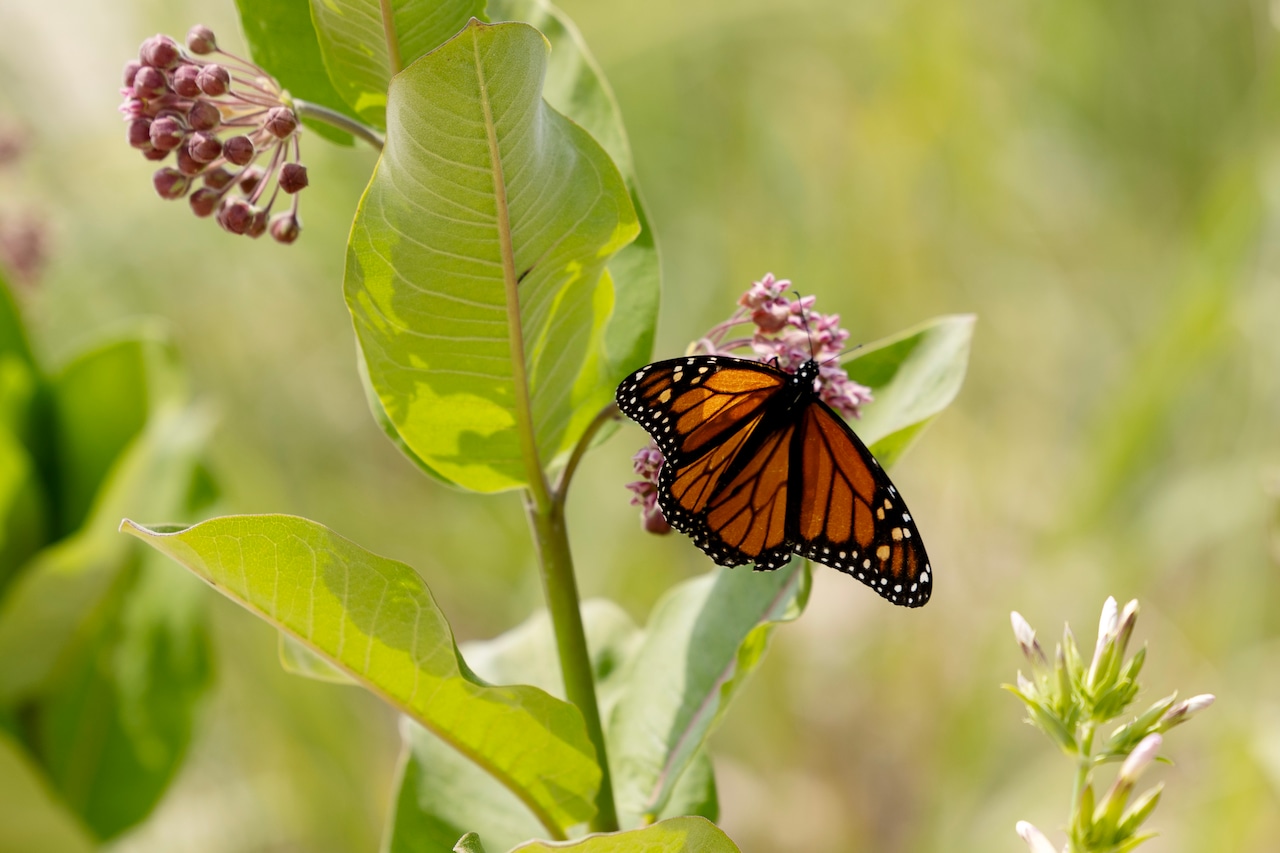 A monarch butterfly lands on a common milkweed plant on Beaver Island on July 17, 2023. (Neil Blake | MLive.com)Neil Blake | MLive.com
Comments are closed.