
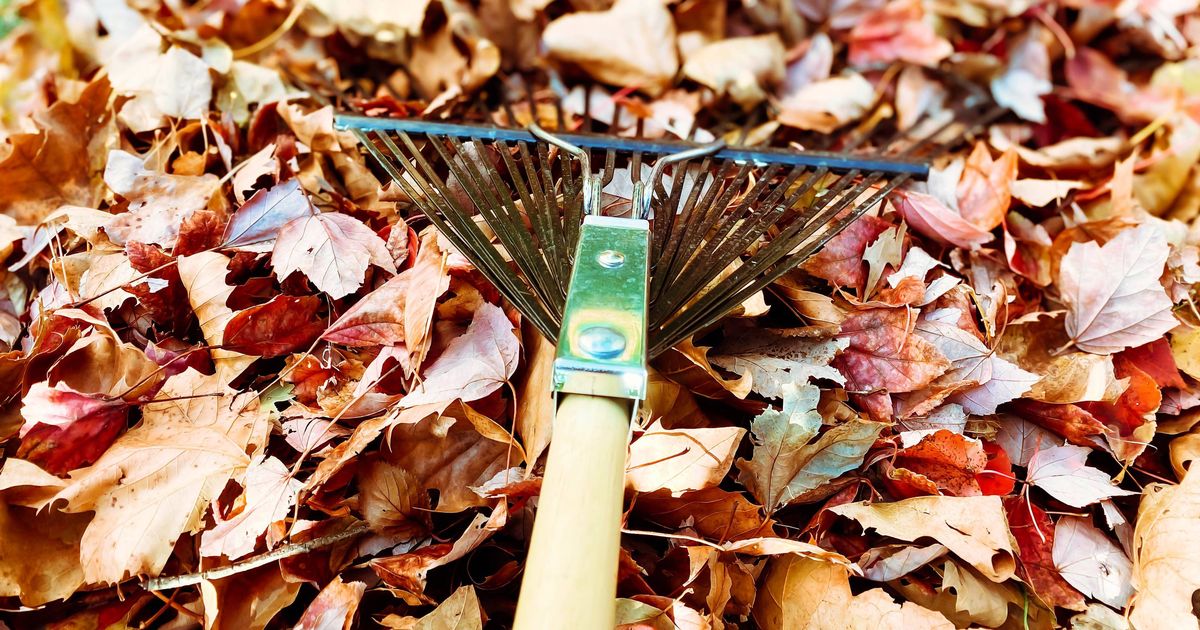
As the chilly months roll on, our gardens and parks are carpeted with leaves. But before you reach for the rake and bag up everything, garden experts have some advice on what to do with them. (Image: Grace Cary via Getty Images)
As winter sets in, our gardens and parks are often carpeted with fallen leaves. While the instinct may be to rake them up and dispose of them, gardening experts are urging us to think twice before doing so.
Getting rid of these leaves could mean missing out on some valuable gardening benefits. Thankfully, one horticultural expert has shared her advice on how best to utilise this seasonal abundance for the benefit of your garden.
Helen Hutchings Cox has shared her own approach to managing fallen leaves during the colder months.
She’s highlighted four ingenious ways to make use of this natural resource instead of simply throwing it away. Helen shared her tips on her Instagram page, helenlikesplants, stating: “Where possible, I just leave them alone where they fall.
Read more ‘Beautiful and comfortable’ Dunelm duvet set that is ‘perfect for dog lovers’
“They massively improve your soil and give animals and insects places to hide over winter.”, reports the Express.
If leaves end up on your lawn, Helen suggests: “If they fall on my lawn, I just sweep them to the side.
“You can use them directly as a mulch on your beds and they’ll break down over winter.”
For those who have compost bins or prefer a neater garden, Helen has another idea.
“You can add them to your compost bin or worm farms,” she advised. “Or you can store then in a bag or bin for a year and they’ll break down into leaf mould, which is a lovely soil additive.”
Helen’s final advice was: “Whatever you do, don’t throw them away.”
The Royal Horticultural Society also advocates for keeping those autumn leaves that tumble from your trees. They’ve detailed how leaves naturally break down into leafmould – a free soil improver.
They stated: “Making leafmould is a great way to recycle what would might otherwise be garden waste into a form of organic matter that’s perfect for mulching. The best leafmould is produced from the leaves of oak, beech or hornbeam.”
Creating leafmould couldn’t be easier – simply gather up your fallen leaves and place them into a bin liner. If the leaves are dry, moisten them slightly, then pierce some holes in the bag.
Tie it loosely and stash the bags out of sight for a couple of years.
Alternatively, you could construct an enclosure using chicken wire and wooden stakes. Just heap your leaves inside the structure, ensuring it’s tucked in a sheltered corner so they won’t blow away in the wind.
Comments are closed.