
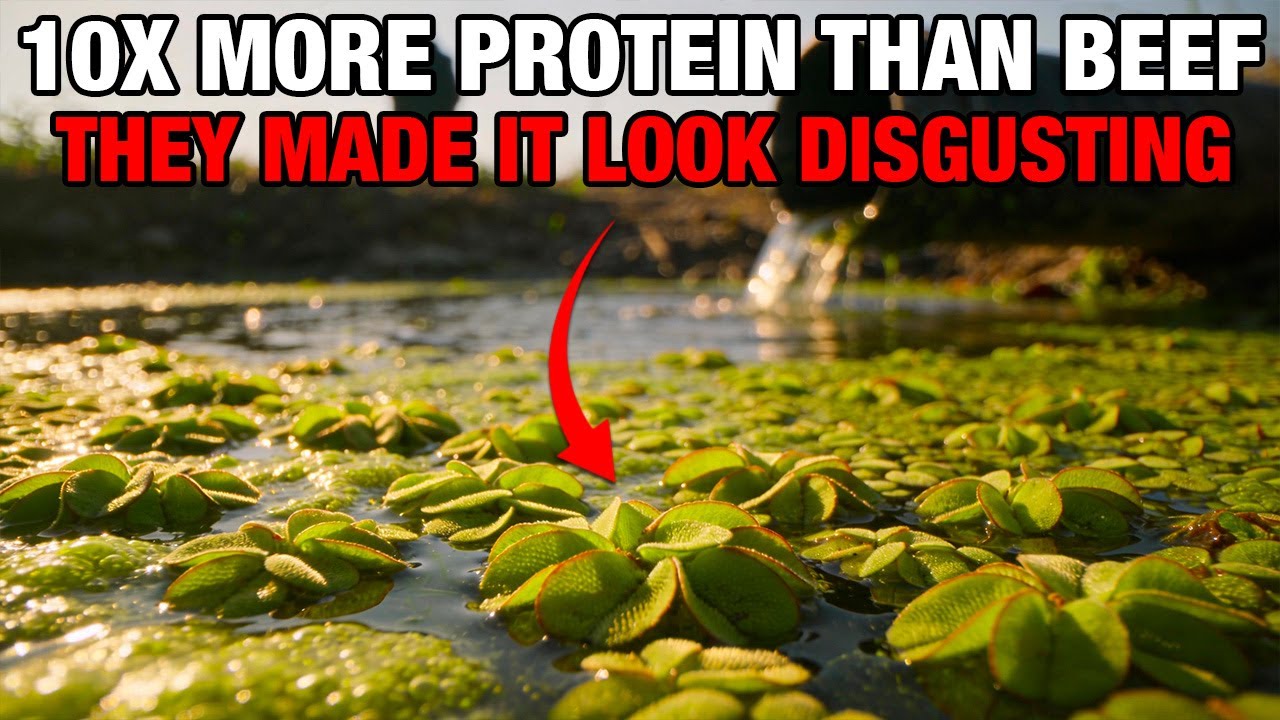
The Fastest Growing Food on Earth: Why is the World’s Most Efficient Protein Labeled a Weed?
Duckweed is the fastest-growing flowering plant on Earth, doubling its mass every 16 to 48 hours. On a dry-matter basis, it can contain up to 45% protein—meaning one acre of duckweed produces 5 to 10 times more protein than an acre of soybeans. While it has been used as a staple “water vegetable” in Southeast Asia for centuries, Western “water management” companies treat it as a pest to be poisoned with expensive chemicals.
20 Comments
hmm, this is a good video i was just wondering how to lower food costs i can eat it with rice beans and chicken or chili or beef stew thanks
Harvest it, compost it. Natural fertilizer.
Has anyone made Protein Powder out of Duckweed instead of Pea Flour or Soy?❤😂🎉
Animal based protein is still absorbed 20% more efficiently than any plant. Proven scientifically beyond doubt. Chicken and fish if you don’t like red meat, boom. 100g of chicken protein is equal to 130-140g of plant based protein.
I really enjoyed this video, +1 subscriber haha! I especially loved how you mentioned the economic pressure applied to prevent the widespread adoption of duckweed. I'm currently studying how to utilize this remarkable plant to produce therapeutic proteins, and I hope my research enhances the positive perception of the Lemnaceae family. Wish me luck and keep creating!
i get bored easily but i watched this entire video without skipping , amazing video
i keep trying to grow duck weed but i can't get it to grow
The PLANET STRUGGLES to care for humanity. We’re just really stupid.
Didn't expect to open youtube to find Duck Weed propaganda, but I'm super glad I did ❤
This video uses the same dialogue, arguments and descriptions as the one about Chufa.
I hate duckweed so much, got into our hydroponic system and it took a full year to eliminate it, absolutely a pestilence.
Filter plants are great for filtering but any plants that have filtered should NOT be eaten. Growing duck weed in a clean water source and eating it is fine.
"The chemicals are weapons because they sound like weapons" is a bad argument.
The plant is called duck weed for anyone waiting for this guy to reveal it.
JUST SHUT UP AND TAKE MY MONEY!!! >:O
Do the world a favor and be the first one along with your family to start eating it then
plant based is a trap. vegan protein is 47% usable while beef is 95% usable and eggs 96%. you guys probably believe in starving plants of their rightful CO2 also.. please stop trying to starve plants
This is an interesting video but it's important to note that duckweed DOES have some downsides. For example, it must be continuously harvested and then processed quickly or it spoils, unlike soybeans that only need to be harvested once and then can be stored for months. It also requires high nitrogen content in the water and the right climate (it grows poorly in cold weather). And it's considered "invasive" because it can de-oxygenate the water which kills fish, and blocks sunlight which kills other organisms in the water that need that.
also has to do with challenges like maintaining optimal growth conditions (nutrients, light, pH), controlling pests/diseases in large systems (fungi, algae, snails), navigating novel food regulations (like in the EU), managing its invasive potential, and the technical complexity of harvesting for consistent quality, though research and projects are working to overcome these for its high protein/nutrient potential.
This is unscientific nonsense, ALL plants contain ALL 9 essential, amino acids. The 10x higher protein is false. They don't even specify if it's per calorie or gram, incredibly misleading. They even used the graphic from the study "Maximizing the intersection of human health and the health of the environment with regard to the amount and type of protein produced and consumed in the United States" which proves all plants contain all 9 essential amino acids, and all 20 amino acids. So many more flaws, be aware of the misinformation contained in this video.
Amazing green. A little watter and let it grow.