
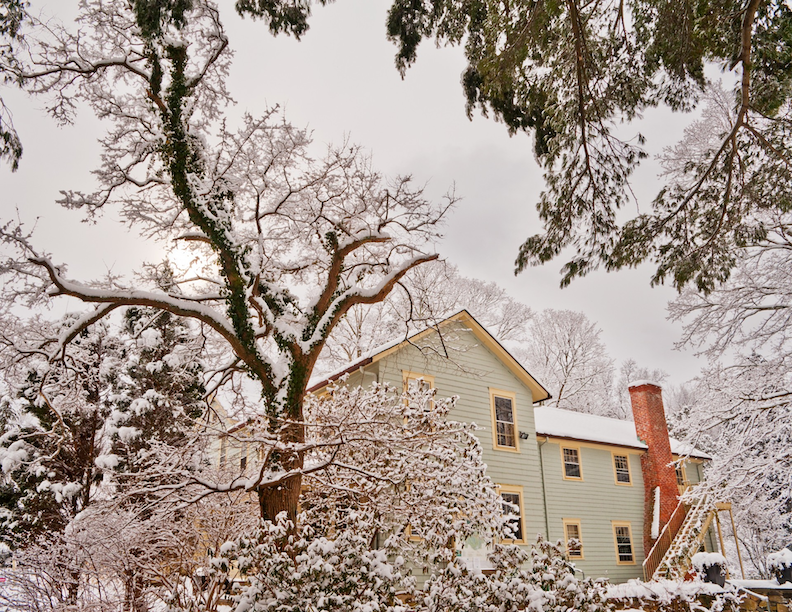
 The Bartlett Arboretum and Gardens has called Stamford home for 60 years. Photo courtesy of Bartlett Arboretum
STAMFORD — Nature can transform lives. That philosophy has been at the forefront of the Bartlett Arboretum and Gardens since it was established in 1965.
Nestled among the historic landscape of southwestern New England in Stamford, the arboretum is known as nature’s sanctuary where people can explore, enjoy, and savor the beauty of the natural environment and also learn about the habitats of the natural world. This year, the 93-acre property is celebrating its 60th anniversary.
“Reaching our 60-year milestone has been both humbling and energizing,” said Margo Reitz, executive assistant. “The arboretum has always been a place where people feel connected to nature, to learning, and to one another. Celebrating six decades of that shared experience reminds us how meaningful this place is to so many and how important it is to steward it thoughtfully for the next 60 years and beyond,”
Open year-round, dawn-to-dusk, the arboretum, named a Top 50 Green Space by HGTV, is a nonprofit organization in partnership with the City of Stamford that serves as a public garden, educational campus, and community gathering space.
“Our mission is to cultivate and develop a diverse collection of trees, gardens, and plants for all to explore, enjoy, and study,” said arboretum CEO Tracy Kay. “Through education and stewardship, we work to create a greener, healthier, and more beautiful environment for our community.”
The arboretum includes open space and award-winning Champion trees, woodlands, wetlands, meadows, carefully cultivated specialty gardens, maple wetlands and boardwalks, woodland walking trails, varied wildlife and native habitats.
“It serves as a peaceful public landscape and a vibrant educational resource,” Reitz said. “Iconic features include our nationally recognized Conifer Collection, Champion Trees, the Red Maple Wetland Boardwalk, diverse wildlife habitats, and seasonal gardens such as our pollinator and shade gardens. The arboretum evolves with each season and offers new discoveries all year.”
Every year, it hosts more than 450 programs, classes, tours, and community events, welcoming more than 8,000 participants of all ages. “These offerings include school field trips, youth camps, adult workshops, seasonal festivals, guided nature walks, horticulture classes, and summer concerts,” Reitz said. “The Bartlett provides a rare blend of natural refuge, environmental education, and community connection. Families discover and learn together here, students experience a living classroom, and nature lovers find inspiration in every season. For the broader community, the arboretum is a restorative green space that supports well-being, biodiversity, and a sense of belonging.”
The arboretum marked the anniversary by hosting programs and community gatherings including its annual gala, guided tours, exhibitions, and educational programs. One of the activities was 60 Years / 60 Trees, a series of six seasonal guided walks led by the arboretum’s Master Gardeners that highlighted 60 unique trees.
“We chose this approach because our trees are the living legacy of the Bartlett,” Reitz said. “They tell our story, anchor our collections, and inspire curiosity in visitors of all ages. Celebrating the anniversary through our trees felt authentic, meaningful, and directly tied to our mission.”
Arboretum history
In 1965, the State of Connecticut purchased Francis A. Bartlett’s home and property. Since then, it was known as Bartlett Arboretum & Gardens. “We have evolved from a private research estate into a regional resource that blends conservation, education, and public engagement,” Reitz said.
In the early 1900s, Bartlett was a prominent dendrologist and pioneer in the field of arboriculture who studied the natural history of trees and shrubs. In 1907 he founded the internationally known F.A. Bartlett Tree Expert Co. Bartlett purchased 30 acres of North Stamford woodlands where he resided, and in 1927 established the Bartlett Tree Research Laboratories, one of two in the U.S., a training school and research laboratory for his company.
He populated his property with a wide spectrum of woody plant specimens from North America, Europe, Asia, and more. Upon Bartlett’s move to North Carolina, the state purchased his property under the Federal Open Spaces Program and was deemed the Connecticut State Arboretum. Not long after, a local group of volunteers came together to preserve Bartlett’s property and formed what is now the Bartlett Arboretum Association.
Currently, the arboretum is in the midst of its 60th Anniversary Photo Exhibition. It’s open to professional and amateur photographers to capture images that reflect the beauty and character of the Arboretum. “The contest is still open, and the winning photograph has not yet been selected,” Reitz said. “Once chosen, the winning image will be highlighted in our communications and shared with our community.”
The arboretum’s future
The arboretum’s most significant upcoming project is the development of a new Horticulture Complex that will offer expanded classrooms, research spaces, energy-efficient greenhouse facilities, and a pavilion designed to support to expanded education and foster community engagement. “The structure will be built with low-carbon mass timber and will help us meet the growing demand for programming,” Reitz said.
The greenhouse will be a working space and hands-on classroom for students; the conservatory will offer visitors, researchers, and students an opportunity to experience the beauty of the natural world through a display of diverse plant collections year-round; and the pavilion will provide an outdoor classroom and event space, supporting summer camps, festivals, concerts, and workshop.
The project is projected to benefit 6,000 students annually, support food security efforts for vulnerable families, and produce trees and plants to beautify city parks and public spaces.
“In 2026 we will continue advancing this project, expanding our partnerships with local schools, and deepening our commitment to environmental stewardship,” Reitz added. “The next chapter of the Arboretum is centered on growth, innovation, and strengthening our role within the community.”
Over the year, like other green space, the Arboretum has experienced challenges related to funding, infrastructure, and weather impacts on its collections.
“We’ve addressed these through strong community partnerships, volunteer engagement, and strategic planning that emphasizes sustainability. Investments in facilities, programs, and long-term stewardship have strengthened our resilience and prepared us for future growth,” Reitz said.
“The Bartlett has endured and flourished because of steadfast community support, dedicated volunteers, knowledgeable staff, and a mission that has remained relevant across generations. People care deeply about preserving green space, fostering environmental education, and creating places where families and learners of all ages feel welcome.”
Comments are closed.