
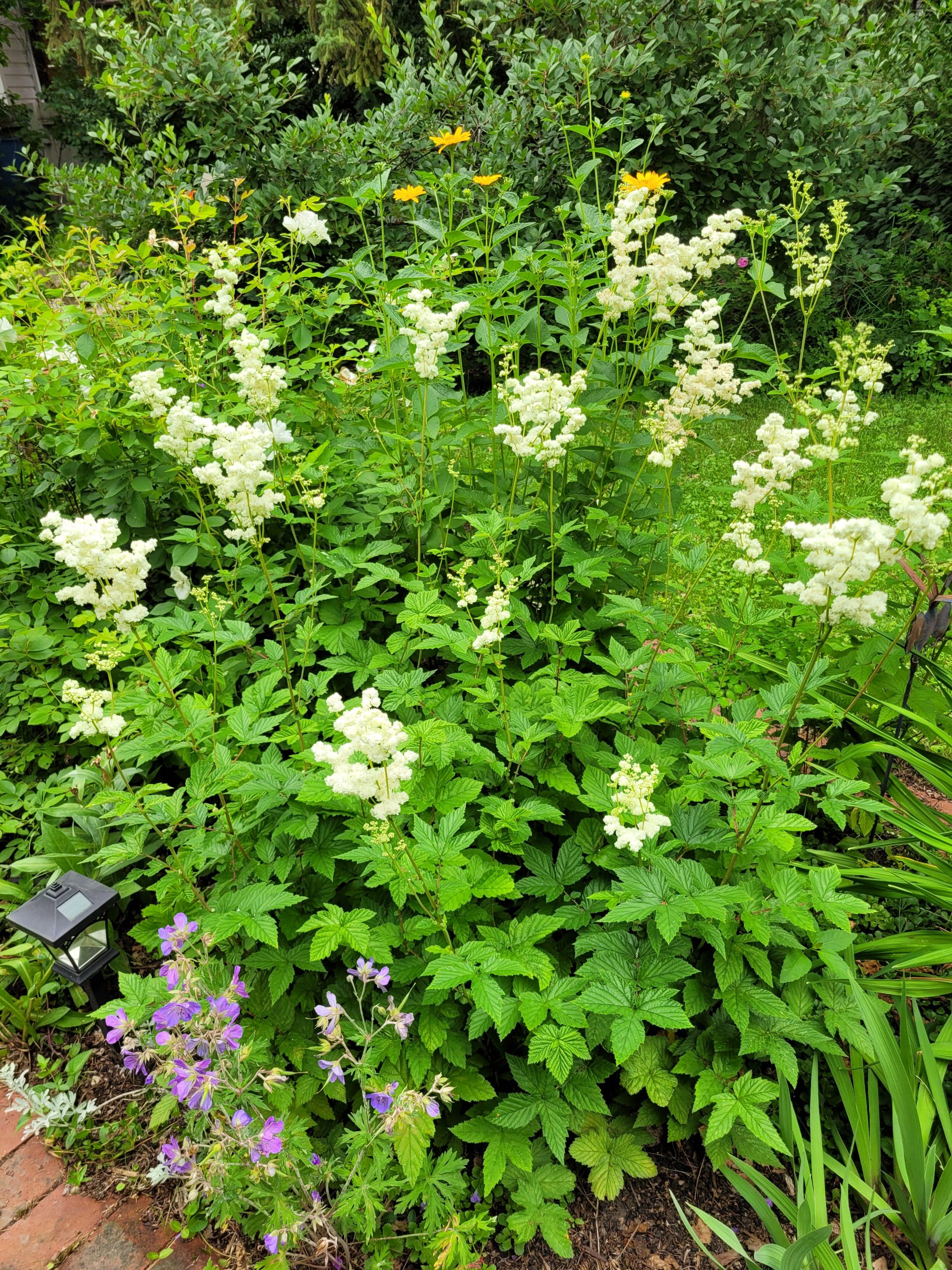
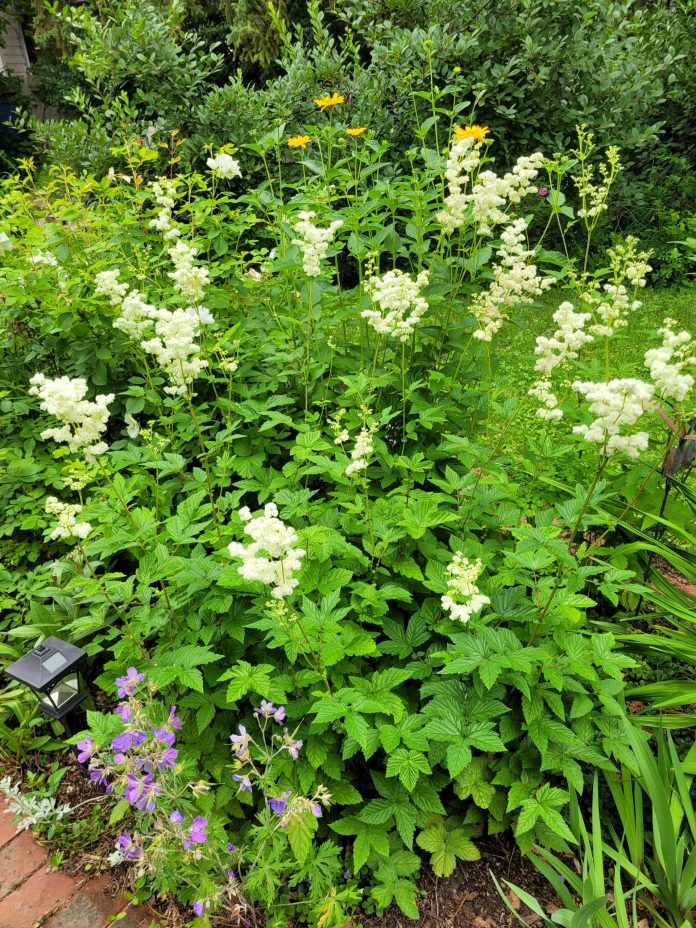
 Photo by Bernadette Vangool Filipendula, well established in this location for many years.
Bernadette Vangool
Saskatchewan Perennial Society
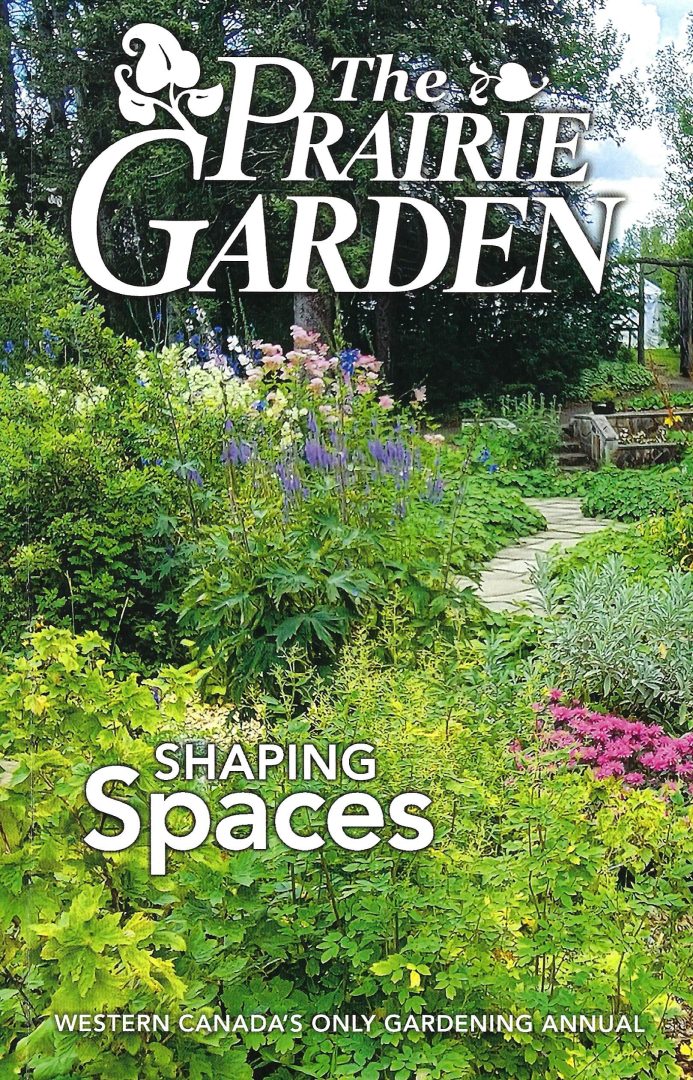
The 87th Annual Edition of the Prairie Garden is out. The theme this year is Shaping Spaces and there are many articles dealing with the design of a yard, garden and other outdoor spaces.
Like many of the recent editions, this issue also embraces the concept of letting nature into our gardens by introducing native species of plants, reducing traditional lawn areas and concentrating on what actually wants to grow in your space: finding the right plant for the right conditions. This approach benefits both the gardener as well as local pollinators and wildlife.
The guest editor for this edition is Mark Bauche, a landscape architect and master gardener with a degree in Environmental Design from the University of Manitoba.
He is the first to admit that many of the landscapes that have inspired him the most are actually those designed by hobby gardener like you and me, who learned from trial and error and enrich the community with colour and life as they improve their small and not so small spaces. A case in point are the boulevard gardens on Ethelbert Street in Winnipeg. In the early 1990s the City of Winnipeg, as a cost saving measure, turned the responsibility of boulevard maintenance over to its citizens, some of whom grew tired of mowing the area and opted instead to use this space for gardens and flowers. This method of gardening is not for the faint of heart. Your creation may be overturned unexpectedly to access underground utilities, or your particular boulevard may get hit by an errant snow plow. Nevertheless, enough citizens persevered and Ethelbert Street has become a destination for garden tours. If you are interested in gardening on the boulevard, know your community’s rules and restrictions before you start.
The majority of the well over fifty articles in this issue deal with some aspect of design and design considerations for planning a successful landscape. The emphasis is on the plants rather than the hardscaping – which is often overemphasised.
 Submitted Photo
The cover of The Prairie Garden.
June Flanagan has suggestions for and edible landscape design, while Sheryl Normandeau tackles a theme garden approach using many dark flowering plants to create a goth garden. Attracting pollinators to the garden is addressed by Jane Olenick who introduces the reader to ten stunning bloomers which attract and support butterflies and hummingbirds. Virginia Stephenson shares her adventures in rain gardening, those gardens taking advantage of occasional flooding from downspouts and water runoff.
As we think about native plants to introduce to our landscape, we often picture the sun-loving plants that colonized the landscape. It was therefore refreshing to find an article by Diana Bizecki Robson, which dealt with native plants for shady locations such as wild ginger (Asurum candense) and bloodroot (Sanguinaria canadensis), both choices for damp shade. Native plants for dry shade include Canada anemone (Anemone canadensis) and early blue violet (Viola adunca). For wetter locations try turtlehead (Chelone glabra) andmarsh marigold (Calthra palustris).These are just a few cultivars mentioned in Diane’s article.
Besides these theme targeted articles, others of general interest are also included. Of special interest are the cold hardy trees and shrubs being trialed and introduced by the North Dakota State University Woody Plant Improvement Program. The cultivars discussed by Dr. Todd West are hardy to USDA zone 3 and 4. Tulip planting, owning a hobby greenhouse, inviting house sparrows to your garden, growing winter squash and starting tree peonies from seed are some of the general topics included.
As we embrace the concept of gardening more naturally, and introducing natives to the landscape, Linda Dietrich reminds us that ecological gardening is mainly about addition not necessarily subtraction. She says it’s okay to hang onto your favourite cultivars – “No one is asking you to give up your peonies.”
The Prairie Garden is available from McNally Robinson Booksellers, some garden centres, as well as through their website: www.theprairiegarde.ca or email: sales@prairiegarden.ca
This column is provided courtesy of the Saskatchewan Perennial Society
(SPS; saskperennial@hotmail.com). Check our website (www.saskperennial.ca) or Facebook page for a list of upcoming gardening events.
-Advertisement-
Comments are closed.