
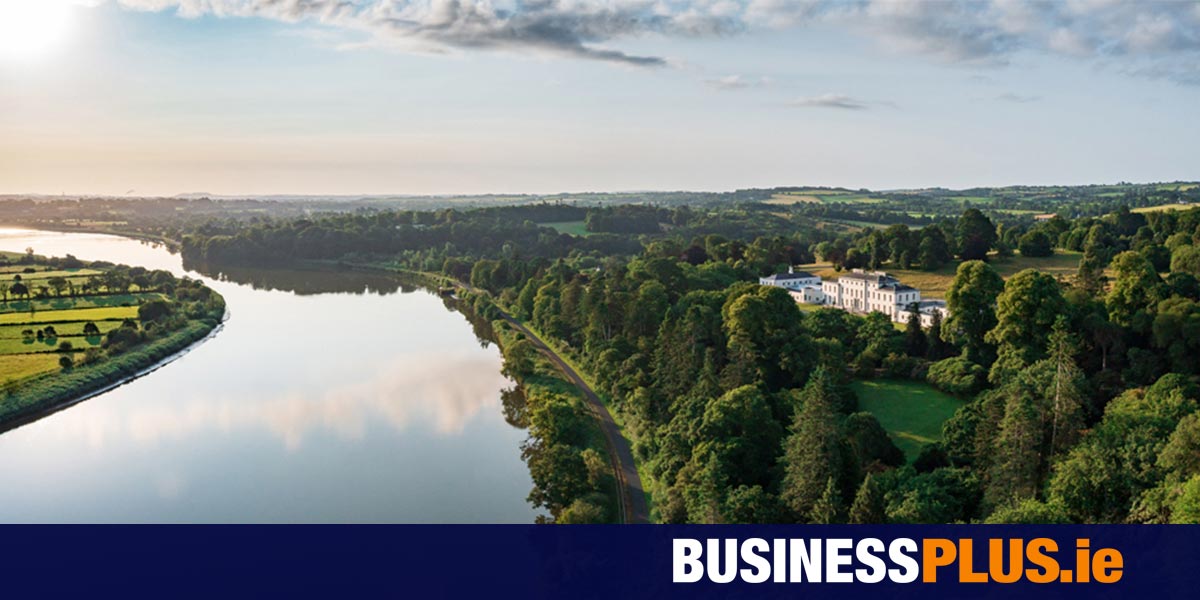
Mount Congreve Estate in Waterford, one of Ireland’s finest Georgian houses, has long held a notable place in the country’s architectural and horticultural story.
Built in the mid-18th century and home to the Congreve family for more than 300 years, it is often described as one of the last liveried “big houses” in Ireland.
Its most famous custodian, Ambrose Congreve—an internationally recognised plantsman—devoted his life to developing one of Europe’s most significant woodland and ornamental gardens.
Yet the estate’s transition from private home to public treasure has been complex and, at times, deeply challenging.
When Mount Congreve Gardens reopened in March 2023, following a €7m redevelopment supported by the EU Rural Regeneration & Development Fund, Waterford City & County Council and Fáilte Ireland, the moment marked both revival and relief.
Years of decline, limited resources and a lack of modern visitor infrastructure had resulted in deteriorating buildings, compromised utilities, overgrown paths and fragile horticultural collections.
The reopening represented the largest single investment ever made in a Waterford visitor attraction, but it was only the beginning of addressing significant restoration backlogs and achieving long-term commercial sustainability.
Almost three years later, Mount Congreve has evolved from a high-risk heritage project into a thriving commercial enterprise with rising visitor numbers, diversified revenue streams and mounting national and international recognition.
The estate has already exceeded the visitor projections in its commercial plan and has delivered roughly one-third of Fáilte Ireland’s ten-year economic impact forecast—well ahead of schedule.
At the heart of this turnaround is CEO Sara Dolan, who has guided both commercial strategy and long-term conservation. While acknowledging that challenges remain, she describes progress as “unmistakably upward.”
From Reopening to Rapid Growth
Dolan recalls the reopening of 2023 as a watershed moment, “This redevelopment was never intended to be cosmetic—it was a step-change,” she says.
“It reimagined how the estate could function as a world-class garden, a cultural hub and a modern visitor attraction.”
The scale of work required was vast. Major projects have already been completed, with others underway, including the Georgian Glass House, the walled gardens, the West Wing and the estate’s gate lodges.
“These require significant time, effort and resources,” Dolan notes, “and they are a major financial challenge.”
The estate must simultaneously run a full-scale visitor operation while investing in long-term restoration that will only deliver revenue in future years.
Despite this, she says, the pace of progress has exceeded expectations.
“Visitor numbers surpassing business plan projections so early on confirms that the strategy was sound—and that the demand is absolutely there.”
In just three years, Mount Congreve has grown “from a cherished local garden into one of Ireland’s most significant heritage destinations with real international pull.”
A Transformational Visitor Experience
A fundamentally enhanced visitor experience has been central to this success.
Guests now arrive through the historic house, where a high-quality audio-visual exhibition tells the story of Mount Congreve, supported by multilingual audio guides.
Accessible 16km pathways, improved wayfinding and themed routes offer multiple ways to explore the 70-acre garden.
A woodland playground has broadened the family offering, while continuous planting and interpretation upgrades add depth and interest.
The estate’s cultural programming is particularly influential. The new Art of Dining: Silver Exhibition will be a catalyst for significantly increased dwell time and is projected to attract over 6,000 visits in its first full year.
Membership continues to grow steadily, with more visitors treating the gardens as a year-round amenity.
“We realised early on that the Estate’s gate lodges, of which there are four, would offer a valuable revenue stream, and though they were in a state of dereliction, and no funding was provided for their restoration, we focused on restoring the main gate lodge first under a very strict budget.
“Within the first year of putting that up for short-term stays, it has a 99% occupancy rate, so we were determined to drive this revenue stream further by restoring the rest and adding more.
“There are now four completed restored gatelodges, along with five stunning forest cabins, a suite in the West Wing of the main house and seasonal bell tents in the meadow too, in total offering 40 bednights at peak season, establishing accommodation as a central revenue pillar.”
A Regional Economic Engine
Mount Congreve’s revival has delivered a powerful economic impact across the South East. The estate now generates approximately €20.3m annually and supports around 140 direct and indirect jobs.
This includes €8m in visitor spend, €2.3m in local payroll and €1.1m in spending with local suppliers.
“That we have delivered about one-third of Fáilte Ireland’s projected 10-year impact in under three years,” Dolan notes, “is extraordinary. But it is also evidence of what strategic investment in heritage can deliver when executed well.”
Commercial Growth with Tight Controls
Financial performance continues to strengthen across all areas, Dolan says, “Our commercial performance reflects a business that is scaling effectively and strategically.
“The Stables Café has become a destination in its own right, supported by estate-grown produce and strong per-visitor spending. Retail, particularly the FOXFORD shop and Irish craft ranges, consistently outperforms expectations.
“Accommodation revenue is rising sharply, with a 42% year-on-year increase as all units settle into a strong trading rhythm.
“Operational discipline remains tight: cost of goods and direct costs are currently running about 12% below budget, positioning Mount Congreve to meet its 2026 commercial goals.”
Diversified Revenue and New Partnerships
Diversification has been a defining element of the estate’s commercial strategy. Accommodation provides a stable, year-round revenue stream while simultaneously saving historic structures from dereliction. New partnerships are activating underused areas, including plans for padel tennis courts under a fixed-rent model worth €15,000 annually, subject to planning approval.
Events, exhibitions and memberships continue to expand, with the upcoming Herman Dool exhibition, which will attract new audiences and further deepen the cultural offering.
Conservation at the Core
Despite strong commercial performance, conservation remains the estate’s driving purpose. “Conservation is the core of everything we do,” Dolan emphasises. “Commercial success matters because it funds the work required to safeguard this estate.”
Following Ambrose Congreve’s death, the gardens faced serious deterioration—from overgrown paths to failing structures and compromised utilities.
The turnaround since reopening has been significant: new planting strategies, major path works, the forthcoming restoration of the Chinese Pagoda with the Irish Follies Trust, and the appointment of a new Head Gardener responsible for shaping a long-term horticultural vision.
Community, Education and Volunteerism
Mount Congreve also plays a substantial community and educational role. Its School of Horticulture with WWETB trains over 16 QQI Level 5 students annually, while placements come from SETU, Kildalton, Glasnevin and international programmes.
The estate hosts Scouts, Beavers, orienteering groups and Civil Defence training, and delivers specialist and age-friendly tours, with accessibility integrated into the site’s design.
Dolan says, “We are incredibly fortunate to have an immensely skilled team of gardeners. Not only are they passing on their years of knowledge and experience and helping prepare the future generations of gardeners, but our volunteers and students also work under the watchful eye of this team.”
Dolan also highlights the indispensable contribution of volunteers.
“We are so grateful to all of our enthusiastic volunteers; they are the epitome of our community engagement and the estate’s collaborative ethos.”
The Road Ahead
Doaln says, “The recognition we’ve received—from Condé Nast Traveller to the New York Times, the Irish Independent Fab 50 and the International Garden Tourism Awards—affirms the calibre of what we’ve created here.
“These accolades significantly elevate our global profile and draw new audiences who might never have considered the South East as a destination. They also demonstrate that Irish heritage attractions can compete confidently on the world stage.”
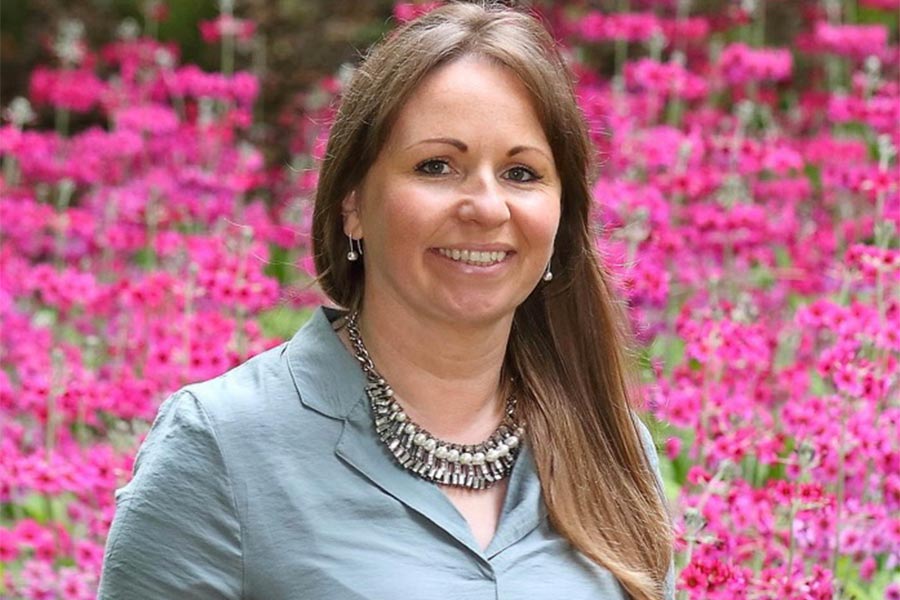 Sara Dolan
Looking forward, Mount Congreve’s focus is firmly on long-term sustainability.
“We are transitioning from a site that required major public investment to one that is working towards becoming self-sustaining,” Doaln explains.
The first three years focused on reopening and stabilisation; the next phase will emphasise enhancement, innovation and maturity.
Challenges remain. Large historic gardens demand continuous resources and specialist care.
Climate pressures, rising operational costs and the need for ongoing horticultural renewal present significant demands.
“These pressures are not unique to Mount Congreve,” she notes. “They reflect the broader reality facing heritage tourism in Ireland.”
Despite these challenges, the future feels secure.
“We are custodians on this journey. The resurgence of Mount Congreve is about far more than commercial success—it is about safeguarding one of Ireland’s great horticultural legacies for generations to come.”
With historic lodges restored, rare plant collections protected and the house fully reopened to the public, Mount Congreve is now firmly on a path of sustainability—enriching not only Waterford but the wider South East.
Mount Congreve Gardens & Estate is open seven days a week from February to the New Year. For more, see www.mountcongreve.com
Comments are closed.