
Key Takeaways
Even cold-hardy plants may need extra protection during severe winter weather.Shield winter veggies, figs, tender perennials, potted plants, and evergreens from hard freezes.Use mulch, coverings, wind breaks, and proper watering to prevent winter damage.
Winter is a time for rest for the garden—but before you put yours to bed, it’s important to make sure that vulnerable plants won’t be damaged by harsh, freezing conditions.
In fact, even cold-hardy plants can actually benefit from some protection from the coldest weather. Here are 5 types of plants to give a little extra TLC this winter.
Evergreen Trees and Shrubs
Credit:
The Spruce / Michelle Becker
It might sound counterintuitive, but landscaping plants that stay green all winter long could use some winter protection. Frozen ground, strong winds, and harsh winter conditions can cause foliage, branches, or entire plants to die back due to a lack of moisture.
This issue is known as winter burn, and you can prevent it by adding a few inches of organic mulch around the base of evergreens once the ground freezes.
Other strategies include installing windbreaks, wrapping trees in burlap, and siting plants properly in areas where they won’t be hit with strong winds. Broadleaf evergreens like rhododendrons and boxwoods can especially benefit from winter protection.
Want more gardening tips? Sign up for our free gardening newsletter for our best growing tips, troubleshooting hacks, and more!
Fig Trees
Credit:
The Spruce / Evgeniya Vlasova
Warmth-loving fruit trees like figs can benefit from protection in the coldest winter weather, especially if they’re on the cusp of hardiness in your USDA growing zone.
Keep trees well watered through fall, which will strengthen their resistance to moisture loss from winter conditions.
After leaves drop, use stakes and chicken wire or burlap to create a protective cage around the tree, then fill in the empty space inside with dried leaves to insulate branches.
An outer layer of tar paper and an upturned plastic bucket on top will repel moisture. Mulching around the base of these plants can also help protect them from winter damage.
Cool-Season Vegetables
Credit:
Getty Images/Mrs Clooney
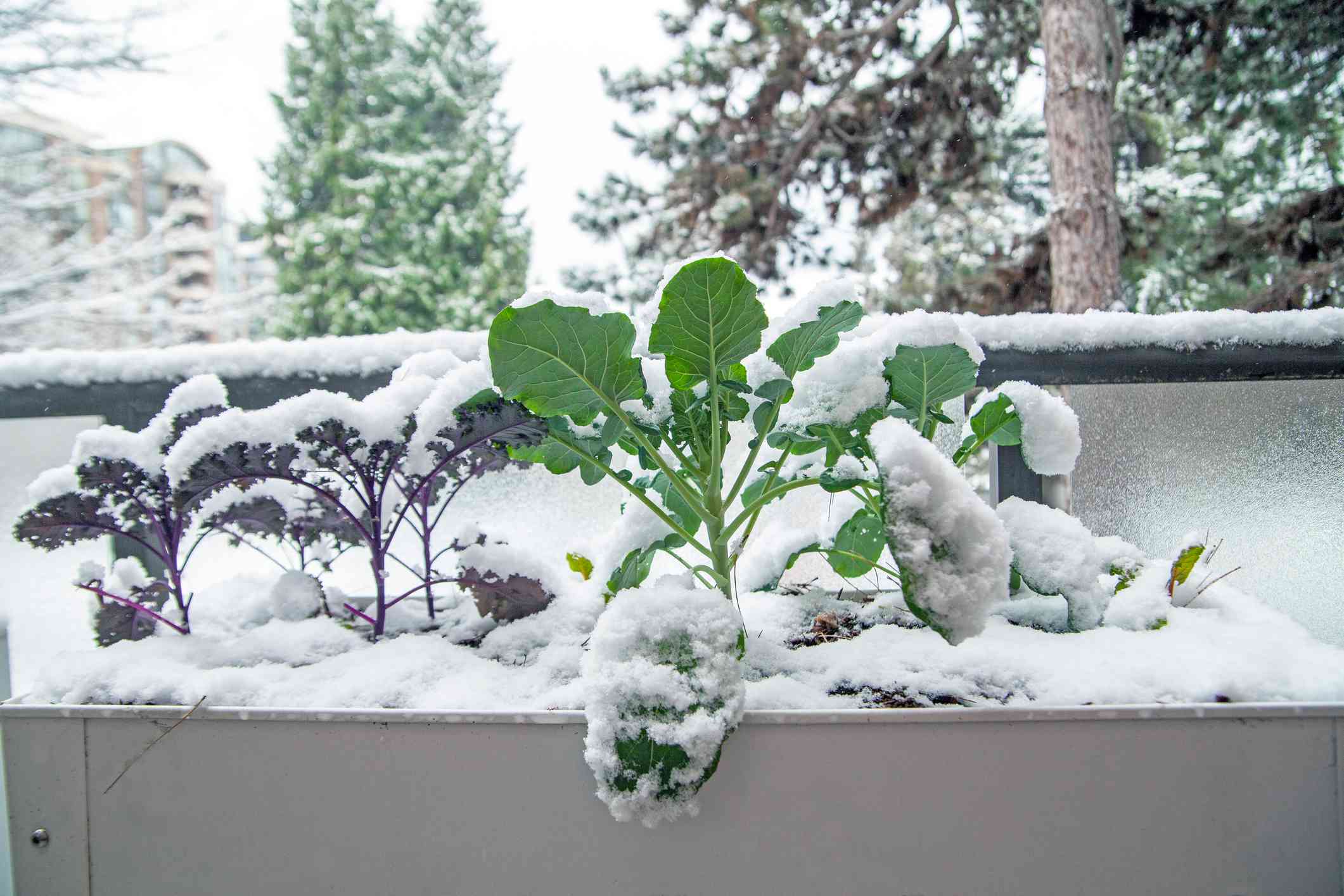
Vegetables like lettuce, kale, spinach, broccoli, cauliflower, radishes, and parsley are some of the earliest crops in the garden each spring—and some of the longest-lasting into fall.
These plants are known for being relatively cold-hardy, and wide varieties can survive even a hard freeze (between 26°F and 31°F) or below for a short period of time.
However, they may sustain damage from exposure to these temperatures, so a little protection is a good idea. Keep plants well watered and avoid disturbing the soil before a hard freeze to hydrate them and protect their roots.
Cover plants with a thin sheet or a piece of floating row cover before a cold snap, or use plastic sheeting, a cold frame, or plastic or glass cloches to cover beds or individual plants and keep them warm before a hard freeze.
Container Plants
Credit:
The Spruce / Jayme Burrows
Even perennial plants that can handle the coldest temperatures in your growing zone may not fare as well if they’re planted in pots rather than the ground. Because they lack the insulation of the surrounding soil, container plants are much more vulnerable to cold damage.
As with in-ground plantings, keeping potted plants well watered can help prevent damage from a freeze.
You can also protect them by moving them into an unheated shed or garage for winter, burying pots up to the soil line before the ground freezes, or grouping pots together in a protected outdoor area and covering them with mulch, evergreen branches, or a thermal blanket until spring.
Tender Perennials
Credit:
Zoie Chow / Getty Images
As long as they’re winter hardy in your growing zone, perennial plants should have no problem surviving the cold months in your garden—but for a little extra insurance, certain tender perennial plants benefit from protection.
Prevent winter damage by insulating plants like roses, dahlias, cannas, clematis, and salvia with a few inches of mulch, compost, evergreen branches, or other organic material after foliage has died back for the year.
You can also install a tomato cage or chicken wire around the plant, cover it in burlap, and fill it with leaves for even more protection.
Comments are closed.