
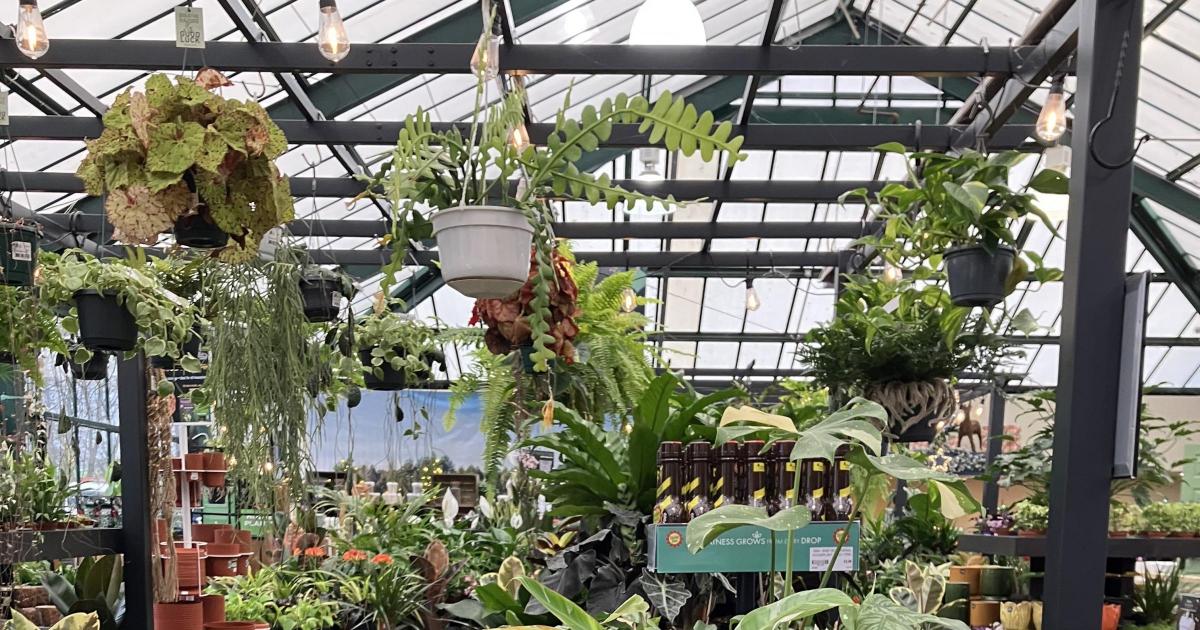
But there is another must-see in the garden centre at this time of year. For this, head to the heated section of the glasshouse where the houseplants of an exotic nature grow. Venus flytrap, cacti and, at this time of year, poinsettia are centre-stage. Look beyond the reach of a duster, say high on a pergola or on the structural steels of the glasshouse itself, and you should spot webs laid horizontally. Hopefully, upon these webs you should see what looks to be a small stick, just a few millimetres long. This is Uloborus plumipes, commonly known as the garden centre spider. Each spider hangs below its web with a posture similar to that of a cat stretching out after it has just awoken, front legs outstretched and back hunched.
The garden centre spider is an accidental import and is thought to arrive on pot plants from Holland. The species was first recorded in Britain in 1992 and has spread widely since. This heat loving arachnid requires temperatures well above freezing to survive. Differences in morphological characteristics exist between the sexes. Females have an angular abdomen and sport black feathery hair plumes on their legs. Males are slimmer and less shapely. The egg-sac, created by the female, is flat, has spiked edges and could be mistaken for a dead holly leaf caught among the webs.
As a control for whitefly, the garden centre spider is great for greenhouses, if you do not mind a few cobwebs here and there. With the species being non-venomous, each fly gets wrapped, present like, in copious amounts of silk. If you have had plants bought for you this Christmas, you might just find one of these arachnid stowaways as a bonus gift among your stocking fillers. If you are not that lucky, you will still be able to spy them down the garden centre in the New Year.
wharfedale-nats.org.uk
Comments are closed.