
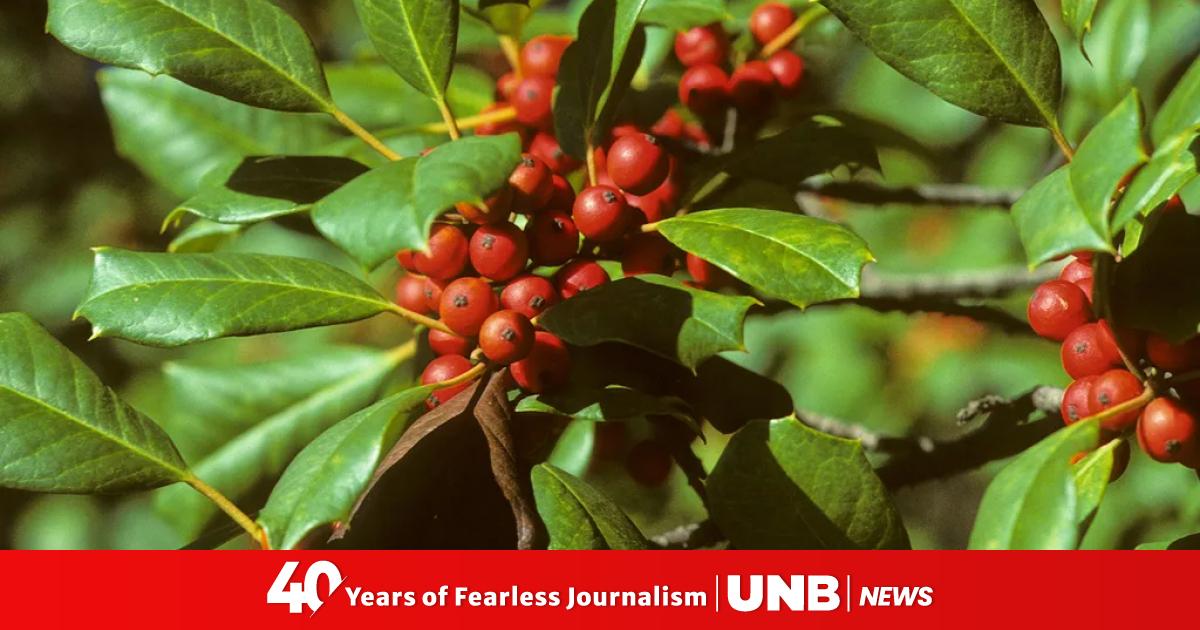
Holly has long been a symbol of the season, appearing in wreaths, boughs, holiday cards, and catalog covers. But have you considered adding it to your garden? With hundreds of species and hybrids from around the world — and over a dozen native to the continental U.S. — holly offers year-round appeal and winter interest.
Historically, ancient pagans used holly branches as crowns and believed the evergreens could repel evil spirits and hasten spring. Later, early Christians adopted holly as a symbol of eternal life. Its bright red berries and deep-green leaves complement traditional holiday colors, while providing an important food source for birds and wildlife (though most berries are toxic to humans).
Plant holly in early spring, after the last hard freeze but before summer heat sets in, and water regularly during the first year. Most hollies are dioecious, meaning male and female plants are needed for berry production. One male can pollinate up to ten females within 50 feet. Plant tags may not indicate sex, but variety names often help — for example, “China Girl” (female) requires “China Boy” (male) to bear fruit.
Here are a few top choices:
Yaupon Holly (Ilex vomitoria): Native to the southern U.S., adaptable to sun or shade, and suitable for hedges or trees. Hardy in zones 7-9.
American Holly (Ilex opaca): Slow-growing, pyramid-shaped, reaching 25-60 feet, thriving in acidic soil, zones 5-9.
Blue Holly (Ilex x meserveae): European hybrid with blue-green spiny leaves, 2-8 feet tall, zones 5-7.
Winterberry Holly (Ilex verticillata): Deciduous, berries on bare branches offer winter interest, zones 3-9.
Caution: English or common holly (Ilex aquifolium), native to Europe and North Africa, can be invasive in parts of the U.S., particularly the Pacific Northwest and California. Avoid planting it in regions where it threatens native vegetation.
With the right choices, holly can add beauty, history, and wildlife value to your garden all year long.
Comments are closed.