
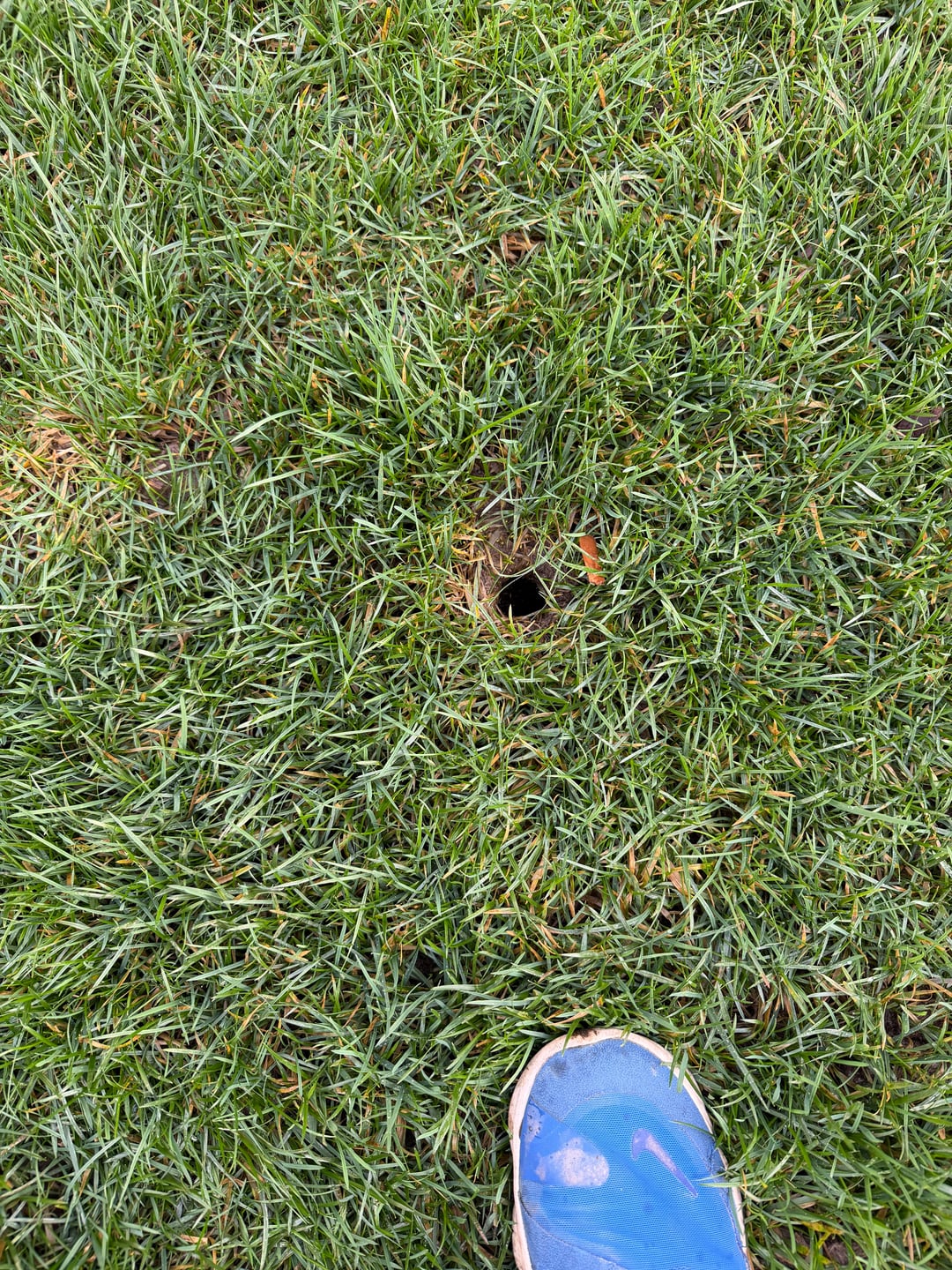
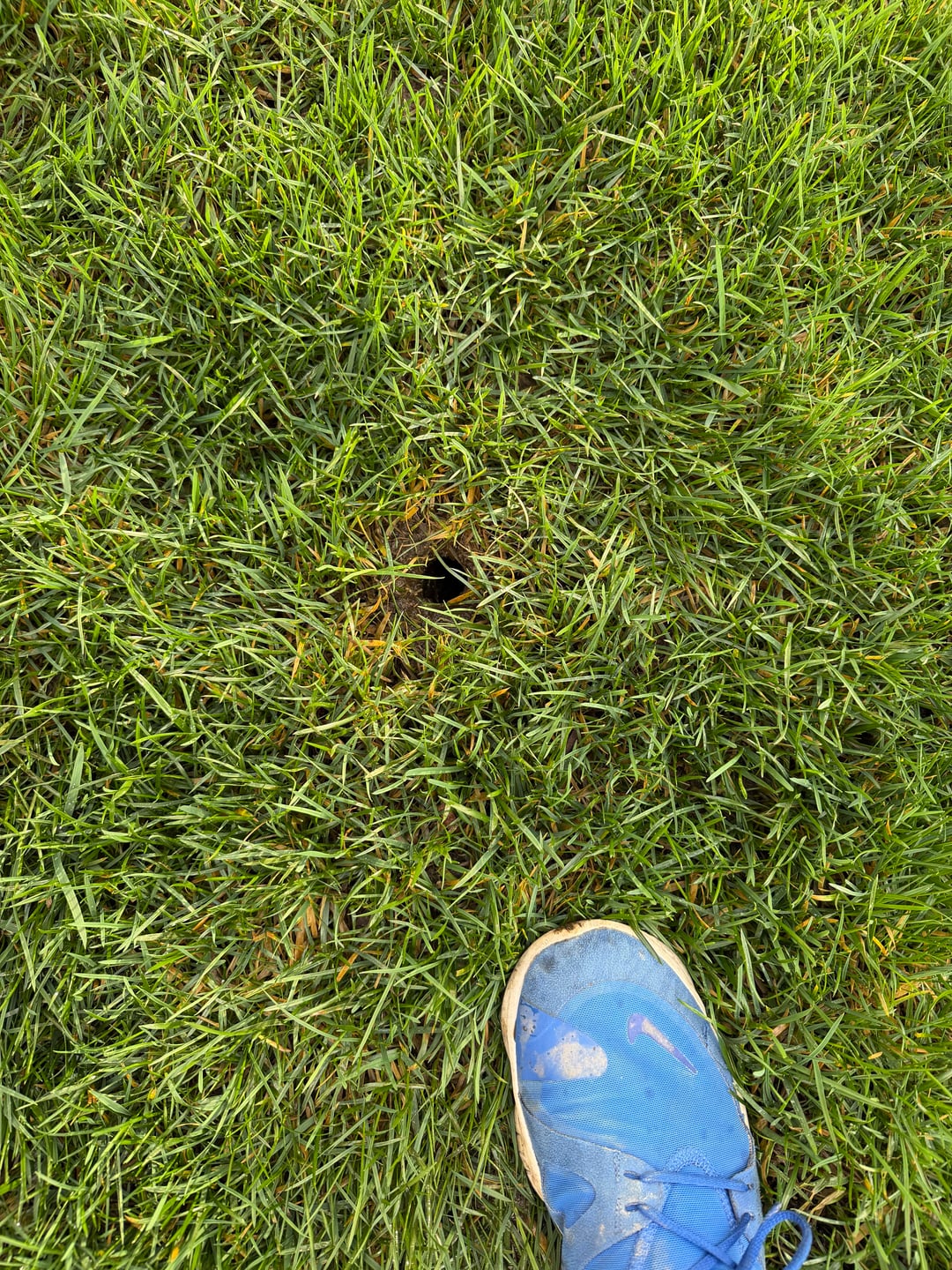
We moved into a house in the near Portland, OR last spring and there were a bunch of holes like this in the ground. They seemed old and I didn’t think much of it. I’ve since tilled the yard and put down sod a couple months ago. I noticed today these holes are back, meaning something dug them very recently. Any idea what’s causing them and how do I get rid of the culprit? We’ve had a ton of rain recently if that matters. Thanks for the help!
by Maximum_Indication88
10 Comments
Check out the [Cool Season Beginners Guide](https://www.reddit.com/r/lawncare/comments/fb1gjj/a_beginners_guide_to_improving_your_lawn_this/).
*I am a bot, and this action was performed automatically. Please [contact the moderators of this subreddit](/message/compose/?to=/r/lawncare) if you have any questions or concerns.*
They’re about the right size for crawfish, but usually crawfish build a little bud chimney around their holes
I think skunks or possums make holes like that digging for grubs. Shouldn’t be this time of year though.
Your neighbor Bill is laying face down in your yard
Have you noticed squirrels around?
Park a lawn mower over it and see if you get stung by yellow jackets. That’s usually what happens to me when I find a hole like that in my yard.
Ended up being birds for me. I had tons of these. After I water the grass they flock to the yard because worms are coming up.
I have the same. They are chipmunks (in my case)
Does the spot stay wet or is it near a water source like pond or creek? Crayfish/crawdad holes look a bit like that but usually leave an excavation mound around the hole which doesn’t seem to be there.
Based on the hole size, clean round edges, multiple openings, and your Portland location, this is most likely vole activity rather than moles, since voles create 1–2 inch neat holes with little to no soil piled up and often leave surface runways through the grass, especially in fall and winter when new sod and moist soil make ideal conditions. Moles usually leave raised tunnels and dirt mounds, which you did not describe. The best solution is to act quickly by removing cover like tall grass, mulch, and debris, mowing a bit shorter to expose the area, and setting snap traps perpendicular to active runways or at hole entrances using peanut butter or apple as bait, checking them daily until activity stops. Repellents such as castor oil products can help, but are unreliable in Portland’s wet climate, and poison is strongly discouraged due to pet and wildlife risk. Once trapping reduces the population and your sod matures and watering becomes less frequent, vole pressure usually drops significantly.