
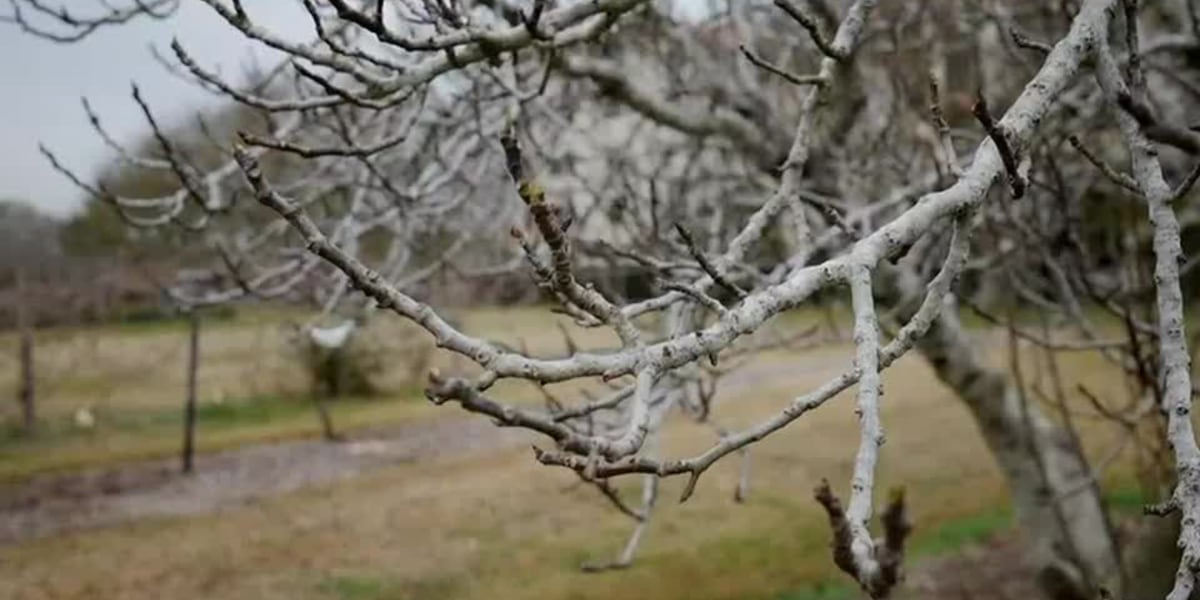
TYLER, Texas (KLTV) – Warm spells in the winter months are not uncommon around these parts. Looking ahead to my family coming to our house on the day after Christmas, the forecast says it will reach 80 degrees!
Warm winter weather in East Texas has a way of stirring up trouble. A few afternoons in the 70s and suddenly folks are fertilizing lawns, pruning shrubs, and wondering why things look worse by February.
The truth is, most winter gardening mistakes don’t happen during hard freezes — they happen during warm spells when we treat winter like spring. Let’s clear up a few myths that refuse to go away.
Myth #1: “It’s warm, so I should fertilize.”
This one cost homeowners and landowners real money. Texas A&M AgriLife Extension consistently advises against winter fertilization of lawns, trees, and shrubs. Warm days do not mean plants are ready to grow. Roots are still operating in cool soils, and pushing nitrogen now stimulates tender growth that’s highly vulnerable to the next cold snap. The result is burned foliage and wasted fertilizer. Soil testing is fine this time of year — applying nutrients is not.
Myth #2: “Brown grass is dead grass.”
Dormant does not mean dead. Bermuda grass and zoysia grass lawns are simply resting. Their roots are alive and storing energy for spring. Aggressive raking, scalping, or herbicide applications during dormancy weaken that reserve and delay recovery. Mow only when necessary for appearance and resist the urge to “fix” what isn’t broken.
Myth #3: “Cold weather kills insects and diseases.”
If only that were true! East Texas winters are mild enough that many insects and plant diseases survive just fine. Warm spells may indeed improve survival for pests like aphids, scale insects, and fire ants. Yet a really freezing cold spell won’t get rid of the either. AgriLife recommends scouting and targeted control rather than blanket spraying. Dormant oil sprays can be effective when timed correctly, but random insecticide applications rarely solve problems and often waste money.
Myth #4: “Winter is a good time to prune everything.”
This is half true, which makes it dangerous. Dormant fruit trees can be pruned now if done properly. Spring-flowering shrubs, however, bloom on old wood. Prune them in winter and you’re cutting off this year’s flowers.
Crape myrtles, azaleas, and many ornamentals should be left alone. Prune for structure and to remove dead or diseased limbs, but not because you are bored and looking for something to do outside.
Myth #5: “There’s nothing to plant in winter.”
Winter is actually the best planting season for most trees and shrubs in East Texas. Cool soils encourage root growth without the stress of summer heat. Plants establish better, require less water, and suffer fewer pest issues. AgriLife consistently promotes fall and winter planting for woody plants — just remember to mulch properly and water during dry spells.
The common thread in all these myths is timing. Gardening success isn’t about reacting to warm weather; it’s about understanding plant biology and working with the season. Winter isn’t a pause button, but it’s not a green light either.
East Texas winters reward patience. Leave dormant plants alone, plant what benefits from cool soil, and save the fertilizer and heavy pruning for when spring truly arrives. A little restraint now pays off with healthier plants, better blooms, and fewer problems down the road.
+++++++++++++++++
Cary Sims is the County Extension Agent for agriculture and natural resources for Angelina County. His email address is cw-sims@tamu.edu.
Educational programs of the Texas A&M AgriLife Extension Service are open to all people without regard to race, color, sex, disability, religion, age, national origin, genetic information or veteran status. The Texas A&M University System, U.S. Department of Agriculture, and the County Commissioners Courts of Texas Cooperating.
Copyright 2025 KLTV. All rights reserved.
Comments are closed.