
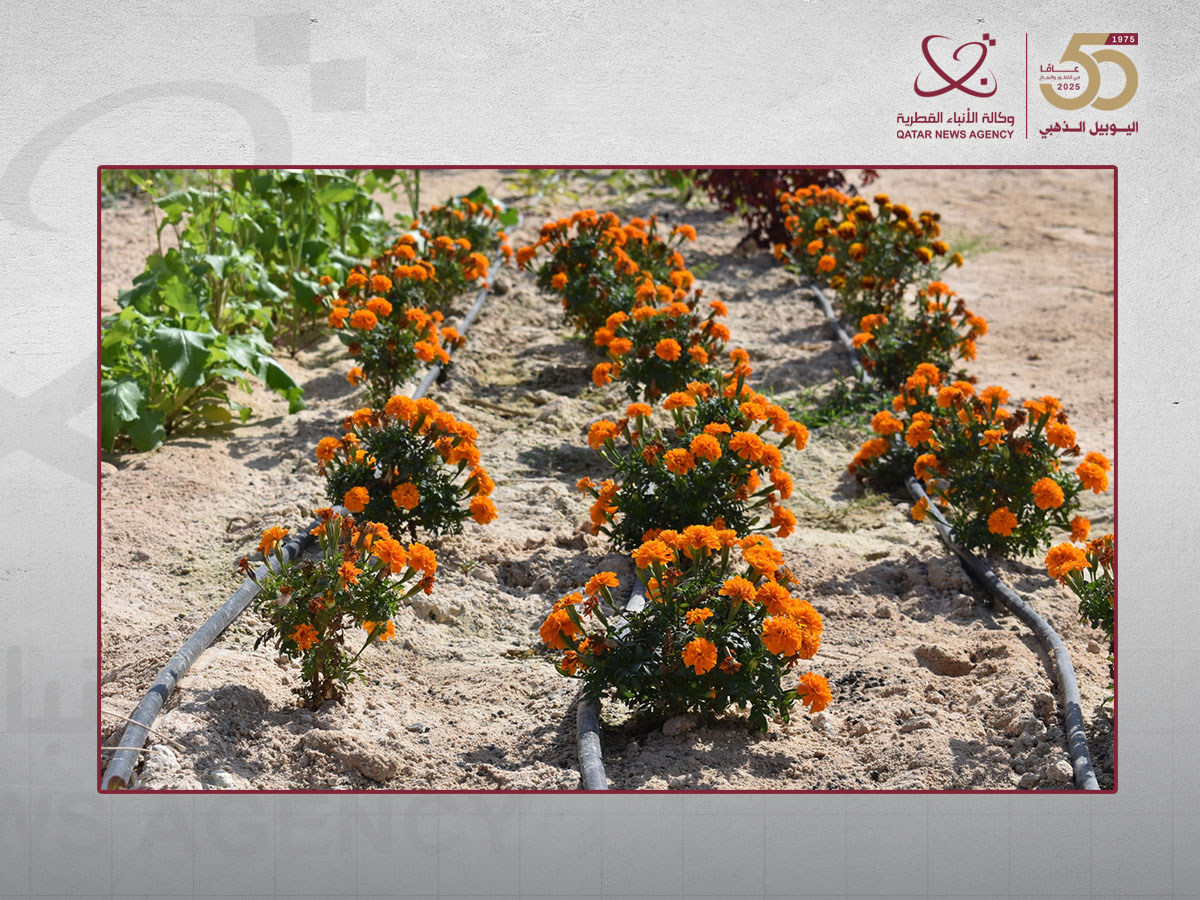
Doha, December 23 (QNA) – The Qur’anic Botanic Garden (QBG), a member of Hamad Bin Khalifa University (HBKU), has collaborated with Qatar Foundation’s (QF) Herfah Program to develop the first Dye Plants Garden at the historic Al Khater house in Education City. This initiative bridges traditional expertise and modern scientific knowledge, reflecting joint efforts to preserve traditional practices and revive plants that have been historically used for producing natural dyes.
This collaboration marks a milestone in strengthening QBG’s role in supporting national initiatives aimed at safeguarding Qatar’s botanical and local heritage products as well as traditional craft.
QBG designed and curated the garden by selecting suitable plant species, supervised by the Herfah Program, which cultivated and documented the dye-related uses of each plant.
The selected plants included a diverse range of dye-producing species, notably marigold (Mexican hibiscus), introduced to Qatar for the first time by the Garden and known for its unique purple dye properties. Additionally, the project featured henna, boxthorn, castor as well as vegetables with natural pigments including beetroot, mustard, eggplant, indigo, and purslane.
Commenting on this initiative, Director of QBG Fatima Saleh M. Al Khulaifi, said: “Our collaboration with the Herfah Program at Al Khater house reflects QBG’s commitment to supporting sustainability initiatives that bring together heritage and scientific knowledge. The Dye Plants Garden is more than a new green space; it is an educational and cultural platform that revives centuries-old practices. We hope that this garden will raise community awareness of the importance of plants and highlight their cultural and environmental value, aligning with QF’s mission to promote sustainability and preserve heritage.”
QBG experts identified and documented dye plants based on their adaptability to the climatic conditions of Qatar and the region, as well as within the Bait Al Khater environment.
An integrated garden design was developed, encompassing planting, irrigation, and an interpretive display to introduce visitors to the natural pigments produced by these plants and their traditional uses. This demonstrates a new model for environmental education and fostering community connections with Qatar’s heritage.
The Qur’anic Botanic Garden aims to serve as a global center for sharing knowledge, education, and research related to plant resources, fostering intercultural dialogues, promoting environmental responsibility, and integrating plant conservation with modern scientific methods. (QNA)
Comments are closed.