
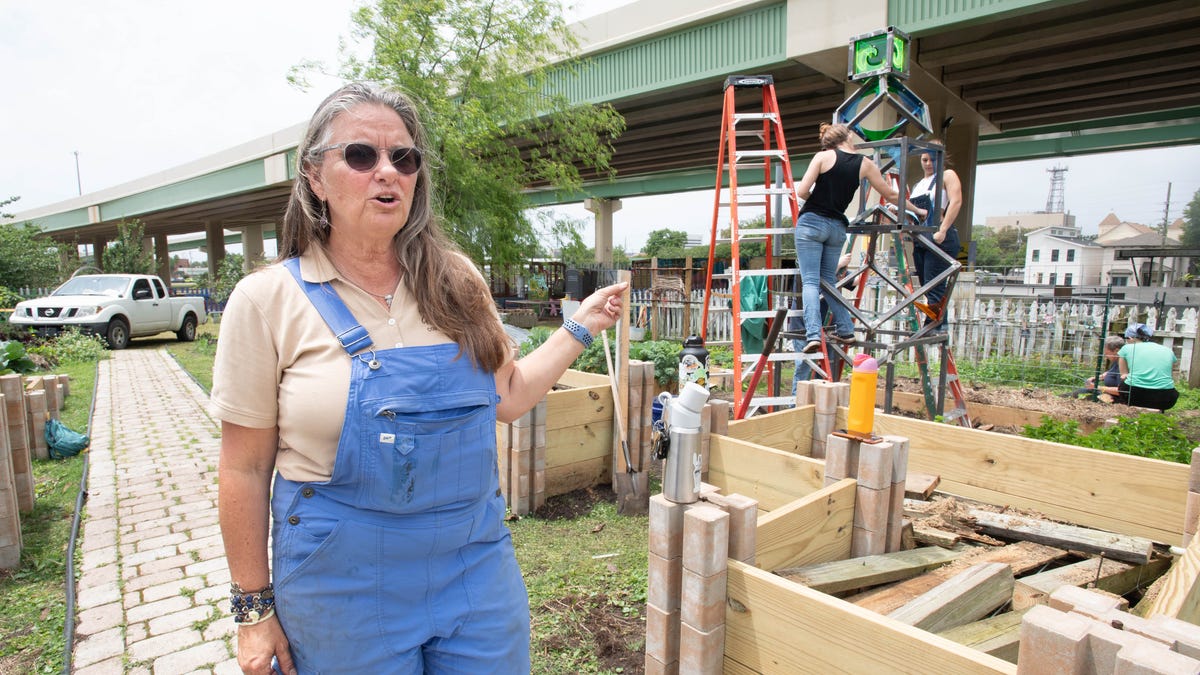
Besides garden boxes full of plants and produce, visitors to “From the Ground Up” Community Garden under Interstate-110 in downtown Pensacola will find a smorgasbord of other organic and homegrown offerings including a small stage for performances, old-fashioned phone booths to connect with lost loved ones, and artwork of all kinds from paintings and poetry to welded sculptures.
“One artist has brought us so many things that he has welded, like a dragonfly and a snowman that’s a caterpillar,” lead gardener and caretaker Elizabeth Eubanks said. “We’re taking those things that aren’t going into landfills then we’re making beautiful art with them.”
Under the leadership and nurturing of the former elementary school teacher, “From the Ground Up” has become a unique, award-winning space offering people not only organic produce but growth and connection of all kinds through gardening, art, and a variety of classes and programs.
Programs like horticulture and composting, plus open-mic concerts and even grief therapy.
In 2025, the community garden was recognized by CivicCon, a local initiative by the Pensacola News Journal and the Center for Civic Engagement aimed at building better communities, with the Placemaker Award for turning what was once an abandoned plot of land under the interstate into a flourishing space for sustainable community connection.
The connection between all of it—the gardening, the art and the education—is people, and for Eubanks creating a space like this to nurture that connection is what matters.
“Nature heals and it’s a space to come and if you don’t even need healing, it’s a great place to recharge,” Eubanks said. “Just having this space that’s kind of sacred and like a sanctuary for people to come learn and experience.”
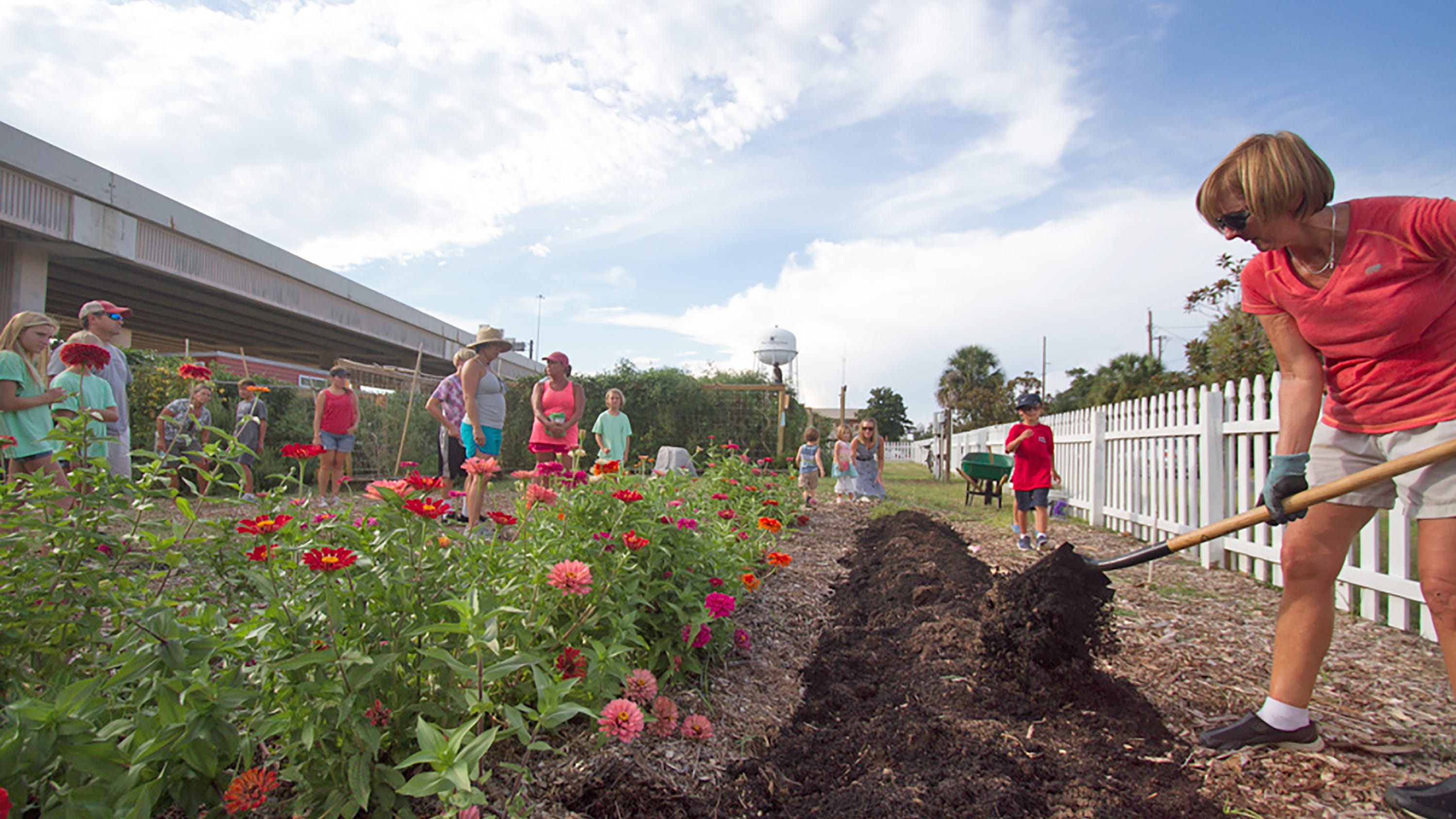

Pensacola From the Ground Up Garden grows community, local art
Discover how Pensacola’s ‘From the Ground Up’ Community Garden cultivates community, healing, and local art under Interstate-110.
How the garden grows community connection
Mary Dee Moralita is a plant-based chef and has volunteered at the garden for the past several years to grow food and connect with the community.
Recently, she parted ways with her food truck business full-time and is looking forward to taking on a role teaching in the garden and showing students the connection between gut health, plants and vegetables.
“The sense of belonging for the city of Pensacola, because there isn’t anything like this space in town,” Moralita said of the community garden. “I feel that it brings people of all different backgrounds, ages together and we can have a safe space to gather, share stories, collaborate.”
Innisfree Hotels runs the garden as part of its nonprofit, Hive Foundation Incorporated.
Ted Ent, Innisfree Hotels CEO and president, says “From the Ground Up” is one of the company’s top community projects and they’re proud of its widespread impact as an increasingly self-sustaining educational and cultural hub.
Ent credits the program’s vibrant success to Eubanks’ vision of a place that offered more than just food to put on the table, which is important, but also taught how the science behind horticulture works in an environment that could double as an entertainment and community gathering venue.
“It went way farther than just having a community garden,” Ent said of his first meeting with Eubanks, who brought him root vegetables at the start. “In the sense of where people come and they help grow things, she does a lot of that too, but as an award-winning, professional educator by trade she said, ‘I can use this venue for outreach.’”
Musician Katie Dineen has hosted numerous music events, including open mics, band and songwriter shows, some associated with the Pensacola Beach Songwriters Festival.
She says the unique space stands apart for a variety of reasons and many who come to the shows are impressed when they see it for the first time. She says one British band that performed there was even inspired to feature “From the Ground Up” on an album cover.
“Many of the venues in town are centered around the bar, you know, that’s a pretty typical place where musicians play,” Dineen said. “So having a venue that is a BYO-picnic kind of situation very much focused on community and education has been really special.”
Dineen is also part of the Earth Day Pensacola volunteer team. The group held an eco-kid’s event there this past year that educates children on ecosystems, gardening, bicycling and solar energy, as well as connects them with local nonprofits.
They now plan to host a day long festival at the garden every year.
Eubanks has also partnered with the nonprofit organization Valerie’s House, which provides free grief support for children, teens and families who have lost a loved one.
Kids can connect with peers and learn coping skills.
Valerie’s House brings children and caregivers to the garden for hands-on experiences, reflection and community connection.
Families participate in gardening activities, shared meals, seasonal events, field trips and unique offerings such as ecstatic dance.
“To me, that has been one of the most beautiful things that have happened in the garden,” Eubanks said. “I was surprised by how many people showed up and sat in the circle and shared moments of grief, or at least respect and honor and love of a loved one that they had lost.”
They also utilize the garden’s telephone booths to help. So-called “wind boxes” or “wind phones,” are disconnected phone booths that provide a space for people to have one-way “conversations” with deceased loved ones and symbolically send messages on the wind to process grief.
Jennifer Elzweig, program director for Valerie’s House says working with “From the Ground Up” is especially powerful for the children and caregivers because grief often disconnects people from their bodies, nature and from one another.
The garden offers a gentle way back.
“Being outdoors, working with soil, growing food, moving freely, and sharing space with others provides grounding in ways traditional support settings sometimes cannot,” Elzweig said. “For many of our families, particularly those facing financial stress or social isolation, the garden becomes a place of belonging rather than another service they must qualify for or navigate.”
Besides programs, people can also come for food or company. Eubanks said she is always looking ahead to the future and finding more ways to make the best of their “sacred space.”
“I am surprised and honored by the award, but the award is not for me, it’s for the community,” Eubanks said. “It’s a place maker, so without people, we have no place if it’s a place maker.”
Comments are closed.