
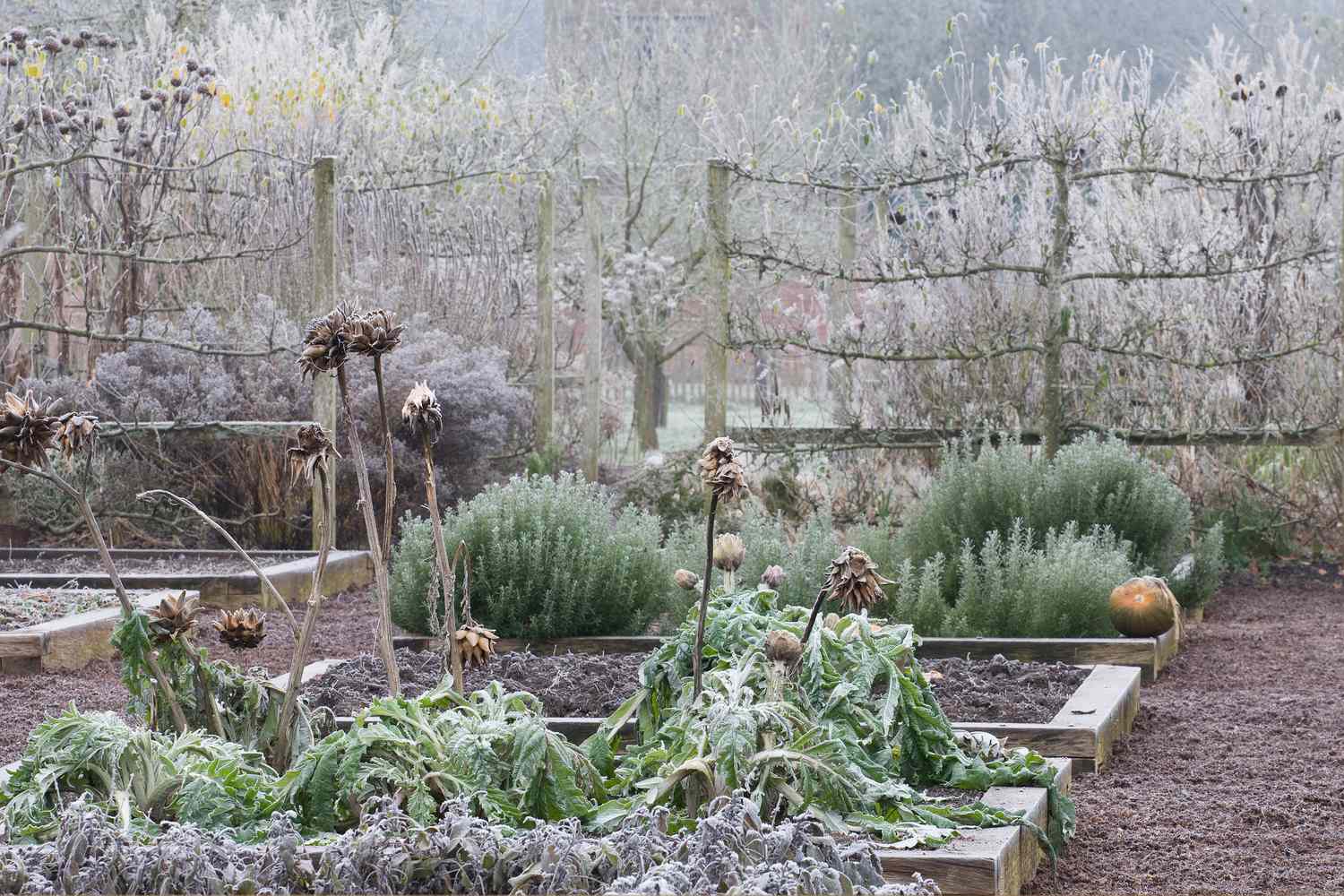
Your walkways, paths, and hardscaping make life easier and add plenty of visual appeal to your garden. But when cold weather comes around, snow and sleet diminish the appeal (and safety) of your beautiful pathways. Whether you have a simple path in the grass, a mulched walkway, pea gravel, or a more permanent brick or concrete walkway, we spoke to gardening experts who shared their tips for successfully maintaining your paths throughout the winter.
Shovel Regularly
One of the best things you can do for your garden paths and walkways is keep them shoveled. You’ll ideally want to do this quite soon after a snowfall while the snow is still somewhat fluffy and hasn’t been packed down by wind or foot traffic. “It is important to shovel regularly because fresh snow is easy to remove,” says landscape designer Jan Johnsen. “This practice prevents ice buildup, protects path surfaces, and helps to keep paths walkable. Regular shoveling is critical for safety and reducing mud and drainage problems later,” she says.
Use Sand
Even a small amount of packed snow can become icy in chilly weather, leading to unsafe walking conditions. The same is true when a cold rain is followed by sub-freezing temperatures. Some homeowners use salt or chemical ice-melt products to combat this problem, but these synthetic chemicals and salts can damage your lawn, garden plants, shrubs, and even concrete or brick patios and walkways.
“There is a common tendency to overuse deicing chemicals so that they may work faster, but they can lead to adverse consequences,” says landscape designer Teresa Watkins. She explains that if you apply more salt or other synthetic chemicals to snow than necessary, it can cause minerals to leach into soils, harming plants when the chemicals are absorbed through their roots. “Deicing products can also damage edging materials like brick, concrete, corten steel, and cement edging, by permanently pockmarking the hardscape if haphazardly applied,” says Watkins.
She says you can avoid these issues by using sand as a garden-safe alternative to deicing products and salt. It doesn’t melt the ice the same way, but it does provide traction for people and pets, and it easily sweeps away in the spring.
Use Pine Branches
Another way to prevent slipping on garden pathways during winter is to lay down evergreen branches from pruning or your Christmas tree. “They create a textured surface, which helps prevent slipping on snow and ice,” says Johnsen. “They protect the garden paths and are much safer than deicing salts. Besides, they are free, reusable, and biodegradable.” Johnsen notes that evergreen boughs are especially useful on steep or shady paths where ice forms quickly. It’s a solution that won’t disrupt the natural feel of your garden.
Incorporate Edging
Don’t overlook the potential benefits of incorporating edging in your garden. “Whether it’s concrete, stone, or metal borders, edging defines the space and can be beneficial during the winter season,” says Watkins. She notes that edging can delineate the locations of walking paths, sidewalks, and borders so you can avoid applying salt and deicing chemicals where plants are growing. “Edging can also help to keep shoveling tools on the walkway and not digging into or damaging low-growing ground covers like bearberry, junipers, and sedums,” says Watkins.
Add Mulch
Mulching your winter paths has many benefits. “An ample layer of compacted shredded bark mulch (3 to 4 inches) is beneficial during winter because mulch acts as a blanket and moderates the temperature of the soil to help the life in the soil and nearby roots,” says Johnsen. “It also absorbs the impact of foot traffic and prevents compaction of the ground and erosion.” She adds that compacted mulch provides safer winter walking conditions by adding traction and reducing icy or muddy conditions.
Clear Debris
General maintenance of pathways, especially during winter, can protect your landscape from potential issues. Old leaves and moss can lead to moisture retention, so raking them away is beneficial. Our experts also recommend repairing bowl-like depressions in your walkways that will turn into mud puddles when the snow melts.
Comments are closed.