
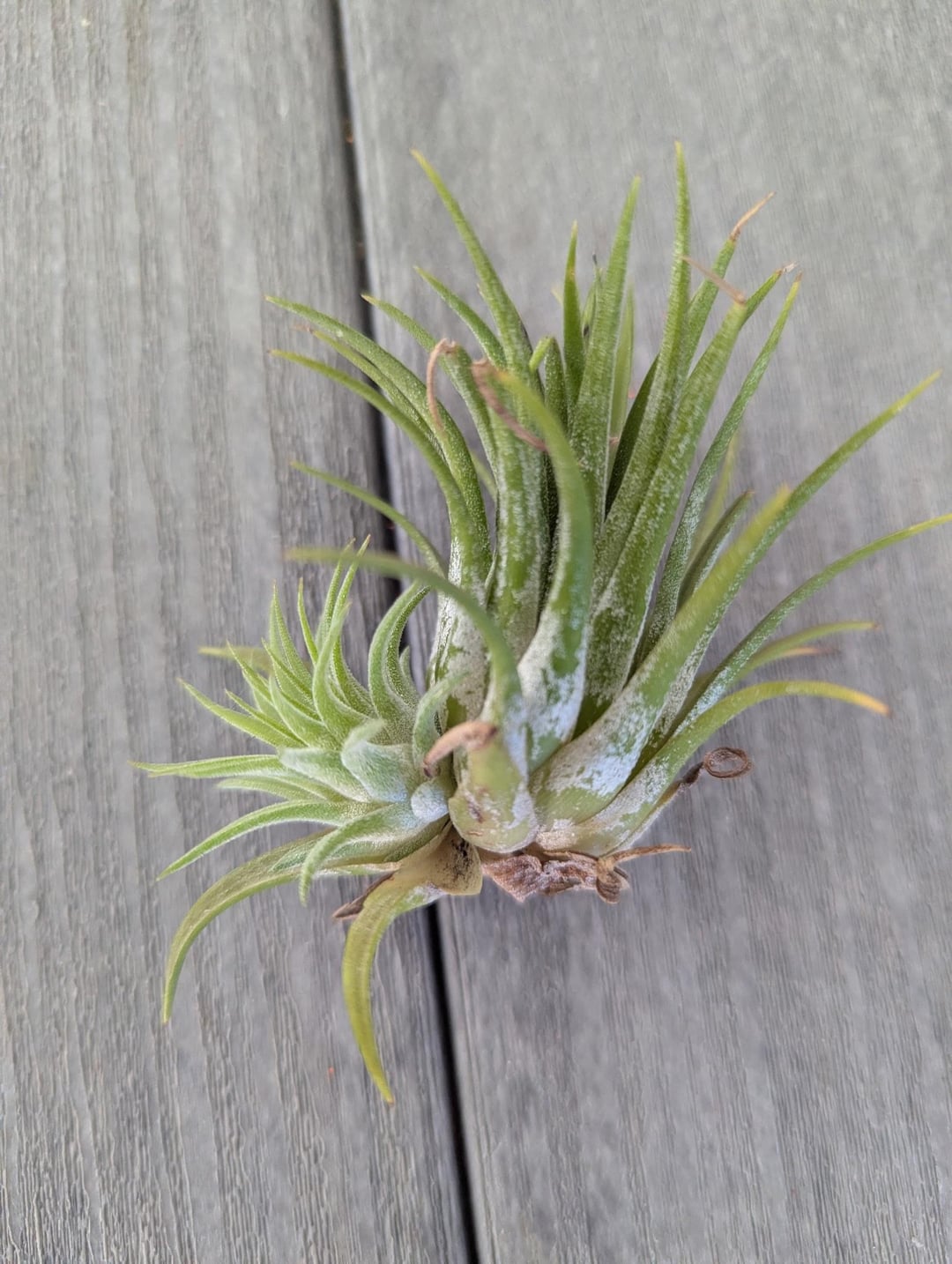
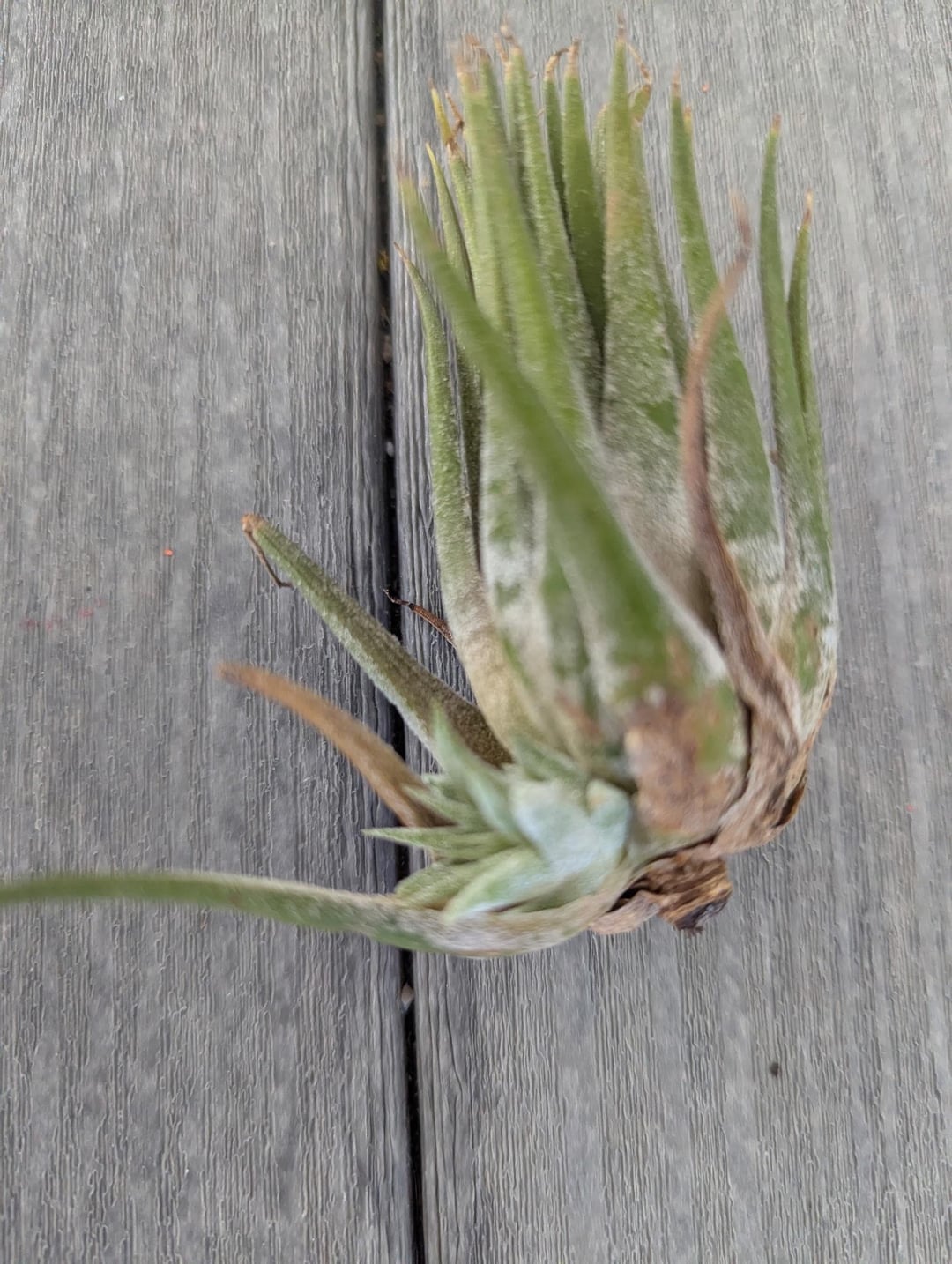
Hi! My mom wanted to know if she can safely detach the babys from the air plant. The big one flowered and by my understanding when they flower, they have babies and die. Is more than one baby going to happen? Does the mother die when its time to detach? Can you detach now? Thanks!
by labarrett
2 Comments
The mother feeds the baby, so it is best not to detach.
Hi! It is generally recommended to wait until the baby (“pup”) is about 1/3 of the mother plant before attempting to detach it, so I’d tell your mom to wait a little bit more. She can also opt to leave them be and never separate them, by the way! There’s no right or wrong here, it’s totally up to her.
Tillandsia pups do not always come after blooming; they can also make their appearance before the mother plant has had the chance to flower, and I believe this * may * be the case of your ionantha because I can’t see any flower stalk from the picture. Are you 100% positive that she has bloomed already? In any case, know that there’s a conspicuous difference between the two pup types: the pups that come BEFORE the mother plant has flowered (through asexual reproduction) are clones, while the pups that grow after blooming has taken place are like “regular” children, so to speak. : )
Flowering is an extremely draining process that always, always results – eventually – in the death of the mother plant, so many people who are not well-informed wrongly assume that pups of any kind are like heralds of the impending death of the mom. But it’s actually the flower stalk that prevents the adult plant from growing new leaves from the center, not pups. If I’m correct and your plant has not yet had a chance to bloom, that means that she still has a long life ahead of her. : ) She may or not may produce other pups (the clone type) during her lifetime, but one day she will surely flower and have regular offsets. Tillandsia that have successfully bloomed tend to live at least one year. It depends on many factors (species, individual genetics of the plant, general state of health…), but generally speaking it’s not like they flower and die immediately thereafter.
I hope this helps!