
All gardeners know that there comes a time when a plant is too far gone to be rescued. So it’s time to rip it out and think again.
Much the same can be said about the Holyrood Parliament.
If it were doing what it was meant to do, and helping make the lives of the Scottish people better, that would at least be to its credit.
But when it’s not implementing pie-in-the-sky legislation, which inevitably gets u-turned, it makes a point of wasting its time, and our money, on one inconsequential piece of drivel after another.
If this wasn’t bad enough, and it is, there have now been allegations of moral wrongdoing.
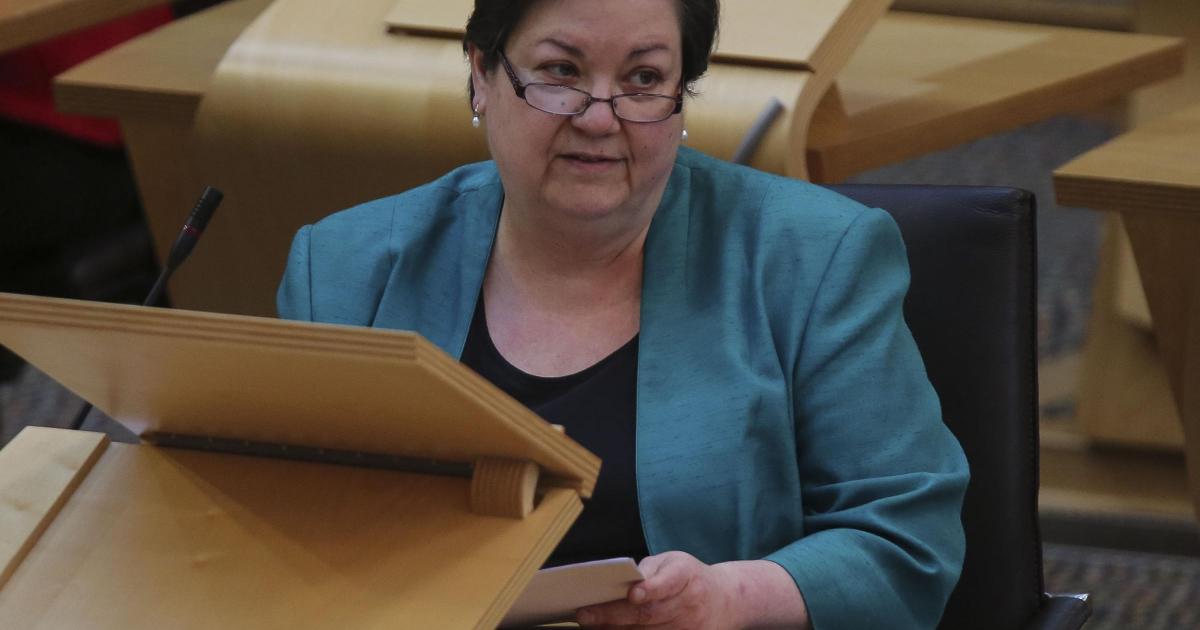
Scottish Labour deputy leader, Dame Jackie Baillie, demanded an urgent investigation into allegations that three SNP MSPs were allegedly secretly recorded by their own staff, though the Parliament’s Presiding Officer has said there is no evidence of this happening.
Meanwhile, the Green Party wants to allow biological males, who identify as women, in the ladies toilets.
Dame Jackie’s demand for an investigation into the above allegations is undoubtedly the proper procedure.
However, it seems to me that attempts to continually scrutinise the behaviour of those working in the Holyrood Parliament is akin to a quack doctor prescribing a sticking plaster for a festering wound.
The patient is too far gone.
It’s time to make some good use of assisted killing legislation, and put the whole sorry thing out of our misery.
If I can have one Christmas wish, it is that the forthcoming Holyrood election is its last.
Graeme Arnott, Stewarton.
More letters…
Hold players to account
Holyrood debate shows what little trust we can put in our politicians
Co-operation, not by-laws, the key to national park success
Scots poor compared to USA
I read with some amusement John Boyle’s attempt at deflection from my wider point, when he called it odd for me to compare Scotland’s economy with the US (Herald Letters, December 19).
In doing so he missed that it is highly relevant to point out the stark difference in affordability for the Tartan Army attending the 2026 World Cup in the affluent United States, where high prices underline Scotland’s stagnant living standards.
America’s low-tax, dynamic capitalist economy has nearly doubled GDP per head since 2007, while Scotland’s, big government, high-tax approach has seen little real growth, making the trip a stretch for many Scots.
Westminster may hold many of the key levers, but Holyrood’s big-government model, significantly higher taxes and freebie priorities amplify the levelling-down consequences of favouring entitlement over growth.
The SNP had a chance to be different but blew it.
I’m glad that Mr Boyle at least acknowledged the accuracy of my figures, but I’m somewhat surprised he had to look them up in the first place.
Ian Lakin, Aberdeen.
Reasons to be cheerful
As another year stumbles to a close, it appears to be one dominated by relentless bleakness on the global and home stages. Conflict in the Middle East and Ukraine, as well as a continuing cost-of-living crisis on our own shores.
However, there have been many positives to come out of 2025, which have perhaps not grabbed the headlines and gained the profile merited.
The ozone layer is healing faster than expected, thanks to the global phaseout of ozone-depleting chemicals like chlorofluorocarbons (CFCs).
If current trends continue, scientists project that by the mid-2030s, some years may see no seasonal ozone hole at all, with full global recovery likely by the mid-century.
In the South Atlantic, humpback whales have rebounded from near-extinction, after decades of commercial hunting reduced their population to just 450 specimens by the mid-20th century.
Thanks to international protections, their numbers have now risen to around 25,000, close to pre-whaling levels.
Over the past three decades, child mortality has fallen dramatically worldwide.
According to the World Health Organization, under-5 deaths declined from 12.8 million in 1990 to 4.8 million currently.
In what may appear a doom-laden year, let us spare a few moments to reflect on the many positives there have been.
Alex Orr, Edinburgh.
Doctors financially fine
I’m sorry, but I cannot agree with Andy Maciver that being a doctor, relative to the rigorous requirements of the job, is poorly paid ( “Scotland’s young doctors have a moral duty not to follow English into strike action”, The Herald December 19).
As compared to other public sector workers in the UK, doctors are well paid.
When I started out in my medical career in the early 1990s, doctors’ overtime – hours worked in excess of 40 per week – was paid at one third of the normal rate.
One third, not time and one third.
For most of the 83 hours per week that my colleagues and I were on duty, and we were up most of the night, we were paid less than our normative 9-5 rate.
Things have, of course, progressed since then, and rightly so. Doctors working such long hours is harmful to patient care, and also to doctors’ health.
I recently attended the 40th anniversary dinner of starting medical school. I was surprised to meet so many of my former colleagues who had retired from NHS practice in their late 50s.
Why? Because while we felt that we had contributed significantly for many years to the NHS, financially we could afford to do so.
As to strikes, medicine to my mind remains a vocation. A rather well paid one, even in 2025.
As such, I agree with Andy Maciver, there are no winners from strikes. Strikes cause harm to patients, and also to the reputation and contribution that doctors can and do make to the health of the population.
Dr Alan Mitchell, Motherwell.
Unsporting decision
I am sad to learn that most TV coverage of next year’s Commonwealth Games will be behind a paywall (“BBC loses out as broadcast rights for Commonwealth Games awarded to pay TV”, The Herald, December 20).
It was Billie Jean King who used the phrase “you have to see it to be it”, and countless young people will be denied the opportunity to be inspired to try a sport for themselves.
As ever, children from disadvantaged backgrounds will be most affected.
I had recently completed phase 1 of the process to become a volunteer at the games, but have today withdrawn my application.
Dr Hilary Aitken, Kilmacolm.
Feline fine
Good news about the success of the Saving Wildcats Partnership (“Wildcats project hailed a success”, The Herald, December 18).
I hope that the newly released cats survive and do not disappear mysteriously, like the white-tailed eagles.
Fingers crossed, and time will tell.
Malcolm Rankin, Seamill.
Many refugees are arriving on the UK’s shores. (Image: PA)
Boats adrift
Over forty thousand asylum seekers have arrived in boats in the UK this year, one of the highest ever annual figures.
Maybe officials should ask the SNP how to ‘stop the boats’.
They did a great job in stopping several hundred thousand ferry trips, by delaying the delivery of the Glen Sannox and Glen Rosa for over six years.
Allan Sutherland, Stonehaven.
Comments are closed.